
West Virginia Senate creates review team for deaths of children in state custody
Senate passes bill regulating recovery residences

State Senate Minority Leader Mike Woelfel said Wednesday that a bill to create a critical incident review team will help provide oversight to cases involving the death of children in state custody. (Photo courtesy of WV Legislative Photography)
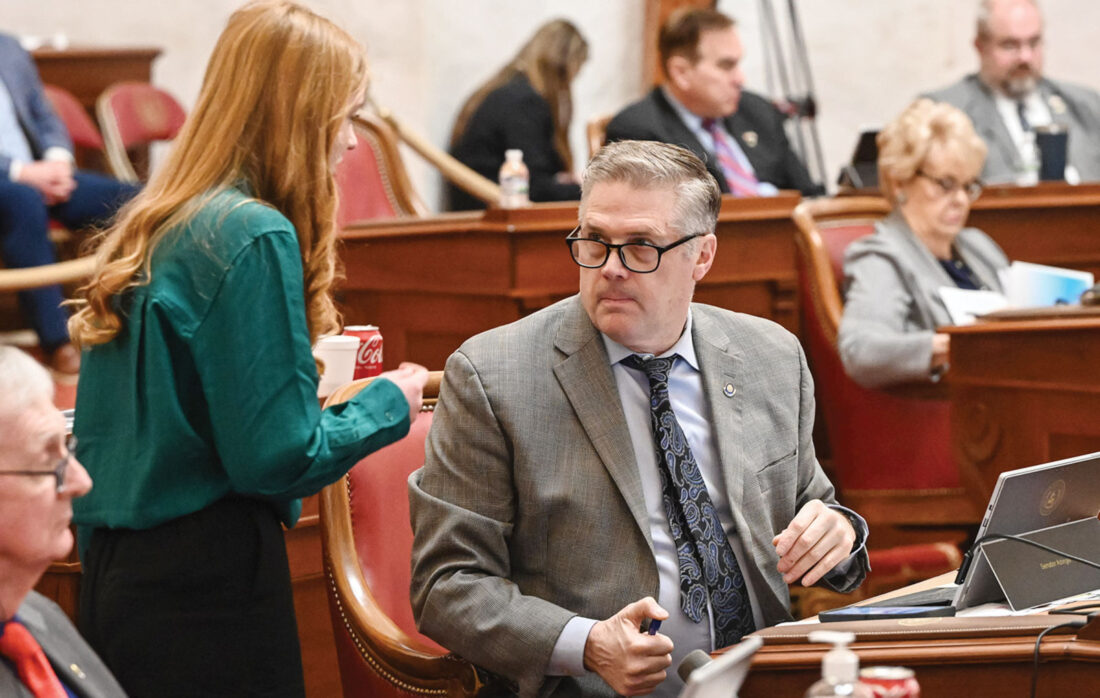
State Sen. Mike Azinger believes SB 475 will protect valid recovery residences while discouraging misuse of recovery residences for human trafficking and other issues. (Photo courtesy of WV Legislative Photography)
State Senate Minority Leader Mike Woelfel said Wednesday that a bill to create a critical incident review team will help provide oversight to cases involving the death of children in state custody. (Photo courtesy of WV Legislative Photography)
State Sen. Mike Azinger believes SB 475 will protect valid recovery residences while discouraging misuse of recovery residences for human trafficking and other issues. (Photo courtesy of WV Legislative Photography)
Trending
CHARLESTON -- Members of the West Virginia Senate passed bills Wednesday creating a specialized team to review the deaths of children in state custody and further regulating sober living homes.
The Senate passed Senate Bill 474 Wednesday morning in a 33-1 vote, sending the bill to the House of Delegates.
SB 474 would create a critical incident review team within the new Department of Human Services (DoHS). The bill's lead sponsor is Senate Minority Leader Mike Woelfel, D-Cabell.
The review team would oversee any case involving the death or near death of children in the custody of DoHS, the death or near death of children by family members with prior history with the department within a 12-month period, or the death or near deaths of children whose names have been submitted to the department through intake reports regardless of whether or not the department opened an investigation.
The new review team would be chaired by the commissioner of the Bureau of Social Services and include the deputy commissioner, other representatives of divisions within the bureau, a social services manager having previous history with the child, the foster care ombudsman, and a representatives of the West Virginia Supreme Court of Appeals' Division of Children Services.
The review team would meet quarterly and analyze all deaths and near deaths; determine trends, patterns, and risk factors; provide statistical information; establish procedures for handling future incidents, and seek additional guidance as necessary. The review team would submit annual reports to the Legislative Oversight Commission on Health and Human Resources Accountability (LOCHHRA).
SB 474 has a similar goal as a bill passed last week by the House. House Bill 4595, would allow LOCHHRA to meet in executive session to hear details of specific Child Protective Services cases, nursing home abuse, intellectual and developmental disabilities (IDD) waiver issues, Adult Protective Services matters, and abuse cases in state-owned hospitals.
HB 4595 would allow LOCHRRA to review internal documents and hear testimony for confidential cases on a limited basis. The bill requires the commission be informed of cases involving the death or serious injury of a minor or adult in state custody or direct care within 30 days, or a referral to the commission that has occurred within six months, though personally identifying information would be omitted.
According to the 2021 edition of the Child Maltreatment Report by the National Child Abuse and Neglect Data System, West Virginia had the highest rate of victims of child abuse, with 17 per 1,000 children. According to the state Child Welfare Dashboard, there are 6,087 children in foster care in the state.
Both HB 4595 and SB 474 are aimed at recent cases involving Child Protective Services and abuse and/or death of children. Two recent cases in Kanawha County made headlines, with two children allegedly locked in a shed in Sissonville with calls by concerned neighbors to CPS going unheeded. Two years ago, a mother in Greenbrier County shot her children and set her house on fire before committing suicide.
"We've all seen and been almost brought to tears by children that have been killed, that have died in foster care and circumstances where the state and its agencies were aware that there were horrible risks posed to the life of that child," Woelfel said. "This is not really punitive in nature, nor intended to be punitive toward the department ... I believe we're going to see a new day in terms of how accountability is had within that agency."
Also Wednesday, the Senate passed Senate Bill 475 in a 33-0 vote, relating to recovery residences. The bill would require new recovery residences to register with the state Office of Health Facility Licensure and Certification (OHFLAC) and existing recovery residences to file with OHFLAC within six months of the effective date of the proposed law.
The bill sets a $20,000 per day monetary penalty for anyone who owns, operates, and manages an unregistered recovery residence. Facilities not registered within 30 days of an initial notice could have their certificate of compliance revoked. Facilities not registered within 30 days and without certificates of compliance can be ordered closed.
Recovery residences are defined in State Code as single-family drug-free and alcohol-free group housing for use in long-term substance use disorder recovery. Also known as sober living homes, these facilities provide a safe place for those in recovery to continue their sobriety. As of now medical services are provided, but there is no need for licensure through state health facility regulators.
Lawmakers have been concerned for several years about the proliferation of new recovery residences whether some facilities are fronts for free labor or insurance scams. Examples given include bringing in those in recovery from other states to West Virginia, using them for labor, then kicking them out once their benefits run out, adding to local homelessness and relapse.
"Unless you're from one of the counties where this is ubiquitous, it's hard to understand why legislation like this is needed," said state Sen. Mike Azinger, R-Wood. "This goes to the core of some important issues that I believe will be a watershed event in terms of bringing us to some form of sanity."
Bill requires the Department of Human Services to contract with an entity to serve as a certifying agency for a voluntary certification program for recovery residence based either on standards determined by the National Alliance for Recovery Residences or a similar organization. The bill would require any standards to include protections against human trafficking and patient brokering, defined as the act of some rehabilitation facilities to pay to recruit patients using a third party.
The Legislature already passed a law in 2019 requiring recovery residences to participate in a voluntary certification program managed through the West Virginia Alliance of Recovery Residences in order to be eligible for state grant funding or patient referrals.
The House Committee on the Prevention and Treatment of Substance Abuse recommended a similar bill to SB 475 for passage. The committee sent House Bill 5239 to the House Judiciary Committee.
Steven Allen Adams can be reached at sadams@newsandsentinel.com