
Parkersburg Municipal Planning Commission approves rebuilding ordinance change

Parkersburg Municipal Planning Commission member Sean Andrews, right, spoke during a commission meeting Friday at the Municipal Building as City Councilwoman Jesse Cottrille, also a member of the commission, listened. (Photo by Evan Bevins)
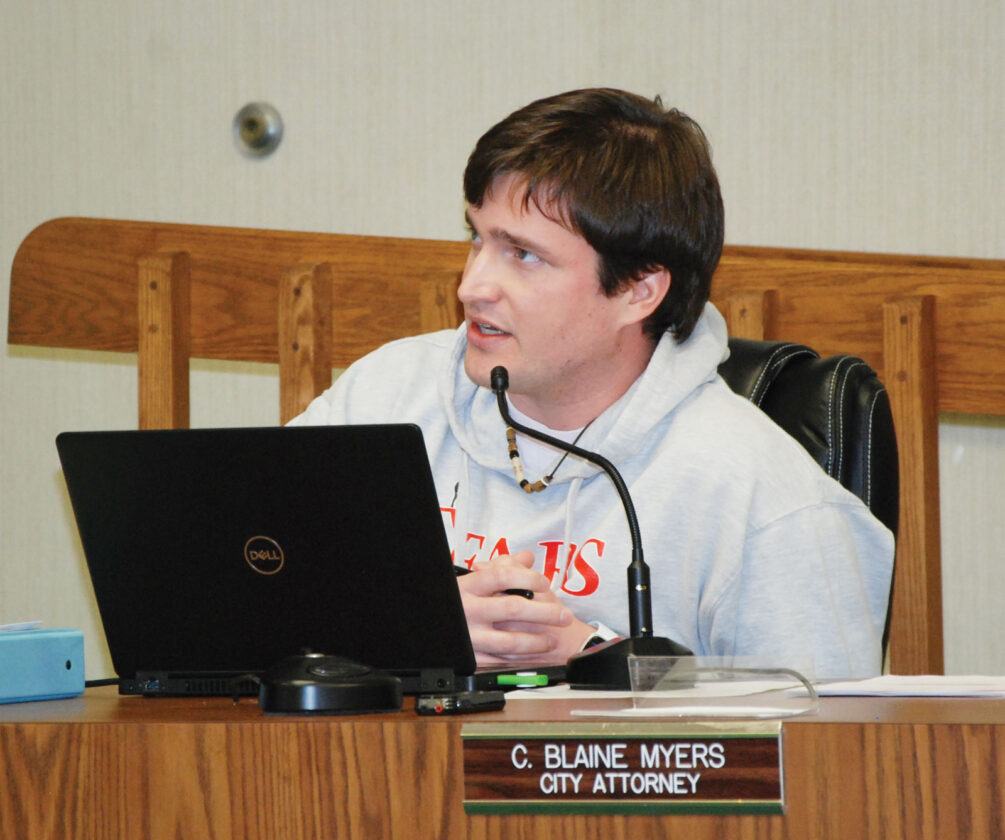
Parkersburg City Planner Connor LaVelle spoke during a Municipal Planning Commission meeting Friday at the Municipal Building. (Photo by Evan Bevins)
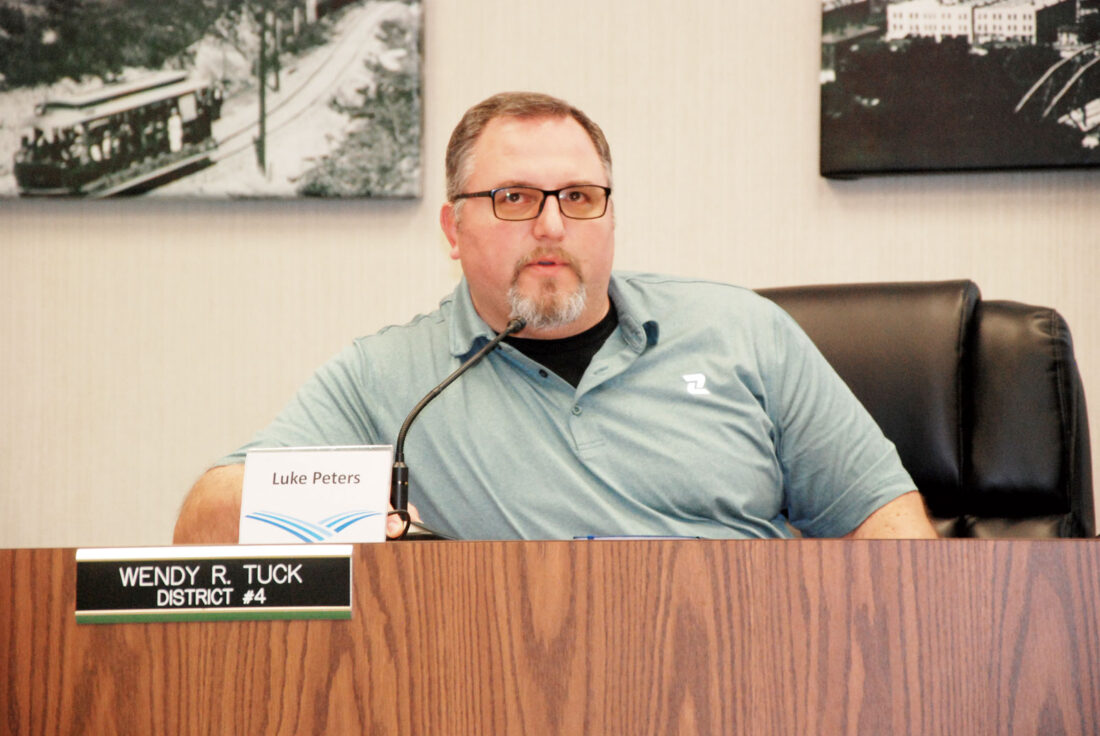
Parkersburg Municipal Planning Commission member Luke Peters discussed a proposed ordinance change during the commission’s meeting Friday at the Municipal Building. (Photo by Evan Bevins)
Parkersburg Municipal Planning Commission member Sean Andrews, right, spoke during a commission meeting Friday at the Municipal Building as City Councilwoman Jesse Cottrille, also a member of the commission, listened. (Photo by Evan Bevins)
Parkersburg City Planner Connor LaVelle spoke during a Municipal Planning Commission meeting Friday at the Municipal Building. (Photo by Evan Bevins)
Parkersburg Municipal Planning Commission member Luke Peters discussed a proposed ordinance change during the commission’s meeting Friday at the Municipal Building. (Photo by Evan Bevins)
Trending
PARKERSBURG -- A proposed ordinance change would remove the two-year time limit on rebuilding on non-conforming lots in the City of Parkersburg while requiring new structures to abide by guidelines related to space between structures.
The city's Municipal Planning Commission voted 9-0 Friday to refer the update to Parkersburg City Council.
A non-conforming lot is one that is smaller than the minimum square footage required in a particular zone. The minimum lot sizes for residential zones are 12,000 square feet for an R-1, 7,000 for an R-2, 6,000 for an R-3 and 5,000 for an R-4. But a number of lots platted prior to the adoption of the zoning code in 1973 are smaller and were grandfathered in, City Planner Connor LaVelle said.
Under existing code, if a structure is torn down on one of those lots, a new one can be built if it follows the prior structure's footprint. Such construction also has to take place within two years, which LaVelle said can limit redevelopment prospects.
"The intent is to open the door a little bit more," he said.
The revision would no longer limit new construction to the prior building's footprint, but the structure would have to meet setback requirements for how far it must be from the property line.
"Requiring the setbacks for rebuilding on any of these lots, the primary concern is the Fire Department," LaVelle said, referring to the danger of a fire spreading from one structure to another.
For example, in an R-4 district, a single-story structure must be at least five feet from the property line, with the total setback on both sides totaling 12 feet. The setback requirement increases with the height of the building, LaVelle said.
Some Planning Commission members said the setback requirements could also be limiting and they should perhaps be changed.
"We're lightening it up for the developer here and tightening it up for them there," commission member John Reed said.
Member Luke Peters said he felt the Fire Department's concerns about setbacks were valid.
LaVelle said a discussion about changing setback requirements could be beneficial and suggested it involve city departments and residents. He pointed out that the language of the revised ordinance only refers to setbacks for zones in general, so it would reflect any changes made in the future.
Commission member Francis Angelos asked if removing the footprint requirement would fit with the trend toward smaller houses.
"I think it would definitely make it more possible," LaVelle said.
The revision would also require the approval of the city's Board of Zoning Appeals for a conditional permitted use for a rebuilt structure, even if it matches the use of the previous building. For example, if a restaurant had operated in a residential district, a new restaurant could not be built on the lot without BZA authorization.
The ordinance now goes to council, where it would have to be approved on two readings to pass.
Evan Bevins can be reached at ebevins@newsandsentinel.com.