Foundations: Oil and gas industry helped shape Doddridge County
-
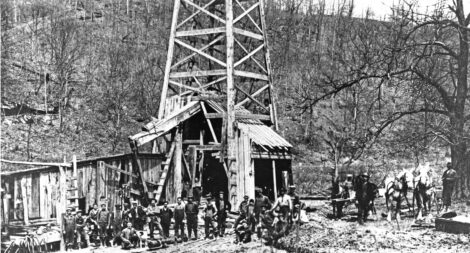
- The Ira Cox Farm, Middle Fork Hughes River, in Doddridge County, circa 1925, where an oil well was drilled. The area has had a long history in the oil and gas business that continues this day with development of the Marcellus Shale deposit. (Photo Provided)
-
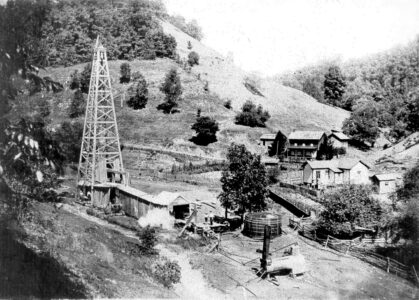
- The Deep Valley Compressor Station in August 1919 in Doddridge County. The station was built in 1917 to take oasing head gas from wells in the vicinity and extract gasoline, discharging residue gas into lines leading to Hasting Station. (Photo Provided)
-
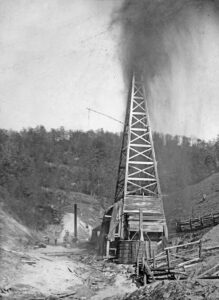
- The Cascara Well, circa 1892, in Doddridge County. Oil and gas production have had a long history in the county with a lot of people in the area involved. (Photo Provided)
-
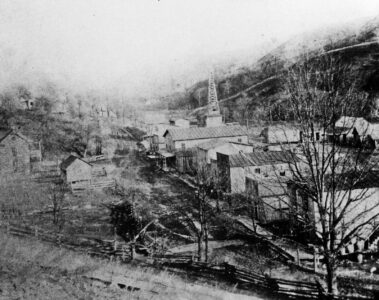
- The Porto Rico oil well being drilled in the early 1900s in Doddridge County. The county has had a number of oil wells and drilling sites over the years. (Photo Provided)
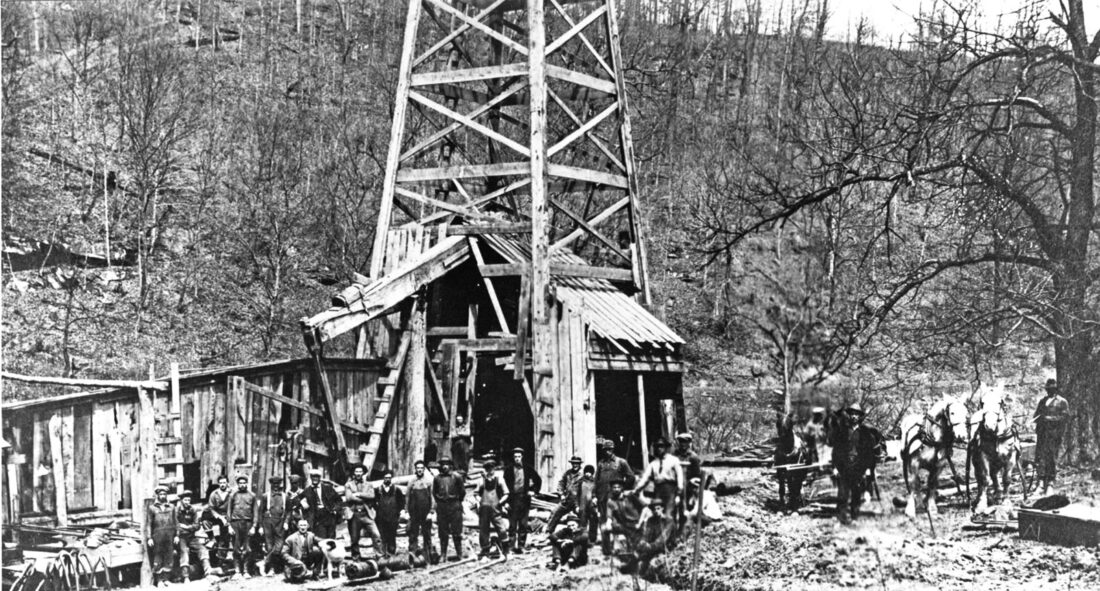
The Ira Cox Farm, Middle Fork Hughes River, in Doddridge County, circa 1925, where an oil well was drilled. The area has had a long history in the oil and gas business that continues this day with development of the Marcellus Shale deposit. (Photo Provided)
WEST UNION — Over the years, the oil and gas business has played an important role in shaping the history and livelihood of Doddridge County.
From the early oil boom days of the late 19th Century to the modern day facilities of Antero, the oil and gas business has played an important part in the history and future of the area.
The Center Point oil pool was opened by the South Penn Oil Company in 1892; between 1900 and 1929, many Doddridge wells commonly produced 50 to 100 barrels of petroleum per day, according to an article written by Christine M. Kreiser for e-WV – The West Virginia Encyclopedia online. In addition to South Penn, major companies included Carter Oil, the Philadelphia Company, Carnegie Gas, and Hope Natural Gas. Numerous local independent drillers also worked the oil and gas fields, Kreiser’s article said.
”Oil and gas production dropped off during the Great Depression, but new drilling began during World War II,” Kreiser wrote. ”Doddridge experienced a second drilling boom in the 1960s.
”A well at the mouth of Doe Run was found to contain 10 million cubic feet of gas and flowed 200 barrels of oil a day.”
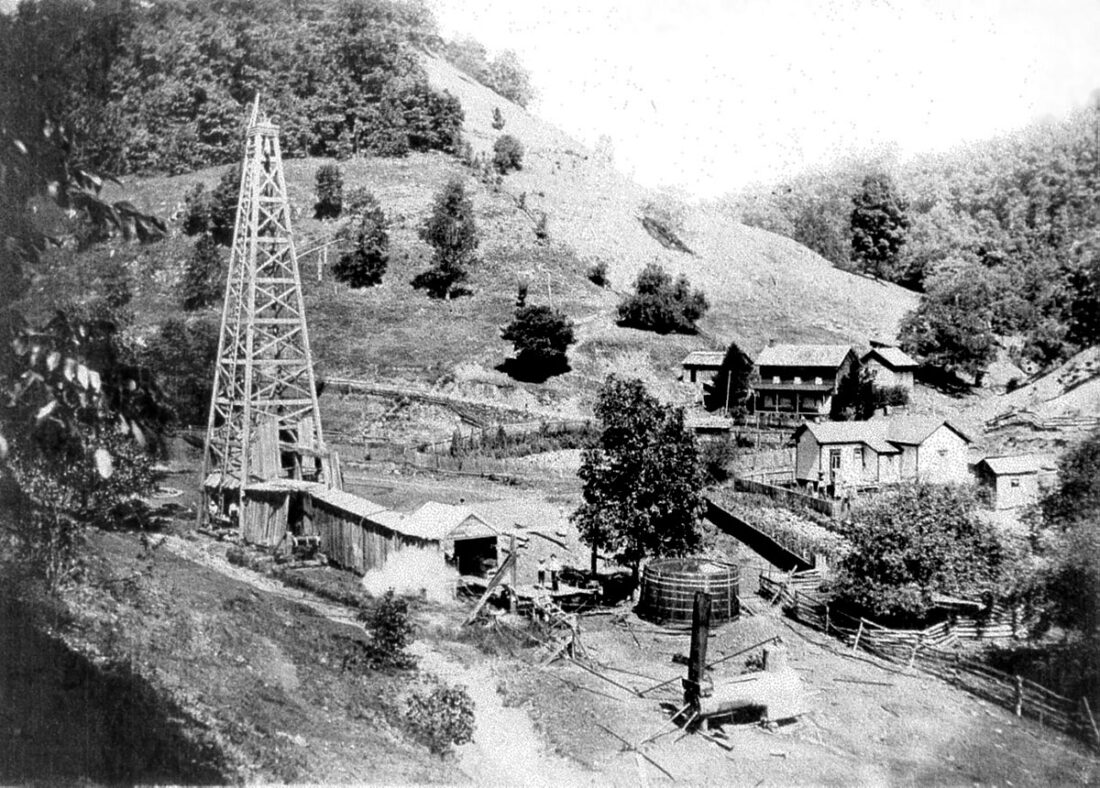
The Deep Valley Compressor Station in August 1919 in Doddridge County. The station was built in 1917 to take oasing head gas from wells in the vicinity and extract gasoline, discharging residue gas into lines leading to Hasting Station. (Photo Provided)
Doddridge County Commissioner Clinton Means started working for the Equable Gas Company in 1962, serving in a number of positions from working in the meter department to being a well tender and more. When he started he made $1.59 an hour.
”Oil and gas was picking up in the 60s,” he said. ”The gas production comes in waves where for around 10-15 years where they see steady production and then it drops and then it comes back up.”
Back when he started some of the well head gas was 10 to 25 cents per 1,000 cubic-feet.
They saw an increase in demand during the late 70s and oil was $40.10 a barrel which was unbelievable in 1979, Means said, compared to it now being around $80 a barrel.
”In the 90s, it went back up and when work began on the Marcellus Shale,” Means said. ”It has really brought our county around.”
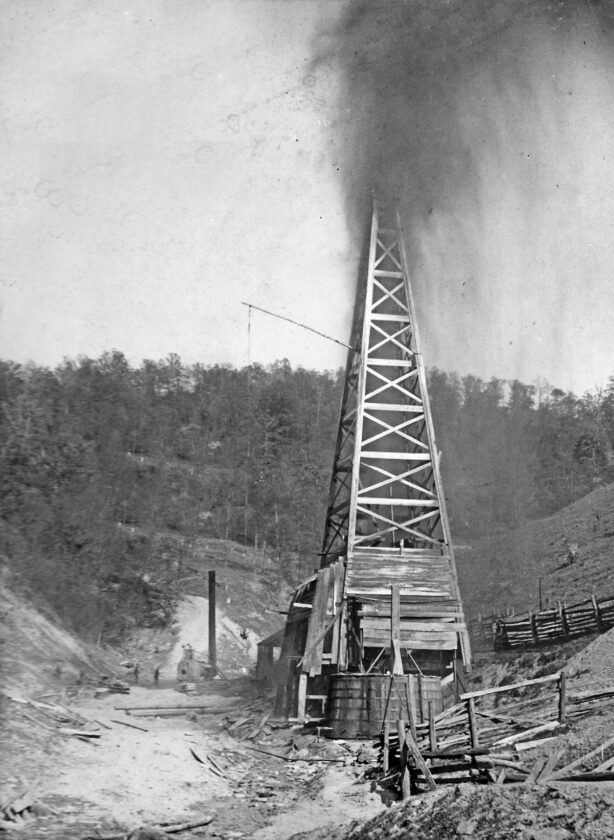
The Cascara Well, circa 1892, in Doddridge County. Oil and gas production have had a long history in the county with a lot of people in the area involved. (Photo Provided)
Means points to three new schools that were built in the county. They are building a new annex at their county courthouse and more.
”It is all due to the oil and gas revenue,” he said.
In 1994 the county budget was less than $1 million and now it is $16 million, due to the oil and gas business.
Patricia “Patti” Harris, President of the Doddridge County Historical Society, said there were landowners in the late 1800s-early 1900s who, like many others at the time, were poverty-stricken.
When the drilling started, and people who still had their royalty could get wells drilled on their property, many became successful contributors to the community. Local shops were thriving, and the area throughout Doddridge County saw growth, Harris said.

The Porto Rico oil well being drilled in the early 1900s in Doddridge County. The county has had a number of oil wells and drilling sites over the years. (Photo Provided)
“However, some took the money they made and squandered it in the short-term, disregarding the long-term,” she said. ”Several nice homes were built in the area during that period, but many owners could not afford to maintain them during downturns in the oil and gas business, and the homes fell into disrepair. It seems to have been a repeating cycle over the years.”
County officials are currently seeing a decline in revenues as the cycle continues to work out the way it has in the past, but Means remains positive about the future of oil and gas in the area.
”I think the future for the oil and gas is really good,” he said. ”I can’t see having an electric car in Doddridge County and being very dependable.
”We have to rely on the coal and natural gas for the electric we have.”
He points to power plants being in the region operated with natural gas which uses natural resources available within the United States.
”We just wouldn’t have a lot of anything if they tried to do away with the oil and gas like some people want,” Means said. ”We cannot afford to shut down the oil and gas industry as we would not have any plastics, would not have a lot of the clothing we have.
”You cannot run this country on wind power and solar power.”
The gas industry has provided a lot of good paying jobs in the county.
”When I retired in 1995, after 33 years, I was getting $12 an hour,” Means said. ”Now an oil and gas worker gets over $20-$25 an hour.”
His father worked for Pennzoil for 45 years. He made $86 a month during the late 1930s-40s, working six days a week and 10 hours a day. They were able to live in a company house at $6 a month. At the time, a sack of flour was 25 cents. Oil and gas can continue to benefit the county if the infrastructure can be put in place with waterlines, piping for gas and more.
”We are working on it,” Means said.
Local roads have been impacted by heavy use related to the oil and gas business, but many roads are better than what Means had as a boy in the 1940s which were a lot of dirt/mud roads and gravel with very few paved roads. He said the gas companies have been able to do work on some of the local roads.
Antero is currently a significant player in gas production and part of the local tax base. The county is engaged with the company on tax issues.
Antero Resources is an exploration and production company engaged in the development of natural gas in the Appalachia Basin, according to the company’s website. They have 423,000 net acres located primarily in northern West Virginia, operate over 1,000 producing horizontal wells and has 1,550 undeveloped core drilling locations, according to their website.
There is still natural gas to be gotten from the Utica Shale underneath the Marcellus Shale and companies are looking to pursue that.
Means estimates that the county has received around an average of $10 million in tax revenue from oil and gas production which can vary from year to year based on the amount of production.
According to Mineral Answers.com, from January 1985 to December 2018, 4,981 wells were drilled in Doddridge County.
Both Harris and Means are unsure how many active wells there are today in Doddridge County.
There have been people who have benefited from the oil and gas business, like royalty owners who have the mineral rights beneath their property.
“Others who didn’t have it received nothing but payment for the damages they incurred,” Harris said ”Many landowners were angry when they found they didn’t have the royalty or the leasing rights, as it had been sold off many years ago, in some cases, as far back as the latter 1800s, for a fraction of its worth.
”They, of course, didn’t fully understand what they had, let alone realize the value of its worth.”
The county has seen a massive increase in drilling again over the past several years.
”The local infrastructure is currently being updated, upgraded, and, in some cases, created anew,” Harris said.
Waterlines are being laid where none existed before. Broadband internet expansion is in the planning stage.
”This is all being done to help attract more businesses to the area and build the local economy further,” Harris said. ”A new library and a medical facility were recently built in the area.
”More needs to be done if we want to increase industry here. The county can and is building the infrastructure that can support it.”
Harris wants the county to learn from what has happened before.
”Let us learn from history,” she said. “Let’s continue to invest in the long term, so we have prepared other means to sustain this county when the oil and gas have been depleted.
”Let us be successful, but let us not change who we are as a people in the process. That’s my vision for Doddridge County.”
Local News

Morrisey signs bills cutting income tax, repealing high school transfer rule
New River Gorge National Park designated underrated destination by U.S. News

Trump signs order directing creation of a national voter list, a move already facing lawsuit threats
Prime Time: Parkersburg-area officials tour West Virginia’s first last-mile Amazon facility
West Virginia treasurer presents Parkersburg Police Department with $16K unclaimed property check