
Jefferson Elementary Center students learn life-saving skills
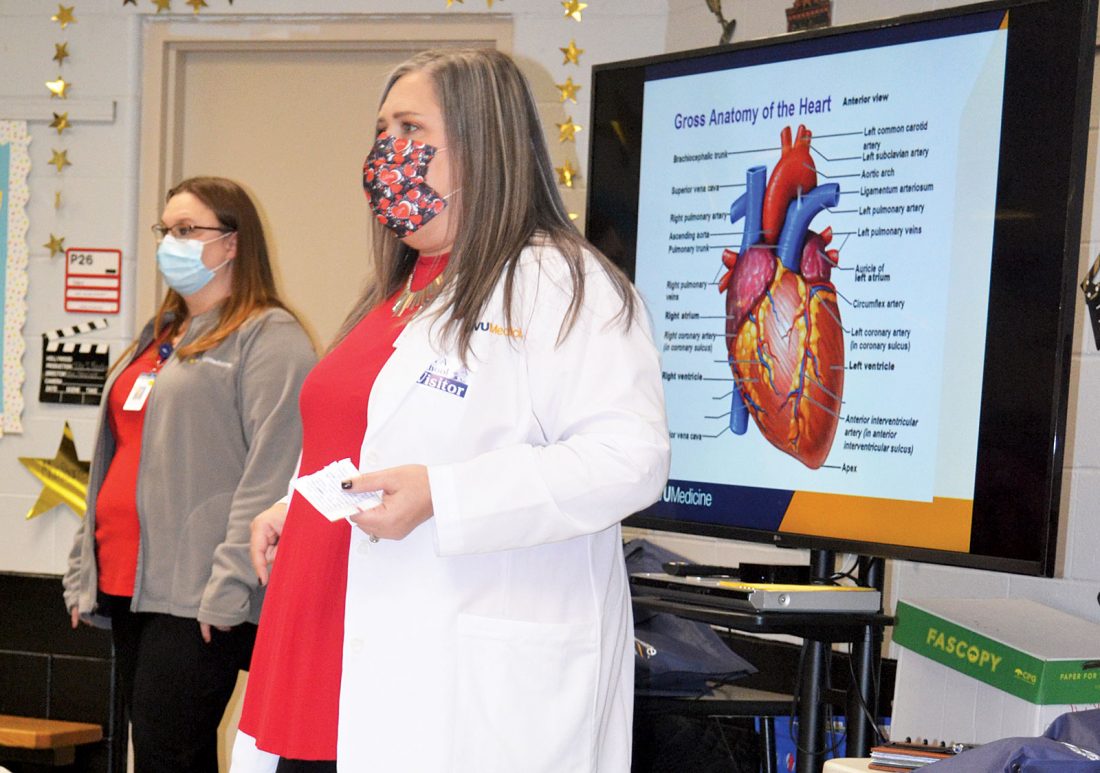
Kristina Brooks, director of cardiac services at WVU Health Camden Clark Medical Center, kick off a presentation Monday at Jefferson Elementary Center. (Photo by Larry Launstein Jr.)
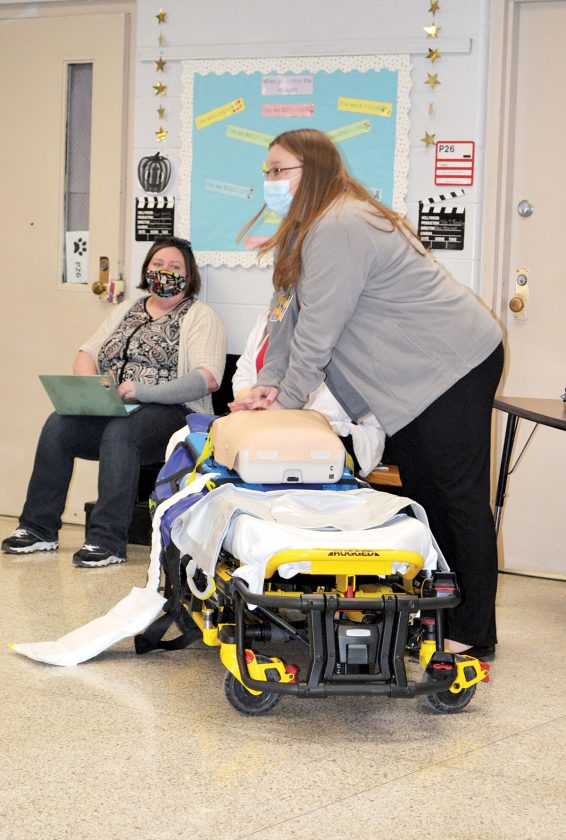
Callie Benedict, an EMT who works as the stroke and chest pain registrar for the WVU Health Camden Clark Medical Center as well as with the Warren Township Volunteer Fire Department, demonstrated how to apply hands-only CPR Monday to the students at Jefferson Elementary School. (Photo by Larry Launstein Jr.)
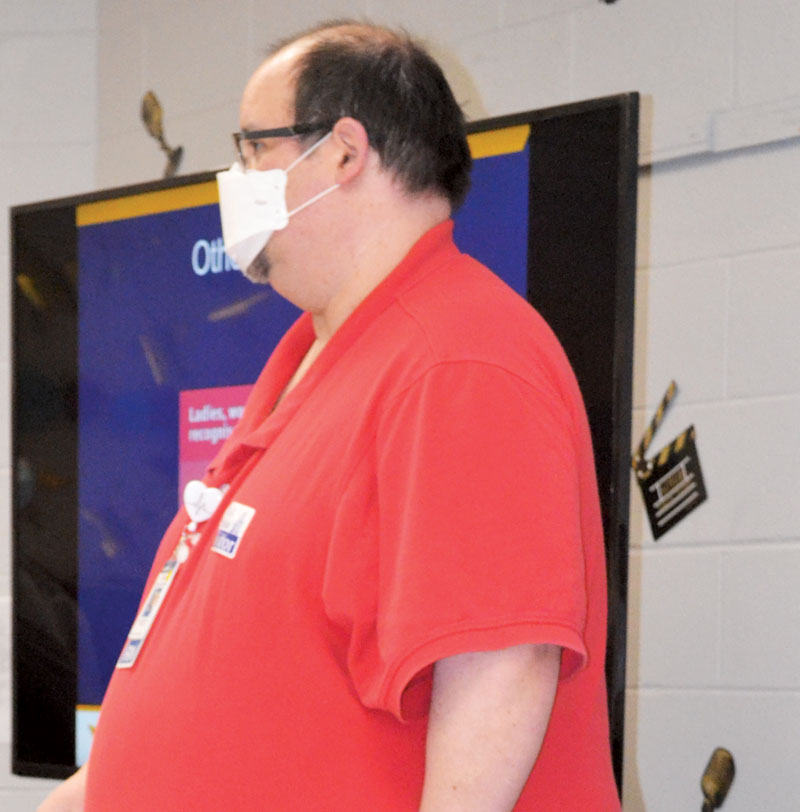
Rob Russell, a nurse who also is the strokes and chest pain coordinator at WVU Health Camden Clark Medical Center, became the second presenter Monday at Jefferson Elementary Center. (Photo by Larry Launstein Jr.)
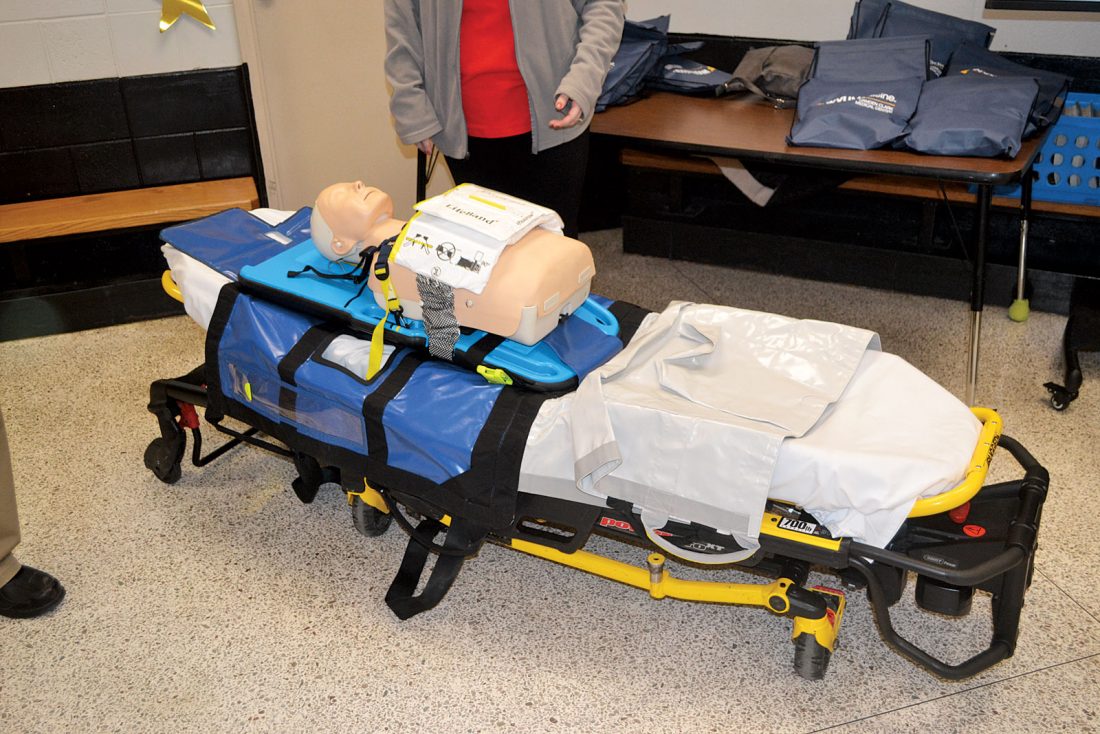
The AutoPulse machine was used to show hands-off and hands-only CPR at the demonstration Monday at Jefferson Elementary Center. (Photo by Larry Launstein Jr.)
Kristina Brooks, director of cardiac services at WVU Health Camden Clark Medical Center, kick off a presentation Monday at Jefferson Elementary Center. (Photo by Larry Launstein Jr.)
Callie Benedict, an EMT who works as the stroke and chest pain registrar for the WVU Health Camden Clark Medical Center as well as with the Warren Township Volunteer Fire Department, demonstrated how to apply hands-only CPR Monday to the students at Jefferson Elementary School. (Photo by Larry Launstein Jr.)
Rob Russell, a nurse who also is the strokes and chest pain coordinator at WVU Health Camden Clark Medical Center, became the second presenter Monday at Jefferson Elementary Center. (Photo by Larry Launstein Jr.)
The AutoPulse machine was used to show hands-off and hands-only CPR at the demonstration Monday at Jefferson Elementary Center. (Photo by Larry Launstein Jr.)
Trending
PARKERSBURG -- Students at Jefferson Elementary Center got a lesson in life saving for those with heart attacks and strokes at a presentation Monday by the WVU Health Camden Clark Medical Center.
Fifth-graders participated in a hands-only CPR demonstration, learning what to do if someone starts having cardiac or stroke issues.
Kristina Brooks, director of cardiac services at Camden Clark, asked students to make a fist and then put it on their left chest.
Brooks then said, "can you believe that your heart is the size of your fist, but it's about this size. And it plays such an important role in the body, because our body, we need oxygen to survive. The heart is what delivers oxygen, via our blood, to all parts of our body. It's what allows us to live."
After that, Brooks showed a slide of the different parts of the heart and showed how the two different pumps work. The left side is what sends the oxygen through the blood to the rest of the body and the right side brings the blood back after the oxygen is expended in the body.
Then, Brooks explained the function of the lungs, which is to bring oxygen to the blood.
She explained to the students about what causes a heart attack, when plaque gets inside the coronary arteries and oxygen cannot enter the heart.
The presentation then switched over to Rob Russell, a nurse who also is the stroke and chest pain coordinator at Camden Clark, who showed videos about what a heart attack is, the symptoms and to call 911 in the event of an emergency.
According to the video and Russell, many heart attacks don't start out very badly. The symptoms include difficulty breathing, chest pains, pain in the arm or jaw, sweats, being very tired and nausea.
Russell said, "chest pains are one of the most common symptoms and it's the one that scares people the most."
"One thing you may not know, heart attack symptoms for women are different a lot of times than they are for men. Women don't always experience the high degree of pain in their chest for a variety of reasons," Russell said. "Some of it is that the arteries they tend to get blocked up are smaller and it causes less pain when they get blocked out."
Throughout the heart attack part of the presentation, the children were asked what to do if they see anyone experiencing those symptoms. The kids said in unison, "call 911."
The presentation then switched to strokes, and Russell said, " Sometimes they call a stroke a brain attack. They kind of work the same way as a heart attack. A heart attack is when your heart is not receiving enough blood to get oxygen and that lack of oxygen is what makes the pain happen. Stroke is similar in many cases. You are not getting a constant blood flow to your brain and it causes a wide variety of symptoms."
The students were shown another video, dealing with strokes.
According to the video, "when a stroke happens, a person's brain is not getting enough blood or oxygen. We have an easy way for you to recognize the signs of a stroke."
They used the term FAST, meaning "F" stands for face drooping, "A" for arm movements, "S" for speech difficulty, and "T" meaning time to call 911.
Russell then added, "we actually now use BEFAST. So, in addition to the face, arms, speech and time that they talked about in the video, we also pay attention to balance and changes in vision."
"B" stands for balance, and "E" stands for eyes.
"So, when your brain is deprived of oxygen depending on where, what part of the brain it's happening, there could be a variety of different symptoms," Russell said. "Another thing that happens when people are having a stroke is one side of the body or the other will become weak or even paralyzed. So, if somebody's having trouble with their balance, it could be that one of their legs is not working right."
He also said that one may feel dizzy, and another thing that can occur is that somebody who is normally able to see, that person will lose the ability to see in one of their eyes.
Another symptom Russell discussed was legs falling asleep. He also demonstrated how a person's arms could look when they are having a stroke.
"If you ask somebody to put their arms out in front of them, normally, people will be able to hold their arms out and keep them there. But if somebody's having a stroke, you might notice that one of their arms is drooping and they can't keep it, lift it up, so sometimes they can't lift it at all," Russell said.
He also said people having a stroke may have slurring of words, when they can normally speak clearly. Suddenly, they start to slur. They may also have trouble figuring out words.They know what they want to say, but they cannot make the words come out right.
When asked about blood clots, Russell said, "Yes. Sometimes your arteries can have a lot of gunk in it, and sometimes that gunk can break off and completely plug up one of your arteries."
Russell said there are two different kinds of strokes, ischemic and hemorrhagic. Ischemic strokes occur when not enough blood is getting to the brain due to blockage and hemorrhagic strokes occur when there is bleeding in the brain. Hemorrhagic strokes are much more serious.
Callie Benedict, an EMT who works with the Warren Township Volunteer Fire Department and is the stroke and chest pain registrar at Camden Clark, talked about taking one's own pulse to see if it's normal, and showed the children about how to do CPR.
Benedict said the American Heart Association now says it's possible to do CPR with hands only and not by mouth-to-mouth anymore.
The children then had to learn to use as many beats as in a video featuring Baby Shark. Benedict said that this is the only form of CPR that the children are allowed to use.
And finally, Benedict closed the presentation by showing them a no-hands device called an AutoPulse. It automatically gives a patient a pulse, freeing those in an ambulance to do other things needed to help treat a patient, such as give them IV's.
The ambulance and the AutoPulse used in the presentation were lent by the Warren Township VFD.