
Moratorium advances: Parkersburg council to pause new treatment facilities
Parkersburg council to pause new treatment facilities
Trending
PARKERSBURG -- Parkersburg City Council on Tuesday approved the first reading of an ordinance placing a one-year moratorium on the establishment of any new residential substance abuse treatment facilities -- from large rehab centers to sober-living group homes -- through June 30.
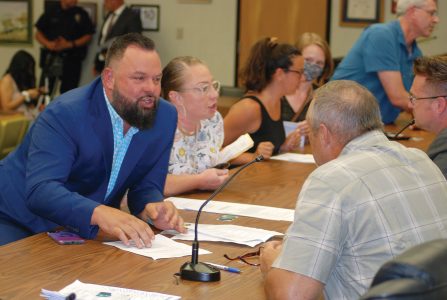
More than 130 people filled the council chambers for the meeting, with nearly 20 speaking during the public forum, which council unanimously voted to extend. More than half of those speaking were opposed to the moratorium, which must be approved on final reading July 27 before it could go into effect.
The number of licensed recovery beds in Wood County has increased from 30 in 2017 to 283, all but 80 of which within the city limits. The ordinance links the proliferation of these facilities to an increase in homelessness and related crime in the city, saying people from outside the area come here for treatment and some leave the programs with nowhere else to go.
Councilwoman Sharon Kuhl said at least three properties have been purchased by companies with plans to turn them into group recovery residences and people in those neighborhoods are concerned about their arrival.
Parkersburg resident Rich Walters, who works with people in recovery throughout the area, said the rehab facilities are only the front end of the solution.
"We don't have the back end built out, which is recovery housing," he said. "Taking away the recovery housing does not fix the problem."
Walters said there are only 70 recovery beds in the county, and it's important for people who have completed, for example, a 28-day treatment program to have a safe and sober place to continue their recovery.
Autumn McCraw with the West Virginia Alliance of Recovery Residences said her group provides standards, guidance and certification for such facilities, to ensure they are responsible and don't just put people out on the street if discharged from a program.
"Recovery housing is the essential piece that Parkersburg is missing," she said.
Patrice Pooler is executive director of the Mid-Ohio Valley Fellowship Home, which has operated in the area for 50 years and has five sober living facilities.
"I have seen hundreds of miracles come through our" doors, she said. "We house the sons and daughters of our community, mothers and fathers, brothers and sisters."
Eric Beeson, a counselor who also is in long-term recovery, said the high number of recovery facilities in the area could be beneficial.
"If it was any other industry, would we be having this conversation?" he said. "People in recovery are the most passionate, resilient people I've ever met in my life."
A couple of speakers seemed to be in favor of the moratorium, but acknowledged the positives that come from the recovery efforts others described.
"I don't mean to be mean," Parkersburg resident Teri Miller said. "But that is my concern, is how it (the recovery facilities) is all lumped in one area," referring to facilities along Market Street and downtown.
Kuhl said she is not opposed to group homes, but is concerned about the way some of them have not informed neighbors of their plans until after a property is sold. Group homes decrease the values of neighboring properties, which people have often worked hard to build up and improve, she said.
Quoting to a famous line from the "Star Trek" franchise, Kuhl said, "the needs of the many outweigh the needs of the few.
"In our position as City Council, that's the position that we are in," she said.
Kuhl and Councilman J.R. Carpenter said the moratorium could provide a chance for groups to work together and find better solutions.
"That's all this is is just hitting the pause button, taking a breath," Carpenter said.
"People are dying," said someone in the audience as Council President Zach Stanley called for order.
The ordinance passed 6-1 on first reading, with Councilwoman Jesse Cottrille and Councilman Mike Reynolds absent. Councilwoman Wendy Tuck cast the dissenting vote.
Tuck said she understood residents' concerns, but hoped there were ways to address them without imposing the moratorium. Referring to the disparity between treatment beds and recovery housing, she said, "That is 200 people that are going to wait a year?"
Tuck made motions to amend the moratorium to "have a year of conversations" instead or send the ordinance to the Committee of the Whole for further consideration. Both died for lack of a second.
Mayor Tom Joyce said he wasn't opposed to recovery facilities, but to people from outside the state and the region coming to the area for treatment. One community shouldn't have to solve the problems for others in different parts of the country, he said.
Earlier Tuesday, the city received a letter from the American Civil Liberties Union of West Virginia, claiming the moratorium would violate the federal Americans with Disabilities Act, the Fair Housing Act, state law and the equal protection clause of the 14th Amendment to the U.S. Constitution.
"While this proposed ordinance will, if enacted, almost certainly violate various state laws and federal laws, and impinge on constitutional rights … it also, at its core, will further marginalize people who are already struggling," says the letter from ACLU-West Virginia Legal Director Loree Stark. "We urge you to meet those in need with empathy and compassion, not fear and animus."
After the meeting, Joyce said "the ACLU has every right to exercise their mission.
"My job is to stick up for the citizens of Parkersburg," he said, noting a number of residents and businesses have expressed concern about the increase in recovery facilities.
In other business, council took no action on the final reading of an ordinance allowing fireworks to be discharged in the city on July 4 and 5, so the ordinance died without any discussion.
No one made a motion to vote on a resolution that would have authorized the sale of beer and wine at Bicentennial Park for an October event by Audiology Services of West Virginia. During the public forum, Pooler questioned the inclusion of that item on an agenda that was limiting recovery options.
Evan Bevins can be reached at ebevins@newsandsentinel.com.