
Wine appears in court for hearing about questioning
Trending
PARKERSBURG -- Whether the girl who is accused of setting a Davisville fire that resulted in the deaths of two people fully understood what would happen when she gave a statement seemingly confessing to the crime was discussed in court Thursday.
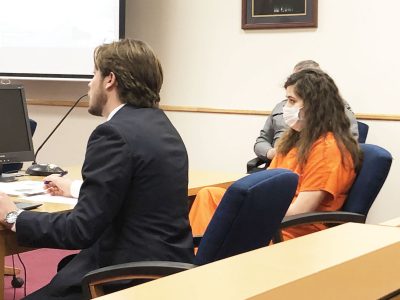
A hearing was held before Wood County Circuit Judge J.D. Beane in the case of Madison Wine who has been charged with first-degree arson and murder in the deaths of Robert Taylor, 58, and his wife, Charolette, 52, at their Davisville home in May 2019.
She was 16 at the time of the incident and the Taylors were her adoptive parents. Wine is being tried as an adult.
Wood County Prosecutor Pat Lefebure maintained in court that Wine voluntarily gave the statement which led to her arrest.
An expert witness for the defense, psychiatrist Dr. Roy Lubit, who participated by an audio call online, said Wine did not understand the full nature of what talking to an investigator meant, did not have a full understanding of what her Miranda Rights meant and was put in a position where she was overwhelmed and felt pressure to confess to the crime as well as their interactions gave her a false sense of security. Also, her being of a young age, having experienced trauma earlier in her life the late hour and other factors contributed to how these interactions played out leading to the alleged confession.
"Altogether that remarkably impairs an individual's ability to think through what is in their best interest," he said.
Lubit, who went to Cornell and Yale universities, has done work in forensic psychiatry and child/ adolescent psychiatry.
Jason Baltic of the State Fire Marshal's office testified about talking with Wine the night of the fire after 3 a.m., how he had a female deputy in the truck at the time while he talked with Wine. The deputy, Tasha Hewitt, testified about Baltic giving Wine her Miranda rights and asking if she understood them on multiple occasions.
He also testified that Wine did not ask for an attorney at any point during their discussion nor did she ask any questions about her Miranda rights. He also said he did not convey to her that their discussion could lead to her arrest and being charged in this matter. He made a recording of their conversation.
Testimony revealed that Wine responded seven or eight times that she did not know the origin of the fire or how it started and stated she did not start it, before eventually giving a statement that she set the fire.
Lubit said the situation Wine was in would have led her to say she understood her rights when she did not.
"Children have a strong tendency to say 'yes' when asked questions and will say they understand things when they do not," he said.
He also said the child feels pressure to give an answer that they think the adult wants to hear.
Psychologist Dr. Timothy Saar, called by the prosecution, testified he felt Wine knew what was being asked of her when she was being questioned about the origin of the fire.
Saar attended the University of Southern California, Cambridge and other schools. He has experience with forensic psychology where they work at determining if people might be lying in a criminal matter.
He testified he felt Wine was intelligent enough to understand what was being asked of her at the time of her questioning, that the late hour did not impact the answers she was giving. He said the tone of the interrogator's voice never raised nor did he become apparently angry or aggressive.
Defense attorney J. Morgan Leach asked if being calm and friendly was also a way of getting a confession from someone. Saar said it was possible. Also, with the number of psychological problems Wine suffered from it was hard for her to fully grasp what was being asked at a late hour. Also, their conversation may have given the implication that the Miranda Rights no longer applied.
Saar said many factors can contribute to the situation in many different people.
"I don't think that happened in this instance," he said.
Saar thought Wine was intelligent enough to understand what was happening and what was being asked of her. In his opinion, she knowingly waived her rights and freely gave a statement to the investigator.
Beane did not rule on the matter Thursday. He wanted time to review the audio recording of the interview with Wine as well as the reports from both doctors. He gave both sides until March 19 to submit all the relevant reports.
A date would be set then for him to rule on the matter. A trial date would also be set at that time.
Contact Brett Dunlap at bdunlap@newsandsentinel.com