
West Virginia assisted living facilities, day care staff to be tested for virus
Also plans to focus on African American community
Trending
CHARLESTON -- West Virginia has completed coronavirus testing of all nursing home residents and staff, but a new executive order issued Wednesday calls for mandatory testing of assisted living facilities and daycare staff.
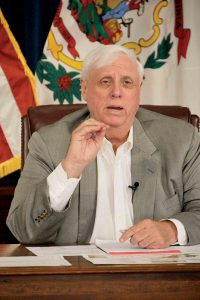
Justice announced the new executive order during his daily coronavirus briefing at the Capitol in Charleston.
"It is our hopes in every way that we can have all our day cares up and going," Justice said. "We need them to be able to take care of our children as our workers go to work. There is no question about that. But we can absolutely not risk anything to our children or anything our children might take back through the interaction with staff or whoever it may be."
Justice said several day cares have already moved ahead with voluntary testing, but the motivation for the executive came after Justice announced that four day care workers in Kanawha County tested positive for the coronavirus even though they had no symptoms. Day cares were allowed to reopen last week as part of the first week of Justice's phased reopening plan.
"As we moved through testing and we completed our testing of our nursing homes we would go immediately to our day cares and we would make it mandatory that we test all of our day care staff," Justice said. "None of these people had any symptoms. We've been telling you this is the way it is...you don't have to have symptoms to be contagious to many others."
State officials have said that testing for the state's 93 assisted living facility residents and staff would start after nursing home testing was finished. The Department of Health and Human Resources announced Wednesday that all 123 nursing homes had completed testing for COVID-19, the respiratory virus that has infected 1,248 West Virginians and has killed 50 people, most of whom were nursing home residents.
"We want to be smart and we absolutely want to be protective of the old and first and foremost look after them," Justice said. "We are a state that was the highest risk state of all; the state with the most elderly, a state with the most chronic illnesses. We can't forget that."
Of the 123 nursing homes tested by Health and Human Services and the West Virginia National Guard, residents and staff in 25 nursing homes tested positive for the coronavirus. According to the department, 177 residents and 140 staff members tested positive for COVID-19. Of the 50 deaths reported statewide, 33 were attributed to nursing homes -- 13 deaths alone were attributed to Eldercare Health and Rehabilitation in Jackson County.
"This nasty killer is still with us right this second, and this nasty killer will take some of your loved ones away," Justice said. "We've lost 50 people, and that's terrible, but compared to the states around us that is just a fraction."
Justice also announced tentative efforts to create a task force focused on the state's African American community. Working with the Herbert Henderson Office of Minority Affairs, Justice said health officials would do target testing in African American communities. According to the U.S. Centers for Disease Control, preliminary data shows coronavirus infections are having a disproportionate effect on minority communities.
"We're looking at these communities doing the prudent-type work that will enable us to ensure we won't have critical problems in those communities as well," Justice said.
Also Wednesday, Justice and health officials explained why only two kinds of businesses -- wellness centers operated by licensed health care providers and drive-in movie theaters -- were being allowed to open starting Monday as part of week three of the reopening phase in. Dr. Clay Marsh, the state coronavirus czar, said health officials are using the time to monitor the coronavirus spread to see if any hotspots develop after the reopening of certain small businesses and easing of social distancing restrictions.
The state's cumulative percent of positive test results remains low at 2.2 percent, but the state's R0 number -- the number of infections that could be spread from a single person -- has increased slightly over the last few days, though the number remains below one.
"Many of our metrics look good...but those are metrics that reflect what is happening today," Marsh said. "There are other metrics that give us a feel for what might be brewing underneath. To express new cases and new spread, it takes about seven to 14 days. At least 45 percent of people will be pre-symptomatic or asymptomatic that will have the virus and be able to spread it. Up to 70 percent of people will be undiagnosed."
Steven Allen Adams can be reached at sadams@newsandsentinel.com.