
Williamstown veteran proud of service even after fallout from Nevada nuclear tests
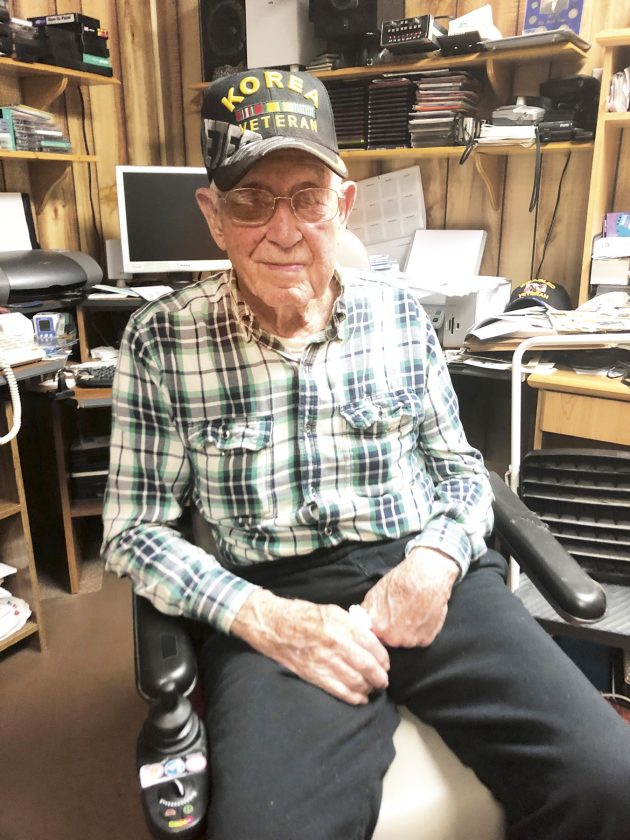
U.S. Air Force veteran Frank H. Vaught, 89, of Williamstown, served from 1951 to 1953, including a tour of duty in the Korean War. Vaught was at Indian Springs, Nevada, on Jan. 27, 1951 when the first continental U.S. nuclear detonation after the 1945 Trinity test was conducted. (Photo Provided)
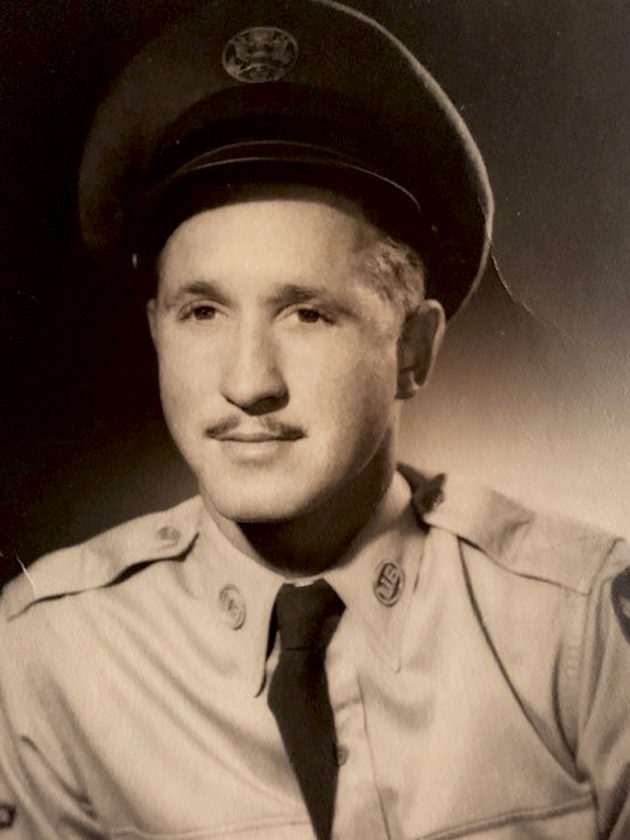
U.S. Air Force veteran Frank H. Vaught, 89, of Williamstown, served from 1951 to 1953, including a tour of duty in the Korean War. Vaught was at Indian Springs, Nevada, on Jan. 27, 1951 when the first continental U.S. nuclear detonation after the 1945 Trinity test was conducted. (Photo Provided)

A diagram showed where weapons testing was done, including atomic weapons, at the Nevada Proving Grounds. The site was established on January 11, 1951, for the testing of nuclear devices, covering approximately 1,360 square miles. (Image Provided)
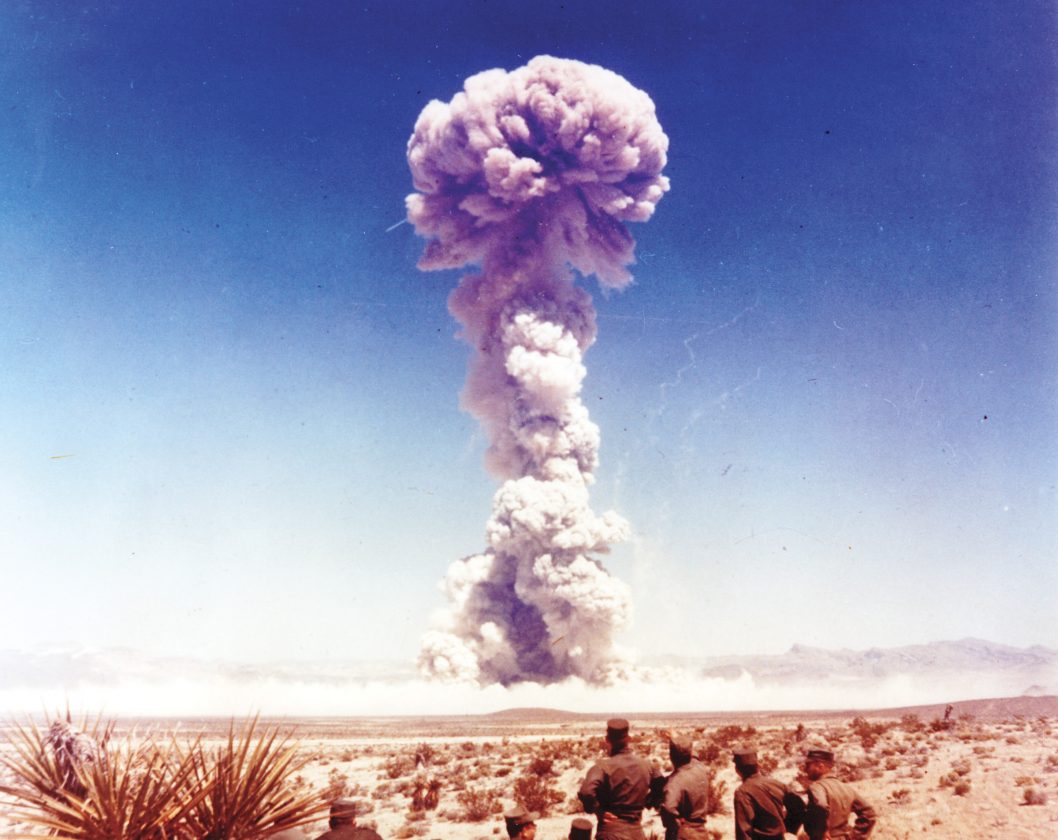
A blast from Operation Buster–Jangle, a series of seven (six atmospheric, one cratering) nuclear weapons tests conducted by the United States in late 1951 at the Nevada Test Site. (Photo Provided)
U.S. Air Force veteran Frank H. Vaught, 89, of Williamstown, served from 1951 to 1953, including a tour of duty in the Korean War. Vaught was at Indian Springs, Nevada, on Jan. 27, 1951 when the first continental U.S. nuclear detonation after the 1945 Trinity test was conducted. (Photo Provided)
U.S. Air Force veteran Frank H. Vaught, 89, of Williamstown, served from 1951 to 1953, including a tour of duty in the Korean War. Vaught was at Indian Springs, Nevada, on Jan. 27, 1951 when the first continental U.S. nuclear detonation after the 1945 Trinity test was conducted. (Photo Provided)
A diagram showed where weapons testing was done, including atomic weapons, at the Nevada Proving Grounds. The site was established on January 11, 1951, for the testing of nuclear devices, covering approximately 1,360 square miles. (Image Provided)
A blast from Operation Buster–Jangle, a series of seven (six atmospheric, one cratering) nuclear weapons tests conducted by the United States in late 1951 at the Nevada Test Site. (Photo Provided)
Trending
WILLIAMSTOWN -- Through everything he has experienced as a result of his military service, including being exposed to fallout from an atomic bomb test, U.S. Air Force veteran Frank H. Vaught said he has never once regretted being able to serve his country.
The Williamstown resident had served from 1951 to 1953 which included a tour of duty in the Korean War. He said his time at Indian Springs Air Force Base in Nevada would have a profound impact on him for the rest of his days.
Around 1948, Indian Springs, about 40 miles from Las Vegas, was reactivated as Indian Springs Air Force Base by the new United States Air Force, with a new role as a new weapons systems and aircraft research and testing site.
Among missions were support for nuclear arms testing at the Nevada Proving Grounds, high-altitude balloon search and retrieval, new gunnery and rocketry systems and testing of experimental aircraft.
On Jan. 27, 1951, the first nuclear bomb test on U.S. soil since the Trinity test in 1945 was conducted at the nearby Nevada Test Site when Vaught was at Indian Springs.
At almost 90, Vaught still recalls when he was a 19-year-old kid in the desert having just completed basic training at Nellis Air Force Base. Indian Springs was used as a test range where pilots from Nellis practiced bombing and strafing runs.
He believes there might have been around 50 people at Indian Springs at the time. Crews would have to drive out in the desert to do certain duties and were close to the mountains where the atomic bomb testing would be done on Frenchman's Flat located above where they were positioned.
One of his jobs was to monitor 10-foot targets during strafing runs. From a line where he was stationed, he monitored if they stopped shooting before they got to the line. He would call in to the control tower and report the results, upon which pilots were graded.
Other people monitored regular bombing targets with conventional weapons on old automobiles and other targets.
Vaught said they returned to base before the atomic bomb was dropped.
"I was out there right after during the next day or two," he said. "Can you imagine an atomic bomb going off on that flat above us (the day before).
"We had no protections down there. We didn't know anything."
Vaught said the blast itself was not that far away from them at their base and the immediate area received fallout from the bomb.
"I was just a boy," he said. "I didn't know about that stuff. I never thought I could be radioactive. I wouldn't have known what that meant even if someone would have told me."
He remembers the initial blast was not that bad, but the shockwave that followed was strong. They still had to hit the ground when the bomb went off. Buildings on the base were knocked down.
After the test, Vaught said he began having bad headaches and developed ulcers. He was told by medical personnel that they couldn't help him. He asked to be transferred out of Indian Springs. He was given the choice of being discharged or being stationed in Korea.
"I was in the U.S. Air Force to serve my country," he said.
He was shipped to Korea in late 1951 and stationed there for over a year due to his experience with operating and maintaining power systems. He worked in the Electrical Maintenance Department. He was responsible for furnishing power to sites that needed it.
He was only 20 miles from the 38th parallel in Korea, the dividing line between North and South Korea. He had worked for the power company before going into the service and worked for MonPower for 43 years after getting out of the service.
After Korea, he was stationed in Florida for awhile where he did additional linework helping out local power companies following a hurricane. He was honorably discharged a short time later in late 1953 as an Airman First Class and returned home. He continued serving in the Air Force Reserves until 1958
He eventually bought a farm in Stanleyville, Ohio, outside Marietta. A couple of years after returning home, he got married to his wife, Fay.
"We were married for a couple of years, but we did not have any children," he said.
Vaught was sent to a doctor who determined he was sterile. It still didn't occur to him that this could have been a result of the radiation he was exposed to. After leaving Indian Springs, he stopped having the headaches he was having and the ulcers had cleared up so he did not give it much thought.
A couple of years after finding out he was sterile, he started experiencing blindness while working on his farm. He went to a doctor and was sent to the Cleveland Clinic where doctors operated on him to bring his sight back. It left scar tissue all around his eyes which impacted how he saw things and it took awhile for himself to adjust to it.
A lot of the chemicals and water used around his farm were tested without a specific cause determined.
"I still never thought of radiation," Vaught said.
In his later years, around the time he turned 80, he began talking with doctors and determined that a lot of the problems he experienced was due to radiation he was exposed to, including becoming sterile. It could also impact the eyes because they contain the smallest veins of anything in the human body, he was told.
The effects of that test have followed him throughout his life.
"Every doctor I have told this story to would tell me that is how radiation impacts the body," Vaught said.
Vaught said there were a lot of people exposed at the time through numerous atomic tests, part of which was to see the impact on military personnel. He has held on to all the paperwork of his service, where he was stationed and what medical officials have determined with him over the years.
Even with the atomic bombs dropped on Hiroshima and Nagasaki at the end of World War II, the full impact of the effects of radiation were not widely known by 1951 and many hospitals in the U.S. were not readily testing for it.
"I could be the only person in the Mid-Ohio Valley who has ever seen an atomic bomb blast and been through it."
Vaught has recently met with U.S. Representative David McKinley, R-W.Va., to discuss his situation. He said he is not after money. Vaught has seen so much fraud occur in people trying to get something from the millions the government has paid out.
In honor of Veterans Day, he wants people to remember that this happened to U.S. servicemen, like himself, whose lives were impacted like this in the early days of the Cold War. He felt people did not fully understand what atomic weapons could do and the tests being conducted at the time were treated like standard weapons tests.
He was able to come home and work for 43 years, served as a township trustee for Fearing Township from November 1989 to December 1993. He recently lost his wife after being married for 64 years.
Through it all, he was proud to be able to serve his country.
"I absolutely do not regret it," he said. "There were thousands who were worse off than I was with legs took off and arms took off.
"I consider myself lucky. There were thousands more who did not come home."
Contact Brett Dunlap at bdunlap@newsandsentinel.com