
Boaz blacksmith competes on History Channel’s ‘Forged in Fire’
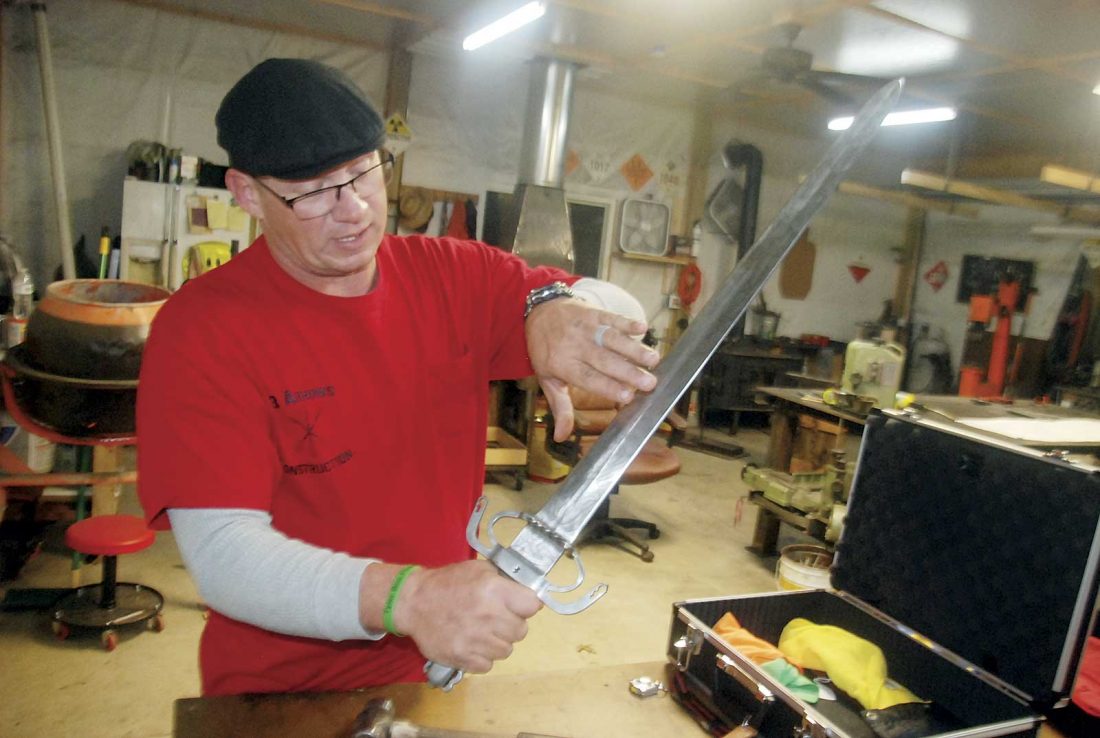
Boaz resident Brent Smith discusses the replica Tizona sword he made for an episode of the History Channel’s “Forged in Fire” that aired Nov. 6. The blade he’s holding is a backup he started during filming and recently completed. (Photo by Evan Bevins)
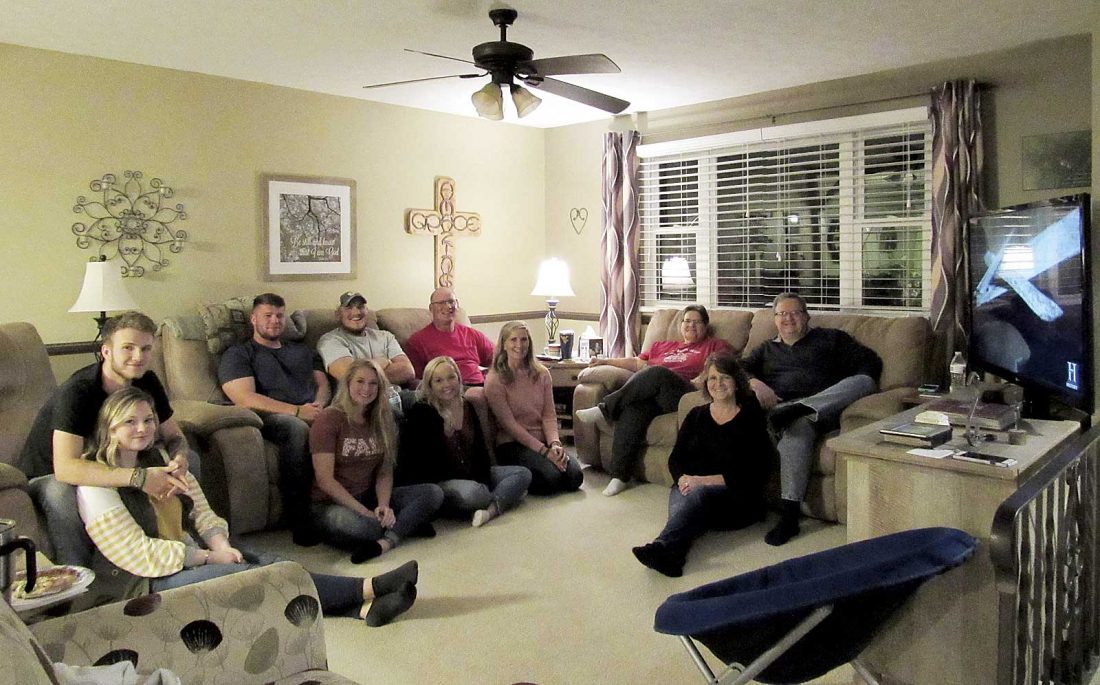
Brent Smith’s friends and family gathered at his Boaz home Nov. 6 to watch him compete on an episode of the History Channel’s “Forged in Fire.” (Photo by Evan Bevins)
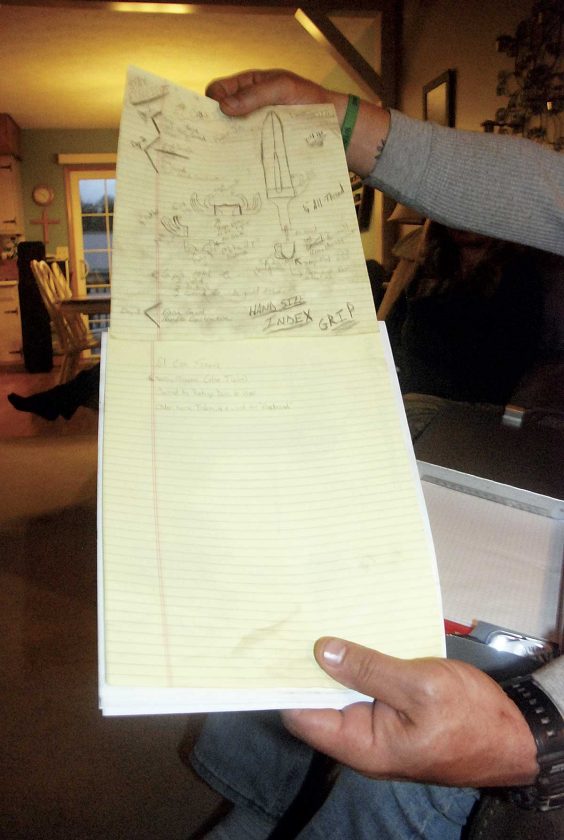
Boaz resident Brent Smith displays the sketches and notes he made on the way back from filming the first part of his appearance on “Forged in Fire,” as he prepared for the final challenge — building a replica of El Cid’s Tizona sword. (Photo by Evan Bevins)

Boaz resident Brent Smith, center, is shown in July with members of the “Forged in Fire” crew during filming at his workshop for the episode of the show that aired Nov. 6. (Photo by Evan Bevins)
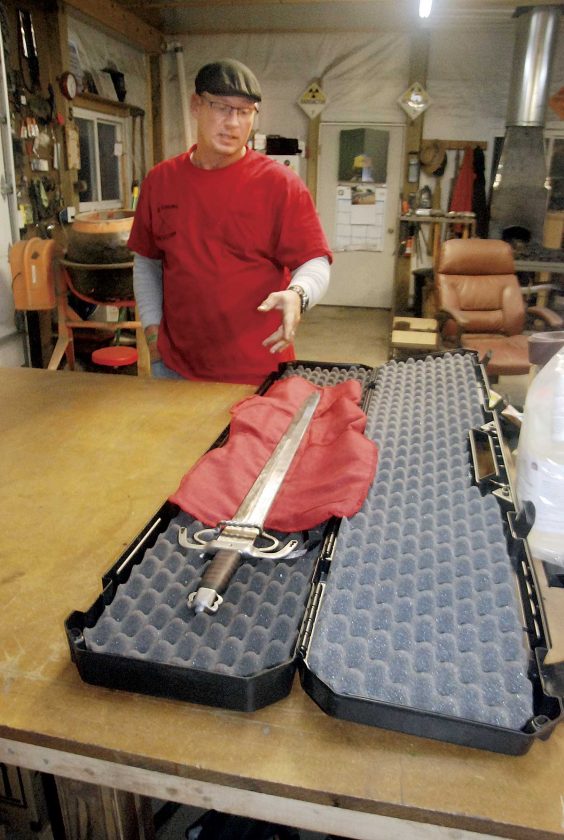
Boaz resident Brent Smith discusses the replica Tizona sword he made for an episode of the History Channel’s “Forged in Fire” that aired Nov. 6. The blade shown is a backup he started during filming and recently completed. (Photo by Evan Bevins)
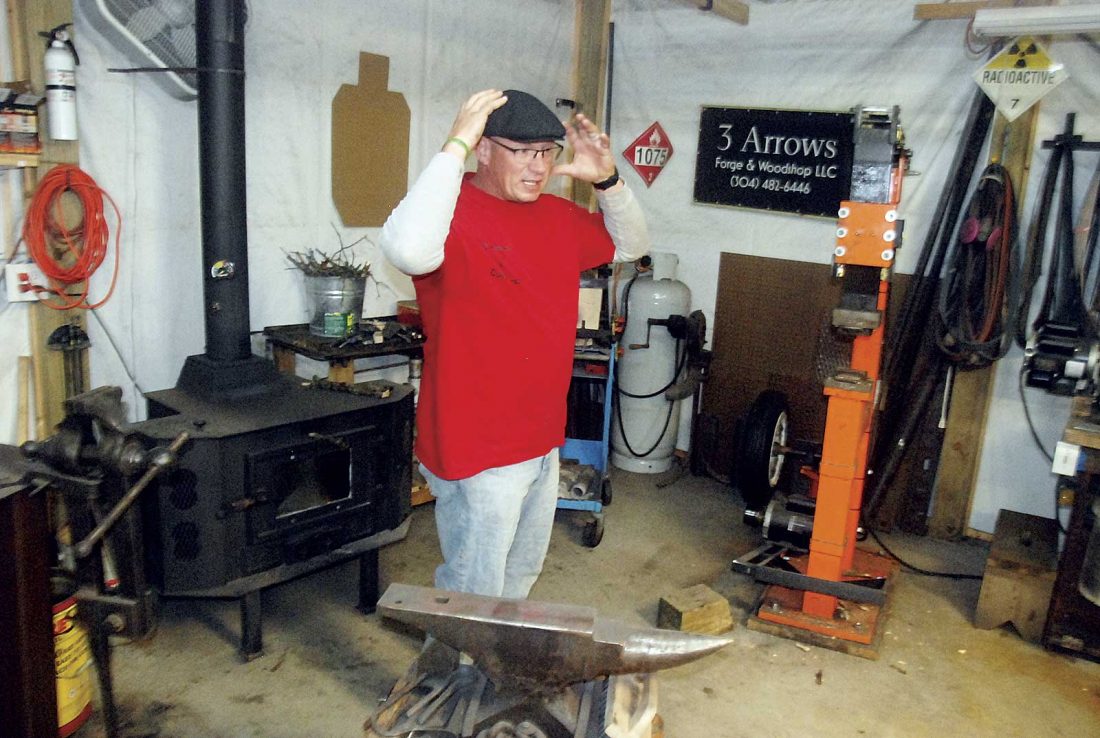
Brent Smith describes the 127-degree conditions in which he forged his final project for a recent episode of “Forged in Fire” at his Boaz workshop. (Photo by Evan Bevins)
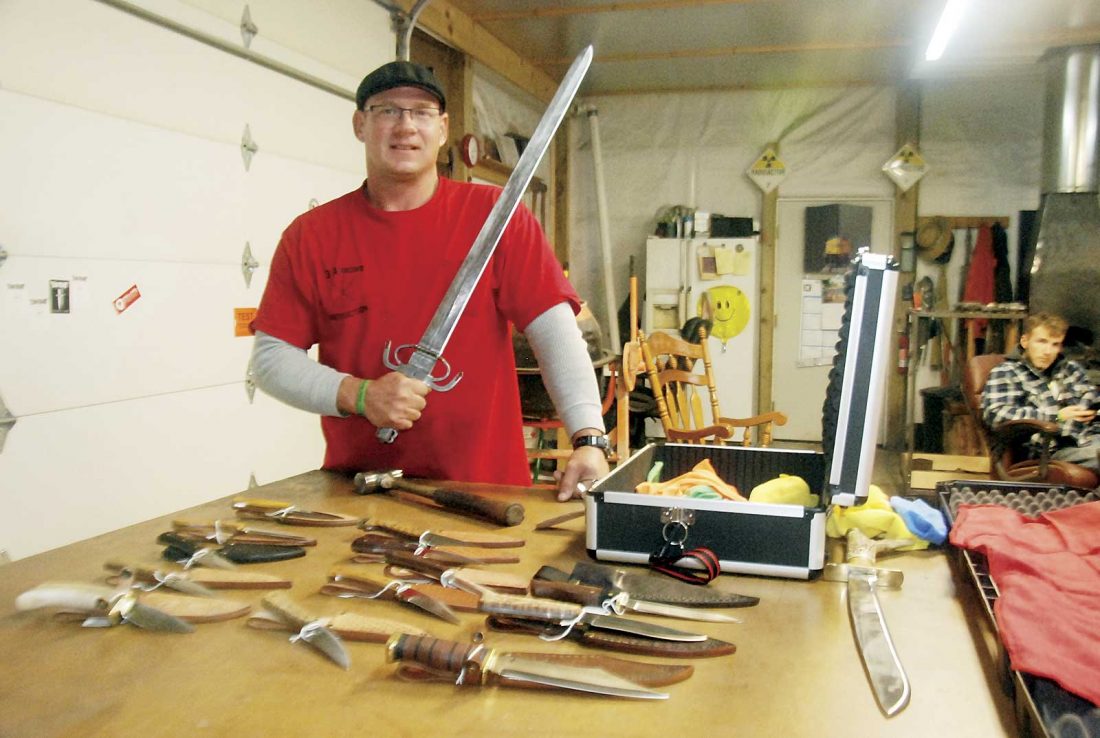
Boaz resident Brent Smith displays the backup sword he made for his appearance on an episode of the History Channel’s “Forged in Fire,” along with the knives he crafts for his business, 3 Arrows Forge & Woodshop. On the right is a 15-inch blade he made to demonstrate to the show’s producers he could handle a larger blade. (Photo by Evan Bevins)

Boaz resident Brent Smith made this 15-inch blade to prove to producers of “Forged in Fire” he could handle a larger piece than what he usually makes for his business, 3 Arrows Forge & Woodshop. (Photo by Evan Bevins)
Boaz resident Brent Smith discusses the replica Tizona sword he made for an episode of the History Channel’s “Forged in Fire” that aired Nov. 6. The blade he’s holding is a backup he started during filming and recently completed. (Photo by Evan Bevins)
Brent Smith’s friends and family gathered at his Boaz home Nov. 6 to watch him compete on an episode of the History Channel’s “Forged in Fire.” (Photo by Evan Bevins)
Boaz resident Brent Smith displays the sketches and notes he made on the way back from filming the first part of his appearance on “Forged in Fire,” as he prepared for the final challenge — building a replica of El Cid’s Tizona sword. (Photo by Evan Bevins)
Boaz resident Brent Smith, center, is shown in July with members of the “Forged in Fire” crew during filming at his workshop for the episode of the show that aired Nov. 6. (Photo by Evan Bevins)
Boaz resident Brent Smith discusses the replica Tizona sword he made for an episode of the History Channel’s “Forged in Fire” that aired Nov. 6. The blade shown is a backup he started during filming and recently completed. (Photo by Evan Bevins)
Brent Smith describes the 127-degree conditions in which he forged his final project for a recent episode of “Forged in Fire” at his Boaz workshop. (Photo by Evan Bevins)
Boaz resident Brent Smith displays the backup sword he made for his appearance on an episode of the History Channel’s “Forged in Fire,” along with the knives he crafts for his business, 3 Arrows Forge & Woodshop. On the right is a 15-inch blade he made to demonstrate to the show’s producers he could handle a larger blade. (Photo by Evan Bevins)
Boaz resident Brent Smith made this 15-inch blade to prove to producers of “Forged in Fire” he could handle a larger piece than what he usually makes for his business, 3 Arrows Forge & Woodshop. (Photo by Evan Bevins)
Trending
BOAZ -- A little more than six years ago, Brent Smith decided to use some of his late father's old saw blades to craft a knife for his sons.
It was his first foray into knife-making, and things were going well, until …
"I bumped into it, and it fell on the floor, and it shattered," Smith said. "And I wanted to know why."
The 44-year-old Boaz resident, who worked for a railroad company for 22 years before joining his son Cody's business, 3 Arrows Construction, started researching forging techniques through "the University of YouTube." A few months later, another source of information and inspiration arrived in the form of a new History Channel program called "Forged in Fire," in which bladesmiths compete to recreate famous knives and swords.
Six years later, Smith, who has his own business, 3 Arrows Forge & Woodshop, competed on the show himself, making it through two elimination rounds to face off against another craftsman in forging their take on the Tizona, an iconic sword wielded by 11th Century Spanish military leader Rodrigo Diaz de Vivar, better known as El Cid.
Spoiler alert: In the episode -- which aired Wednesday and is available on YouTube, the History Channel website and Hulu -- Smith emerges victorious with a weapon he crafted in his Boaz workshop.
"I've had to keep this secret since mid-July," Smith said. "The whole process was a roller coaster of emotion and adrenaline that I would gladly ride again."
The journey began in October 2018, when Smith filled out an online questionnaire for prospective contestants after watching an episode of "Forged in Fire." A month later, he got a call from a talent coordinator and went through a series of Skype interviews. In July, he and his wife, Jeri, drove to Stamford, Conn., to film the episode audiences finally got to see this week.
In the first challenge, Smith and the other competitors had to each make a knife out of parts of a drum set and music stands. It utilized a technique called san mai -- which Smith had never attempted -- and required them to use W1 steel, a very hard, tool-grade form of steel with which he'd never worked.
"I thought 'Uh oh,'" Smith recalled.
However, he was familiar with the layered Damascus method, which involves using multiple layers of steel, while san mai combines three. Despite his initial reaction, Smith said he was "feeling pretty calm actually. I felt confident doing it."
He kept his cool even when the blade appeared to have "cracked all the way down the spine." Turns out, Smith said, the layers had separated and he was able to stitch-weld the spine.
At the end of the three-hour forging period, one of the contestants' blades didn't meet the parameters set forth by the judges, and Smith was on to the second round, in which contestants attached a wooden handle to their blades.
"When it comes to wood, I'm at home," Smith said. "I was in the zone."
But he and Thomas Hacker of Festus, Mo., didn't end up having their knives tested by the judges after the third contestant had to drop out for medical reasons. Then host Wil Willis revealed the final challenge: the Tizona of El Cid.
"It was mind-blowing," Smith said. "I was like, 'How in the world am I going to do this?'"
The knives Smith makes and sells are typically 12 inches or shorter.
"I've never made a sword," he said. His longest was "a 15-inch blade to show the producers I could do it."
Competitors work on their home turf for the final round. As Jeri drove back to West Virginia, Smith gathered information and scribbled notes and sketches on a yellow legal pad, planning his approach.
"The entire way back, I'm studying sword-making videos, I'm studying heat treatment," he said.
Smith had four days, and a set number of hours each day, to do his work. He set a goal for each day, striving to follow the guiding principle he wrote out in capital letters on his legal pad: "Stay efficient."
He started forging two blades so he wouldn't have to start from scratch if there was a mishap.
"I'm forging two swords, back and forth, back and forth. I went non-stop," he said.
The temperature outside was around 90. Inside, as Smith operated his homemade forges, his thermometer registered 127 degrees. Smith recalled dumping ice-cold water over his head to help deal with the heat. Eventually, he had to take a break.
"But the clock didn't stop," Smith said.
He got both blades about 90 percent finished on the first day, then turned his attention to one as his main entry.
But it developed a minor warp after being heat-treated. Using a technique he learned from another competitor, Smith clamped the blade to a piece of angle iron and the warp relaxed during the tempering process.
There were a variety of specific parameters the competitors had to meet in making the weapon, but there was also room for them to put their own spin on it. On the fourth day, as the sword lay on a table while the epoxy on the handle dried, Smith was struck with inspiration.
"I said, 'I could spice this up,'" he said.
Recalling an online video he'd watched months earlier, Smith went into the house and pulled some mustard out of the refrigerator.
"The vinegar in the mustard, which vinegar is an acid, starts to eat away at the high-carbon steel," he said.
Cleaning it thoroughly stops the rusting but the early part of the process leaves behind a mark. The etched pattern helped put him over the top with the judges.
"The show was so close that that's what it came down to," Smith said. "Our two swords in the finale performed exactly the same."
That's how he and Hacker hoped it would turn out.
"We didn't want to see a blade break," Smith said. "We wanted to see it come down to the wire."
Smith said he felt a flood of emotion upon learning he'd won. He thanked God and his family before erupting into a shout of victory.
"It's legit. It's amazing. It's a wonderful competition," he said.
The prize for winning is $10,000, which Smith said he'll invest back in his shop. One way is replacing the knife grinder he and his son, Chase, built with a professional-grade machine.
Evan Bevins can be reached at ebevins@newsandsentinel.com.