
Dutch Ridge couple produces 8-foot-tall elephant ear
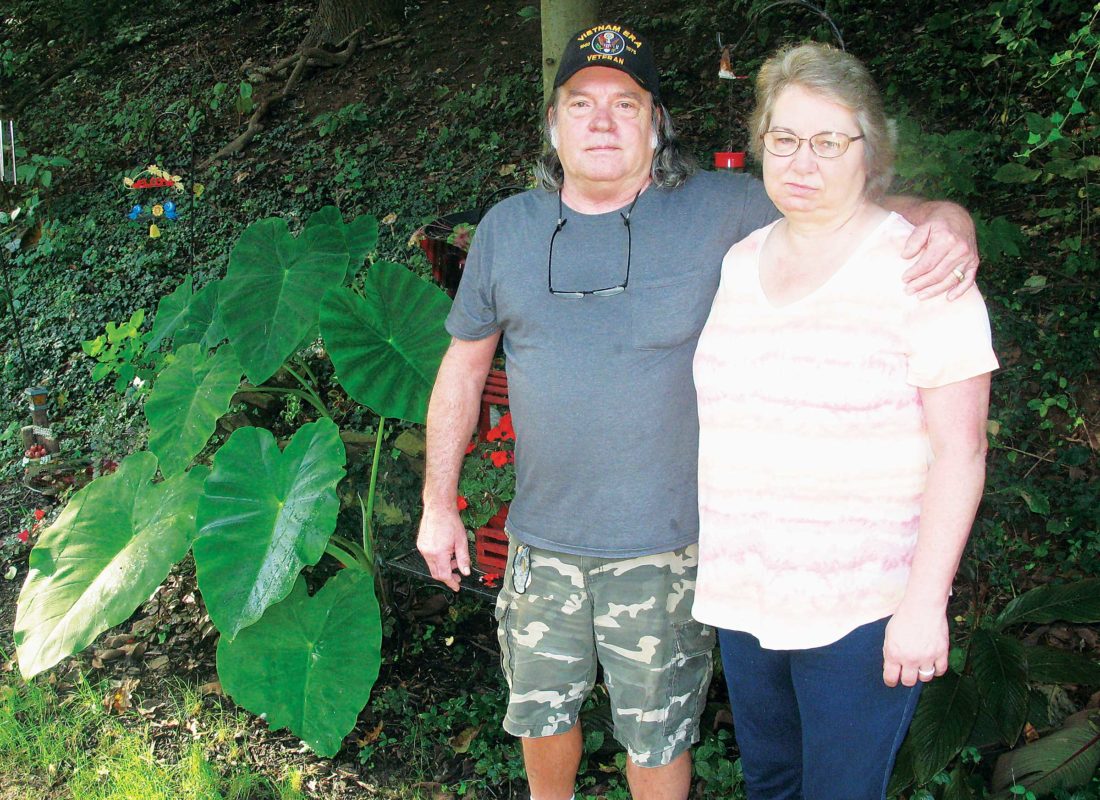
Photo by Jess Mancini From left, Brad and Dawn Senne pose with the elephant ears in front of their residence on Dutch Ridge Road. The bulbs were from an original three he obtained eight years ago, he said.
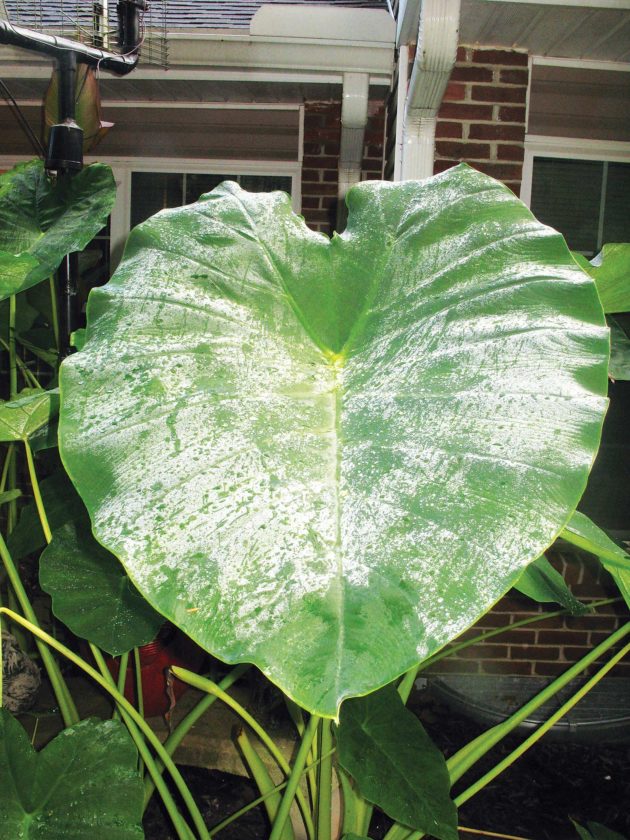
Photo by Jess Mancini

Photo by Jess Mancini Brad Senne stands adjacent to an elephant ear that has grown nearly 8 feet tall. The tropical plants are common in the south, he said.
Photo by Jess Mancini From left, Brad and Dawn Senne pose with the elephant ears in front of their residence on Dutch Ridge Road. The bulbs were from an original three he obtained eight years ago, he said.
Photo by Jess Mancini
Photo by Jess Mancini Brad Senne stands adjacent to an elephant ear that has grown nearly 8 feet tall. The tropical plants are common in the south, he said.
Trending
PARKERSBURG -- A Dutch Ridge resident's enthusiasm for elephant ears produced a plant almost 8-foot tall.
"I've never seen one grow that tall around here," said Brad Senne, a retired painting contractor who owned his business. "Down South, but not around here."
Elephant ears, a tropical plant also known as alocasia and colocasia, grow gigantic water-laden leaves, so much so that it looks like its raining around them.
"I've only watered this garden three times this year," Senne said.
Senne's fondness for the tropical plant goes back to his childhood in Kansas where his mother also grew the large-leafed plants.
He became re-interested in the plants eight years ago when he got three elephant ear bulbs, which he planted around the entrance of his residence.
Over the eight years, the number of bulbs have multiplied to about 30, he said.
"It's quite an undertaking," Senne said. "You have to dig them up each fall or the bulbs will die in the ground."
Senne digs the bulbs from the soil, which is sandy clay, and stores them over the winter. He replants them in the spring.
The growing season for elephant ears is five months in the Mid-Ohio Valley, he said. Winters are cold here, unlike in the south where the plants grow year-round and the bulbs can remain in the ground, Senne said.
"You can't do that here," he said.
But that's about where the similarity between now and his childhood in Kansas where his mother left the bulbs in the dirt and where the winters are much older and harsher.
He removes the bulbs around mid-October and replants around mid-April.
Senne is aided by Mother Nature, too.
"Sometimes the squirrels will replant the bulbs for me," he said.
The annual routine of planting and digging has paid off as the oldest of the bulbs, eight years, produced the tallest plant so far Senne said. The plants grow taller as the bulb ages, he said.
The plant is a half-inch shy of 8 feet, Senne said.
"He's got the green thumb," Senne's wife, Dawn, said.
She enjoys sitting outside amid the plants.
"I like looking at them," she said.
Elephant ear are much like peace lilies, Senne said.
Besides the 8-foot plant, Senne also for the first time has a plant that is producing a flower, which he called the "spath."
The flower has yet to bloom.
Senne is willing for share his experience and knowledge and can be reached at bradsenne2000@gmail.com.