
Marietta College cites costs, deterioration in Dorothy Webster Hall demolition plan
Trending
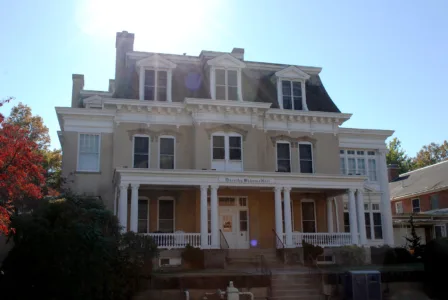
MARIETTA -- Marietta College says structural deterioration and renovation costs warrant demolishing Dorothy Webster Hall, while some alumni are urging preservation of the former home that became the college's first residence hall for women.
The planned demolition is part of a campus redevelopment supported by Joe and Linda Chlapaty's $55 million gift commitment. In an explanation posted on its website, the college said restoring Dorothy Webster would cost approximately two to three times as much as planned new construction while leaving substantial accessibility and housing limitations.
Sarah Griffin, a 2010 graduate, opposed the demolition in an email to the newspaper, arguing that the building's significance extends beyond its use as student housing.
"It represents the college’s history, its benefactors, and the people who helped shape the institution we know today," Griffin wrote.
According to the college's facilities history site, brothers John Mills, an 1867 graduate, and William Mills, an 1871 graduate, donated the home in 1929 in memory of their mother, Dorothy Webster Mills. Both were longtime trustees and benefactors.
The building previously served as the residence of Civil War Gen. A.J. Warner and was converted into a dormitory before its dedication Jan. 30, 1930. The college identifies it as its first residence hall for women.
Griffin urged the college to consider preservation as part of its plans for the future.
"Marietta College's history cannot be replaced once the buildings that tell its story are gone," she wrote.
Several other alumni shared their opinions under a Facebook post from the college which acknowledged the concerns regarding Dorothy Webster Hall.
“I appreciate that change is hard, but I'm grateful for university leadership that is focused on the future of Marietta College. I loved my freshman year in (Dorothy Webster), but believe it's more important to stay focused on a positive future,” said alumna Adrienne King under the post. “Some renovations are simply too costly. Unless my fellow alumni are prepared to fund the difference in costs, tough decisions have to be made.”
Another commenter shared her concerns.
“This breaks my heart - I lived there freshman year in the eighties…it had already changed so much, with less green space,” said alumna Elizabeth Moore.
The college acknowledged the building's importance to alumni but said professional assessments found a deteriorating sandstone foundation, significant water intrusion and moisture problems, and exterior deterioration that includes separation of the front facade from the building.
Previous renovations also removed or changed many original architectural details and interior features, according to the college.
"The current decision must be based on the structure as it exists today," the college stated on its website.
The college said the building's age, layout and structural condition would make it difficult to provide accessible, functional student housing even after substantial investment. A renovation would also leave limitations on the number of beds and the quality of accommodations compared with new construction.
Trustees toured the structures before making decisions and reviewed estimated renovation and restoration costs, according to the college. Its explanation does not provide dollar amounts for the Dorothy Webster alternatives.
The college said the Chlapatys' commitment provides an opportunity to improve residential life and support efforts to attract and retain students.
The broader housing project includes renovations to Marietta, Elsie Newton and Mary Beach halls. The college also currently plans to remove Russell Hall, citing its location in the flood plain. Its tentative schedule calls for renovated Marietta Hall to open in fall 2027 and the first-year housing complex in fall 2028.
The graduate health sciences building planned for Fourth Street would require removing Pioneer House, Hopewell House and Barbara Diggs Lyles House, according to the college. That facility is tentatively scheduled to open in winter 2029.
The college said it will work with families and alumni to recognize the people whose names are attached to buildings being removed.
That includes Barbara Diggs Lyles, a 1951 graduate and the college's first Black woman graduate. The college said it will develop a permanent tribute with her family, alumni and college leadership and announce those plans before both facilities are completed. Student programming housed in Barbara Diggs Lyles House will move to Andrews Hall.
For Dorothy Webster, the college said it intends to preserve the history of the building and its namesake, although specific plans have not been finalized.
The college said it is still determining which building materials or items will be retained for historical purposes. Its project website also says it is exploring opportunities for alumni to purchase bricks and other keepsakes.