Celebrating 175 Years of the Diocese of Wheeling-Charleston: Mid-Ohio Valley organizations contribute to Roman Catholic legacy
-
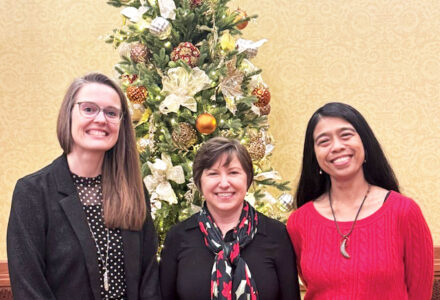
- Staff members with Sisters Health Foundation include, from left, Executive Director Renee Steffen, Associate Director Marian Clowes and Program Officer Shei Sanchez. (File Photo)
-
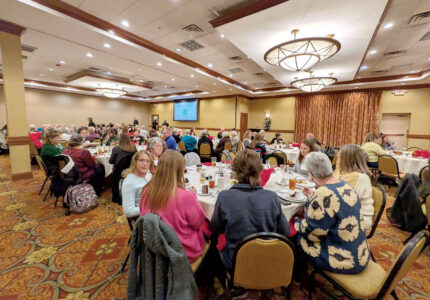
- The Sisters Health Foundation held its 26th annual Grant Partner Luncheon on Thursday at Grand Pointe Conference Center in Vienna. The foundation’s beginnings are tied to the sale of the former St. Joseph’s Hospital in Parkersburg. (File Photo)
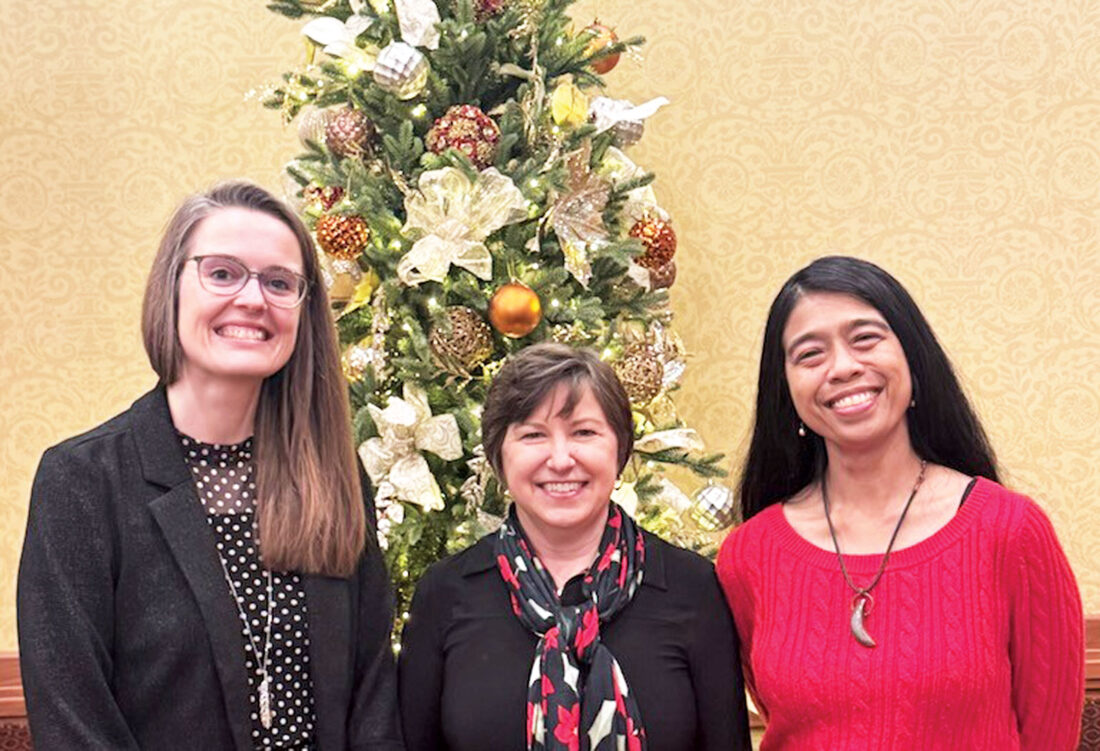
Staff members with Sisters Health Foundation include, from left, Executive Director Renee Steffen, Associate Director Marian Clowes and Program Officer Shei Sanchez. (File Photo)
PARKERSBURG — Among the organizations illustrating the Roman Catholic legacy and benevolence in West Virginia is the Sisters Health Foundation.
The foundation, among the most impactful and significant organizations promoting and supporting health and wellness programs, in 2025 awarded 116 grants to organizations totaling $1,267,497, said Renee Steffen, executive director of the foundation. Since its founding in 1996, the foundation has awarded more than $27 million in grants.
“The foundation’s impact in the region can be summed up by more than individual and community health improvements,” she said. “To us, the quality of relationships with our grant partners and neighbors is equally important.”
Positive, caring relationships help health improvement be sustainable “and sometimes, neighbors just need to know someone cares,” Steffen said.
The foundation’s beginnings are tied to the sale of the former St. Joseph’s Hospital in Parkersburg. It was established in 1900 by Wheeling Diocese Bishop Patrick J. Donahue and the Sisters of St. Joseph of Wheeling, an organization descended from the Sisters of St. Joseph founded in 1650 in Le Puy-en-Velay, France.
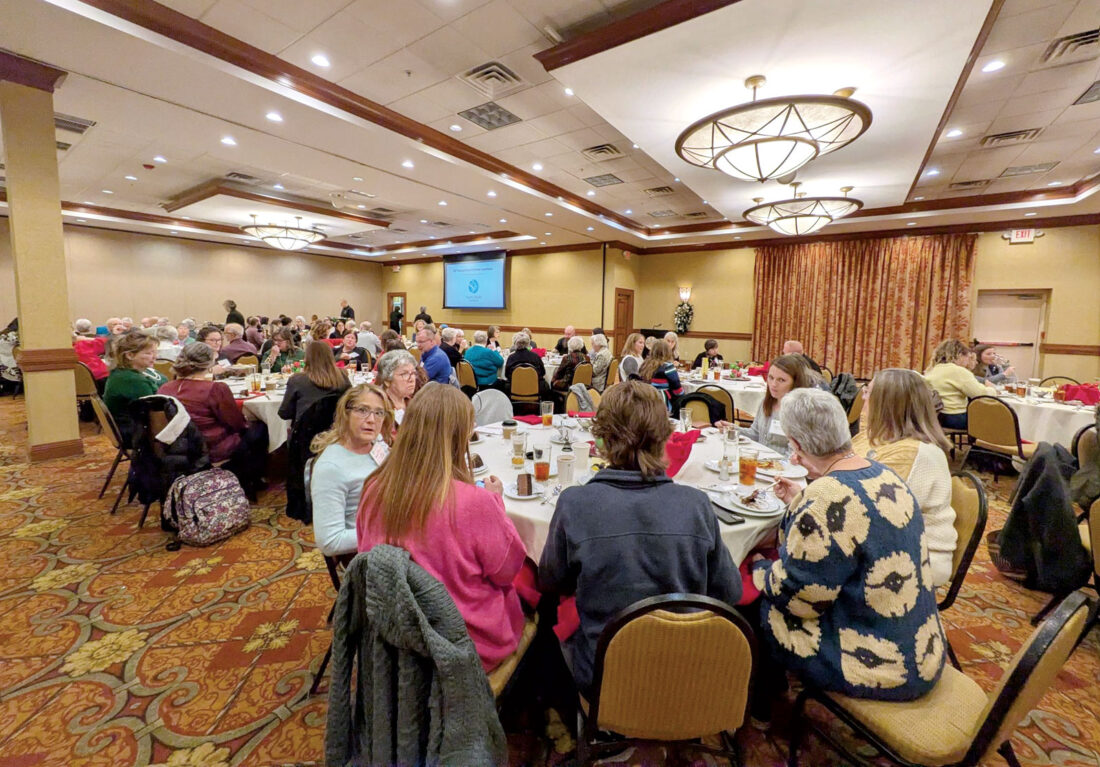
The Sisters Health Foundation held its 26th annual Grant Partner Luncheon on Thursday at Grand Pointe Conference Center in Vienna. The foundation’s beginnings are tied to the sale of the former St. Joseph’s Hospital in Parkersburg. (File Photo)
The Wheeling-Charleston Diocese is celebrating its 175th anniversary this year.
“I hope the legacy of our foundation is similar to how the early Sisters of St. Joseph met the ‘needs of the day’ of the vulnerable in LePuy, France, and furthermore, how the Sisters continued that mission by caring for the sick at St. Joe’s Hospital,” Steffen said.
One of the more visible and well-known of the recipients is the American Red Cross of the Ohio River Valley.
“The foundation is instrumental in a lot of different things in the area,” said Sharon Kesselring, executive director of the Red Cross of the Ohio River Valley.
The Red Cross makes sure it conforms its requests for assistance to meet the goals of the foundation and to match the services it offers that include blood supplies, disaster assistance, services for the military and their families and training, Kesselring said. The relationship between the Red Cross and the Sisters goes back to the foundation’s creation, she said.
“We have successfully received funding from them for most of those years,” Kesselring said.
The foundation is an extension of the original mission of the Sisters of St. Joseph in France by meeting the health “needs of the day” by supporting grant partners who are helping people prevent or manage their chronic health conditions, improving access to housing, transportation and health care and supporting people in recovery, among other areas, Steffen said.
“I hope our foundation has also helped foster a greater understanding that one’s health is multi-dimensional. It encompasses spiritual, emotional, physical, social and economic well-being, and all components are essential to living a healthy life,” she said. “Overall, I am proud that the legacy of the Sisters of St. Joseph continues through the foundation’s efforts and the strength of the relationships that we have with our neighbors, nonprofit partners, and peer foundations is a testament to that.”
Contributions by local Roman Catholics, organizations and Catholic churches have been significant, local historian Roger Nedeff said.
Nedeff is a member at St. Francis Xavier Catholic Church that was completed and dedicated in 1870, built where the first Catholic church was constructed in 1850 at 532 Market St. The influx of Irish immigrants spurred by the new Northwestern and Staunton turnpikes and the B&O Railroad into Parkersburg and over the Ohio River caused growth in the Catholic population, their descendants here to this day.
Among notable Catholics and their contributions to the region are:
* J.C. “Cass” Rathbone, whose family discovered oil at Burning Springs in Wirt County.
“Cass Rathbone converted to the Catholic faith and was a leader in the parish and local community,” Nedeff said. “He was very influential in our area’s oil industry.”
Rathbone also was instrumental in establishing the Visitation Academy in Parkersburg in 1864, Nedeff said. The academy was the precursor of DeSales Heights.
“Cass Rathbone saw education as important in breaking the cycle of poverty that gripped the early Catholic pioneers,” Nedeff said. “His legacy can be seen today in our Catholic schools, which are outstanding educational institutions.”
* Bernard P. McDonough, the wealthy industrialist and philanthropist, is among the most recognizable in contemporary times. He, his family and the McDonough Foundation have contributed millions of dollars to causes in the community.
“McDonough was modest about his charitable giving,” Nedeff said.
* Joseph P. Albright, an attorney, served in the West Virginia House of Delegates as House speaker, then as a justice of the West Virginia State Supreme Court where he also was a chief justice.
“Albright’s legacy can be seen in our present Parkersburg city government where he served on the charter board that created our present form of city government,” Nedeff said. “His legacy can also be seen in the Blennerhassett Historical Park and Museum, which he helped to create and fund.”
* Michael Kelly, the owner of a steel foundry in Parkersburg who contributed to the building of St. Francis Xavier Church.
“Kelly’s legacy is our beautiful church,” Nedeff said. “Each successive generation of parishioners has seen the church building as a gift that has been bequeathed to us and has worked hard to maintain and preserve it for future generations.”
* On the medical side, Parkersburg Cardiology Associates was founded by Drs. Michael Santer and David Avington in 1972 at St. Joseph’s Hospital. The group is now the West Virginia University Heart and Vascular Institute at Camden Clark Medical Center.
“Their legacy can be seen today in the award-winning heart care that our community now enjoys,” Nedeff said. “They were both supportive of Parkersburg Catholic education as well.”
* Warren H. Campbell, an executive with Union Carbide in Marietta, had a generosity to his church that “knew no bounds,” Nedeff said.
“Through his efforts the art murals of St. Xavier church were cleaned and repaired,” he said. “He was instrumental in the purchase and renovation of the old Jupiter building in downtown Parkersburg for use as the St. Xavier Parish Center,” Nedeff said. “His legacy can be found in that building which is used not only by the parish, but many local nonprofit groups who utilize the facility for fund raisers.”
* Since 1990, most of the mayors of Parkersburg have been Catholic: Jimmie Colombo, Tom Joyce, Helen Albright and Bob Newell.
Among lesser-known Catholics who also figured in the history of Parkersburg were:
* James Reynolds Mehen, who died in 1933 at the age of 88, was a Confederate Army veteran who was called Parkersburg’s version of Wyatt Earp. He was a firefighter, police chief and later a U.S. marshal.
* Capt. Michael Egan, who died in 1888, served in the U.S. Army in the Civil War and wrote a book about his exploits, “The Flying, Gray-Haired Yank or, The Adventures of a Volunteer.”
Catholic churches in the area have been involved in community programs to benefit residents, Nedeff said.
“The Catholic churches in our area have been heavily involved in our community, especially the most vulnerable. Some of our programs that are most popular are the Stone Soup Kitchen. This provides a weekly meal to anyone in the community. People can come in and be served a meal with dignity. They sit at a table and are waited on. They don’t suffer the indignity of going through a soup line. They have a warm place to go in winter and a cool place in summer and are served nutritious meals,” Nedeff said. “Also through the efforts of pastor Father John Rice, an arrangement has been made with Coplin Health System to provide medical and dental care to the people that come to the Soup Kitchen. Their mobile health unit comes the second and fourth Wednesdays of every month from 9 a.m. to3 p.m.”
St. Margaret Mary Catholic Church in Parkersburg offers Catholics in Recovery, a group helping those battling addictions; a caregivers support group for those caring for loved ones who are ill; and a widows ministry.
Local Catholic parishes together hired a youth minister who coordinates meetings and activities for teens and young adults and an outreach ministry that includes local public high schools.
Local News
Celebrating 175 Years of the Diocese of Wheeling-Charleston: Mid-Ohio Valley organizations contribute to Roman Catholic legacy

Entertainment and more in the Mid-Ohio Valley

Rooms and Board: Parkersburg residential rental unit inspection and registration ordinance taking effect
Two taken to hospital after three-vehicle crash in Parkersburg
Celebrating 175 Years of the Diocese of Wheeling-Charleston: Faith, heritage and hope – the living legacy of Catholic education in the Mountain State