Mid-Ohio Valley rehabilitator helps aquatic birds amidst winter storms
-
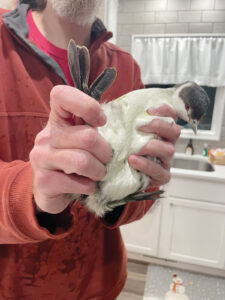
- Ohio Wildlife Rehabilitator Ryan Bates holds one of nearly 20 or so horned grebes he gathered from nearby. He said he released the healthy birds after warming them and feeding them for 48 hours. (Photo provided by Ryan Bates)
-
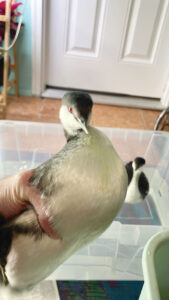
- Ohio Wildlife Rehabilitator Ryan Bates estimated there were thousands of horned grebes found in southeast Ohio and northern West Virginia. He said the birds must’ve mistaken the ice for water as their anatomy only allows them to land and take flight on the water. (Photo provided by Ryan Bates)
-
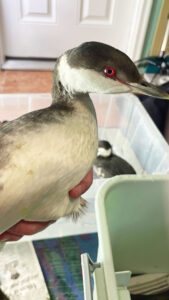
- One of the nearly 20 horned grebes Ryan Bates, of Marietta, gathered from the area for rehab due to the birds’ inability to take off from land. (Photo provided by Ryan Bates)
-
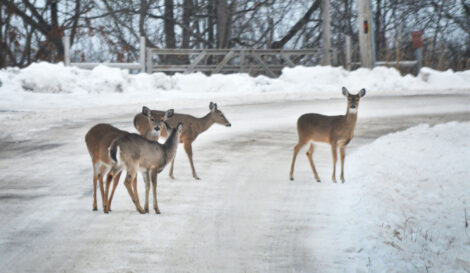
- A group of young deer stand in the middle of Warren Chapel Road during extremely cold weather Tuesday morning. Snow and ice have made movement difficult for people and animals since the winter storm on Sunday. (Photo by Art Smith)
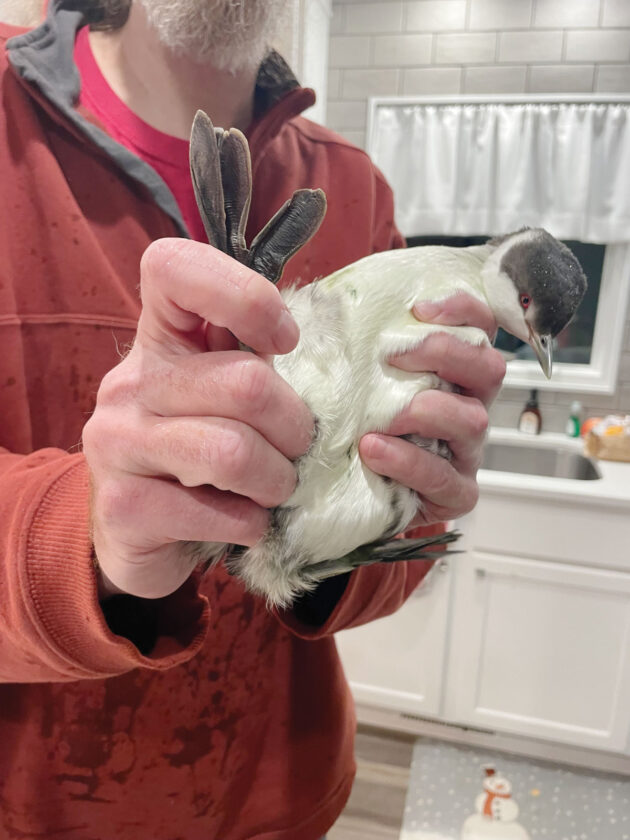
Ohio Wildlife Rehabilitator Ryan Bates holds one of nearly 20 or so horned grebes he gathered from nearby. He said he released the healthy birds after warming them and feeding them for 48 hours. (Photo provided by Ryan Bates)
MARIETTA — The Mid-Ohio Valley has been coated in snow and ice for the past few days accompanied by frigid and below freezing temperatures.
As school districts, county offices, and businesses close due to unsafe road conditions, people have taken cover in the warmth and security of their homes. But what about the wildlife; how do they stay warm and fed during severe winter weather?
While people bundle up in warm coats and blankets, most critters have spent months preparing their bodies for incoming winter weather.
Dave McShaffrey taught biology and environmental science as a professor at Marietta College for 36 years. He specialized in dragonflies and insects and said when the temperature drops, most insects will burrow in the ground where it’s warm or take shelter at the bottom of water sources.
“Anything that lives in the water is fine because the water is cold but as long as it doesn’t freeze completely or stay frozen for long, the insects and fish survive,” said McShaffrey. “They don’t need much oxygen and food to survive so they just take cover at the bottom.”
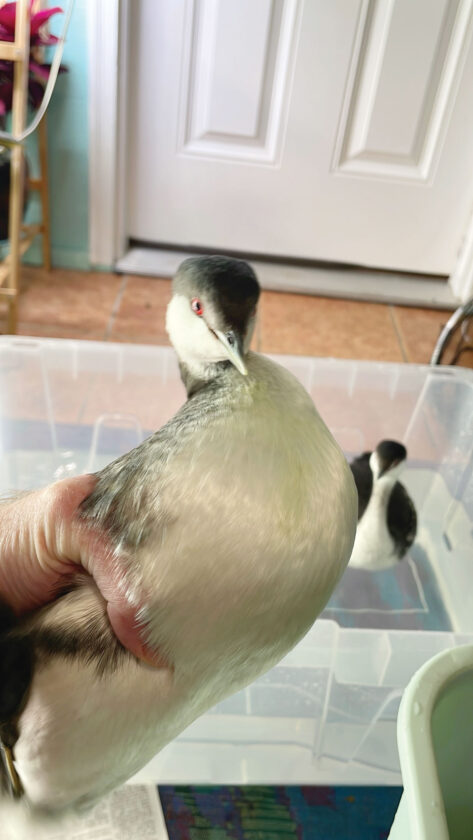
Ohio Wildlife Rehabilitator Ryan Bates estimated there were thousands of horned grebes found in southeast Ohio and northern West Virginia. He said the birds must’ve mistaken the ice for water as their anatomy only allows them to land and take flight on the water. (Photo provided by Ryan Bates)
McShaffrey said turtles can stay under water and hibernate for six to seven months because their respiration rates are so slow. He said most insects and creatures burrow down into the leaf and debris litter where it’s warm because the snow traps in heat.
“Honey bees are the exception because they stay together in a mass in their nests and vibrate their wings to produce heat,” said McShaffrey. “As it gets hotter the bees will take turns migrating to the center for warmth … and they have their honey stocked up.”
The West Virginia Department of Natural Resources said wildlife relies on instincts and natural strategies to survive the cold.
Gaining weight and adding fat is essential for insulation and keeping warm during the cold months. WVDNR reported bears gaining up to 30 pounds a week through summer until winter to keep them insulated during the cold.
Black bears’ metabolisms drop by 50% while they sleep so they can conserve energy for as long as possible, according to WVDNR.
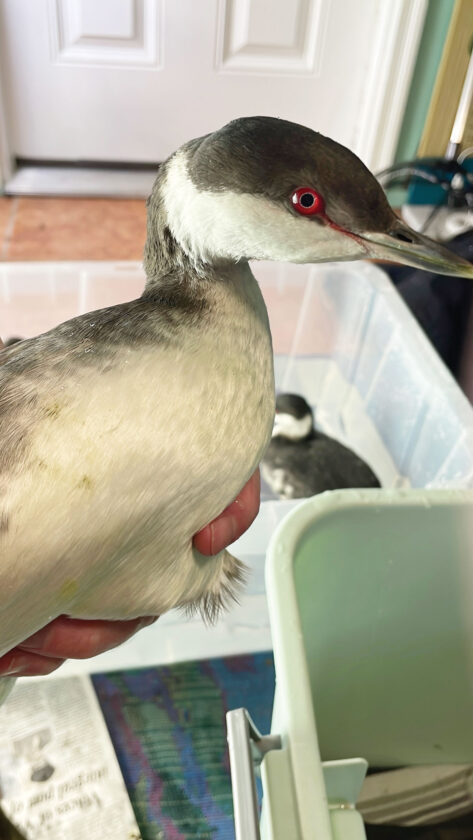
One of the nearly 20 horned grebes Ryan Bates, of Marietta, gathered from the area for rehab due to the birds’ inability to take off from land. (Photo provided by Ryan Bates)
McShaffrey said they’re not truly hibernating because they remain in a “sleep-like” state. He said groundhogs and some ground critters truly reach a state of hibernation during the colder months.
Whitetail deer can eat as much as nine pounds of food a day to prepare, according to WVDNR.
“Animals above ground are warm-blooded and few can stand freezing temperatures,” said McShaffrey. “Their strategies include staying active so they continue moving around and their body temperature rises.”
Birds such as cardinals rely on fluffing and feathers to keep their extremities warm. Feathers can trap in the warm air and prevent wind from penetrating feathers. Whitetail deer also have thick hairs that provide extra layers for warmth.
He said a lot of animals adapt to the cold temperatures by taking cover in warm nooks and crannies which are why a lot of people can find opposums, racoons, and skunks burrowed under their porches.
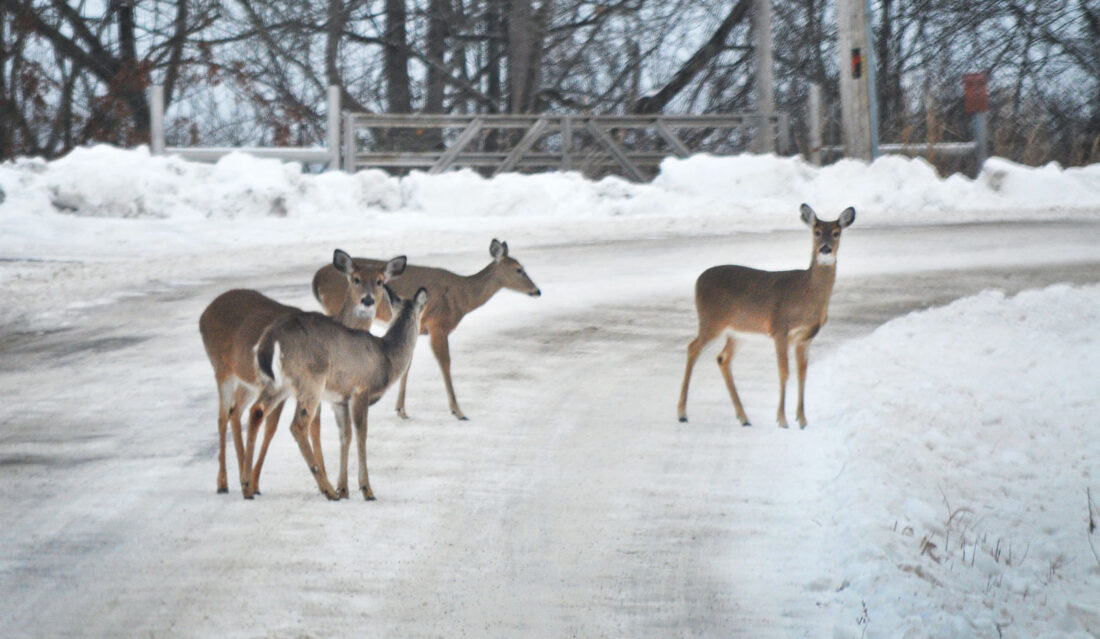
A group of young deer stand in the middle of Warren Chapel Road during extremely cold weather Tuesday morning. Snow and ice have made movement difficult for people and animals since the winter storm on Sunday. (Photo by Art Smith)
“Most animals around here have adapted to the winters but some of the smaller ones or young animals can get frostbite and die,” said McShaffrey. “The biggest problem for most is finding food.”
When the water source freezes over, the animals will usually eat snow to stay hydrated.
He said hawks rely on water for their food source so they’ll usually migrate to where there’s running water with plenty of fish.
“Ducks and geese and seagulls will move south to find open water and a lot of seagulls will come here for the winter,” said McShaffrey. “Geese have it tougher because they feed on grass but ducks can be happy as long as the pond doesn’t freeze over.”
According to the Ohio Department of Natural Resources Division of Wildlife, among the birds that can be found in Ohio during the winter are dark-eyed juncos, short-eared owls, purple finches and pine siskins. There are resident birds, birds who remain in the area year-round, such as cardinals, woodpeckers, hawks, and screech-owls.
Bald eagles can be spotted in large sycamores and oaks along lakes, ponds, and rivers during their mating season in January and February. Bald eagles lay and incubate their eggs in February and March.
Bald eagles can be found in southern Ohio along the Muskingum, Scioto, and Hocking rivers.
Ryan Bates, an Ohio Wildlife Rehabilitator in Marietta, gathered about 20 horned grebes, also known as stabby ducks, he believed had mistaken nearby ice for bodies of water to land on.
“They’re really rare for this area and we think they followed the warm gulf air as it was coming up and then got stuck in the cold storm and mistook the ice for water,” said Bates.
He said these birds can only land and take off in the water so he and his fellow wildlife rehabilitators found a few thousand that were trapped on land anywhere from Columbus as far as Morgantown.
According to Audubon, the grebe bird typically flies to coastal bays during the winter. Grebes migrate from Canada to southeastern states and oceans or large bodies of water.
“We kept them for up to 48 hours because they were so encased in ice they were cold and hungry so we let their body temperature get back up and fed them,” said Bates.
He said they’ve been working on releasing the healed birds but any of the birds who injured their feet and wings from trying to take off on land were being treated until they healed.
“I mostly rehab opposums, racoons, and squirrels but also some hawks and owls,” he said. “I stick with animals I’m familiar with.”
For any wildlife rehabilitation concerns or help with retrieving animals stuck in ice or in danger, contact the ODNR Division of Wildlife: tinyurl.com/mvtvhs5k
Amber Phipps can be reached at aphipps@newsandsentinel.com
Local News

Rubio defends Trump on Venezuela while trying to allay fears about Greenland and NATO
Worries deepen in US South after days of grappling with snow, ice and widespread outages
Mid-Ohio Valley rehabilitator helps aquatic birds amidst winter storms
Rust in Pieces: Mid-Ohio Valley high school teams battle it out with robots at competition

A father awaits Rafah crossing reopening after 2-year separation from family in Gaza