
Model Citizens: Boomtown of Volcano comes alive in new Mountwood Park display

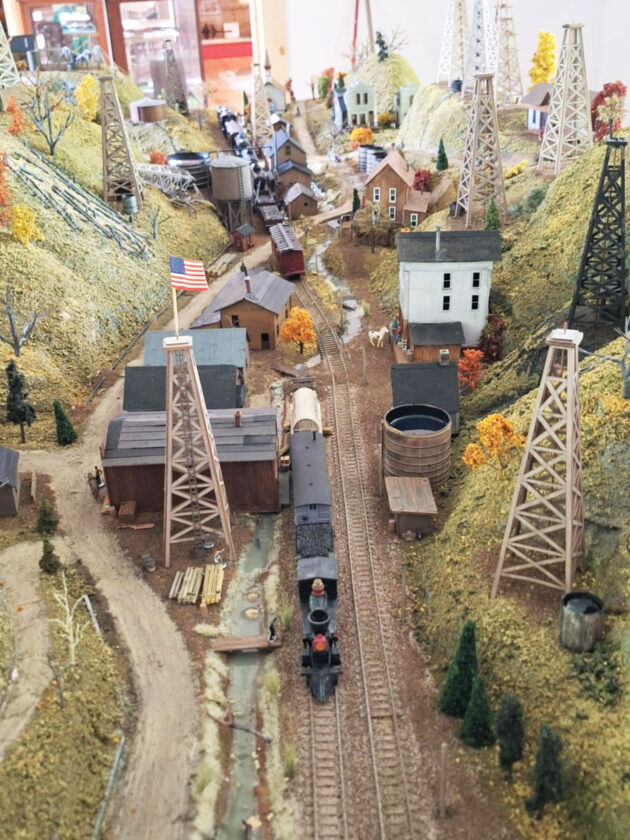
This model that will be displayed in the Mountwood Park Visitors Center details life in Volcano in the 1870s. (Photos provided by Jimmie Bee)
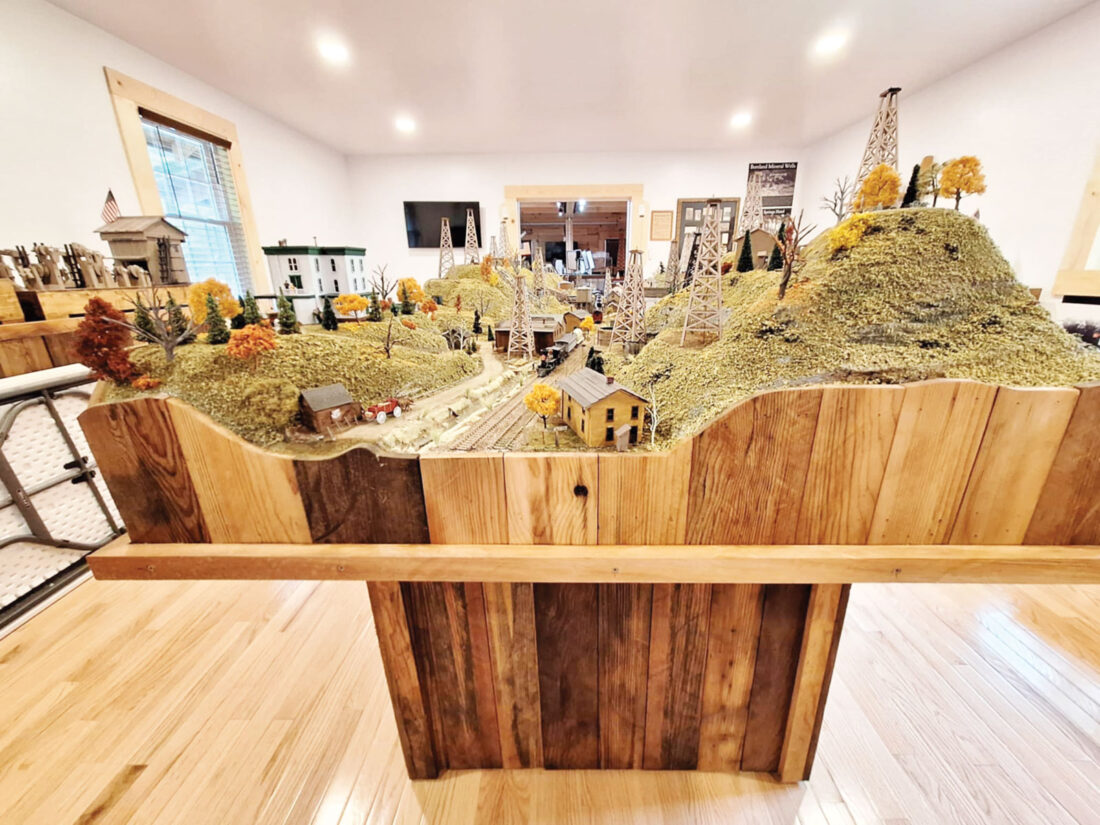
Parkersburg resident Jimmie Bee created this 4-by-11-foot model of the boomtown of Volcano that will soon be on display to the public at the Volcano Museum in the Mountwood Park Visitors Center. (Photo provided by Jimmie Bee)
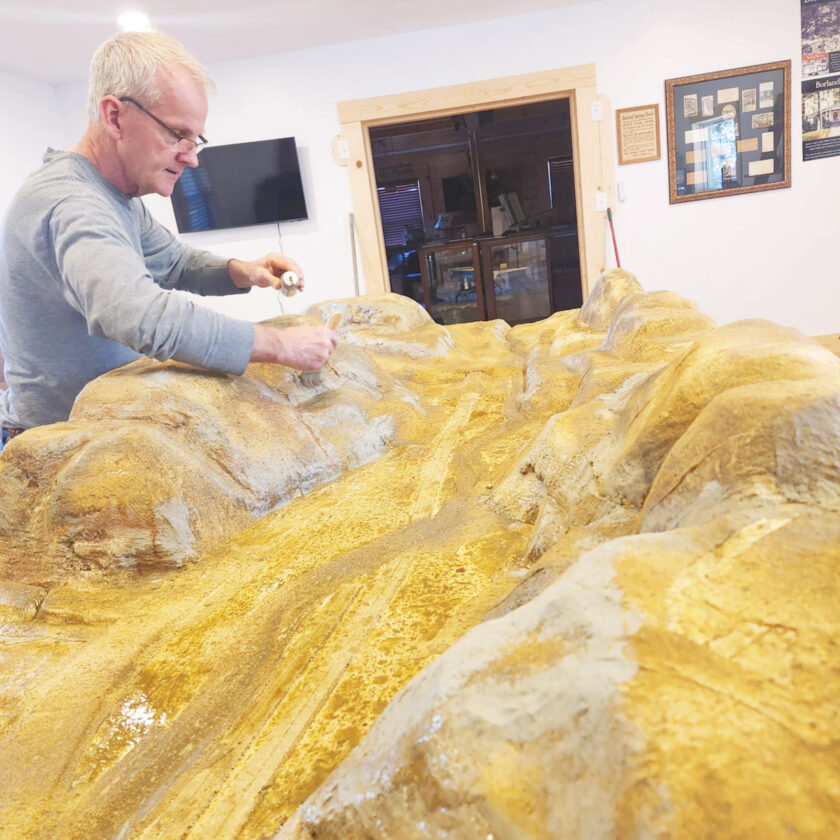
Parkersburg resident Jimmie Bee works on the model of the town of Volcano this spring. The model will be on display in the Mountwood Park Visitors Center. (Photo provided by Jimmie Bee)
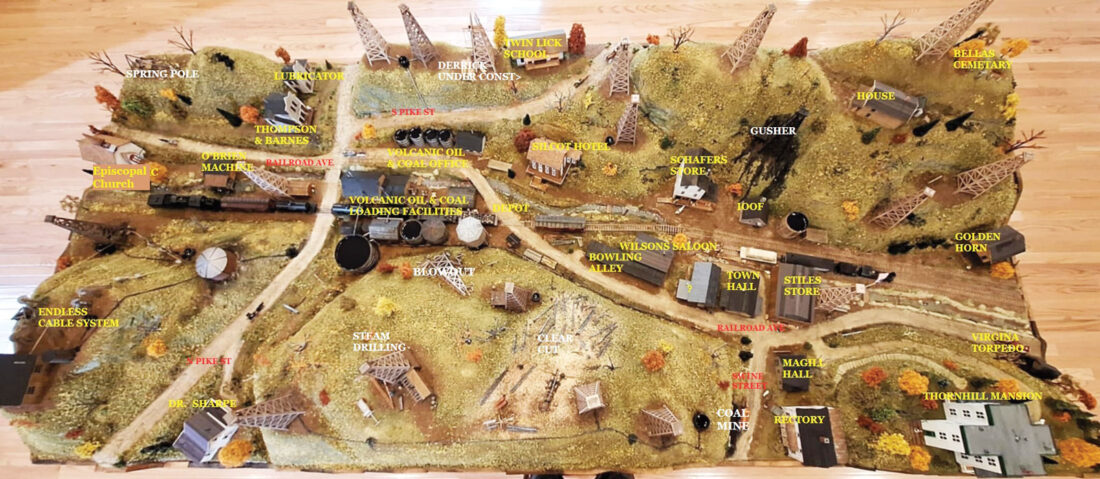
It took Parkersburg resident Jimmie Bee 678 hours to build this 4-by-11-foot model of the boomtown of Volcano that will soon be on display to the public at the Volcano Museum in the Mountwood Park Visitors Center. (Photo provided by Jimmie Bee)
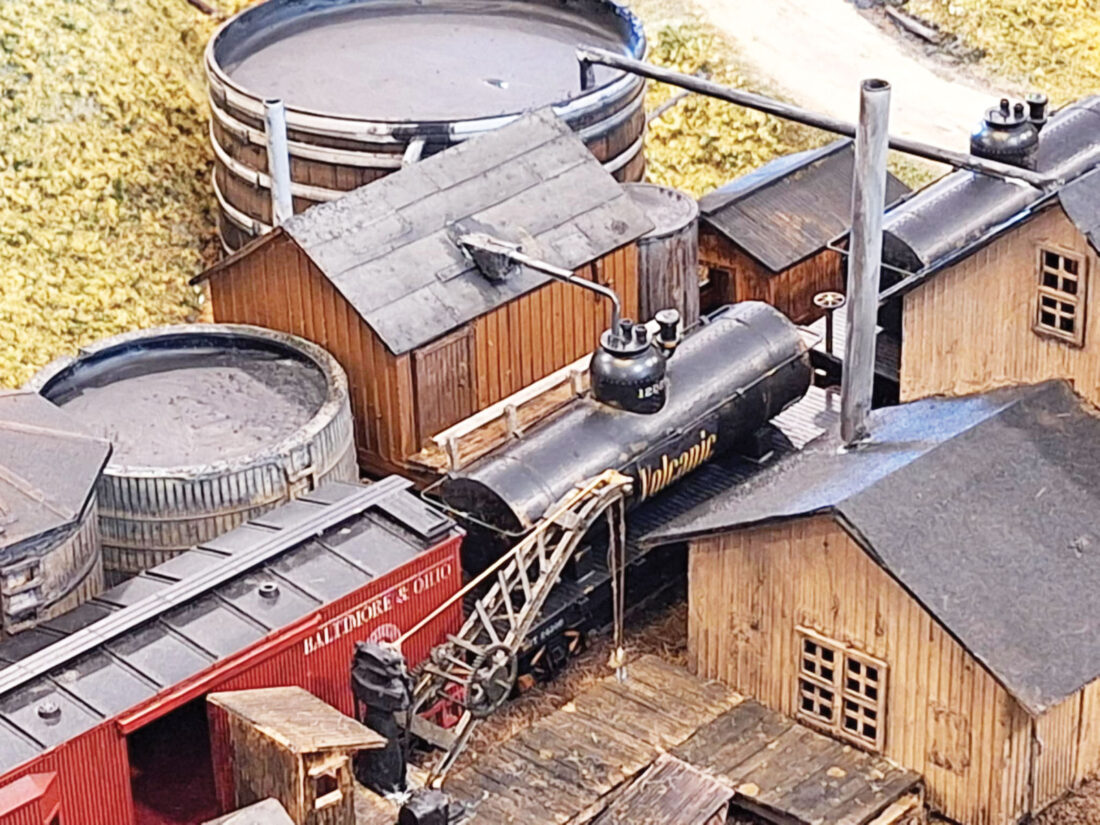
This model that will be displayed in the Mountwood Park Visitors Center details life in Volcano in the 1870s. (Photos provided by Jimmie Bee)
This model that will be displayed in the Mountwood Park Visitors Center details life in Volcano in the 1870s. (Photos provided by Jimmie Bee)
This model that will be displayed in the Mountwood Park Visitors Center details life in Volcano in the 1870s. (Photos provided by Jimmie Bee)
This model that will be displayed in the Mountwood Park Visitors Center details life in Volcano in the 1870s. (Photos provided by Jimmie Bee)
This model that will be displayed in the Mountwood Park Visitors Center details life in Volcano in the 1870s. (Photos provided by Jimmie Bee)
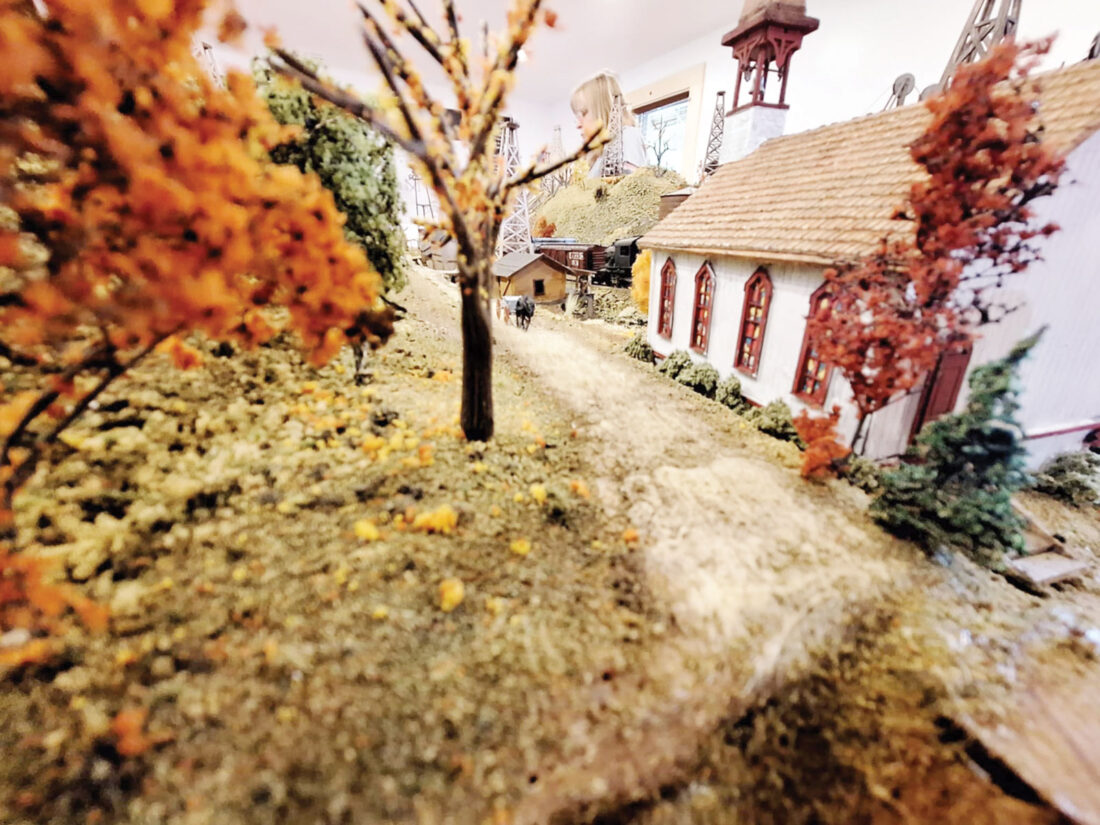
This model that will be displayed in the Mountwood Park Visitors Center details life in Volcano in the 1870s. (Photos provided by Jimmie Bee)
This model that will be displayed in the Mountwood Park Visitors Center details life in Volcano in the 1870s. (Photos provided by Jimmie Bee)
Parkersburg resident Jimmie Bee created this 4-by-11-foot model of the boomtown of Volcano that will soon be on display to the public at the Volcano Museum in the Mountwood Park Visitors Center. (Photo provided by Jimmie Bee)
Parkersburg resident Jimmie Bee works on the model of the town of Volcano this spring. The model will be on display in the Mountwood Park Visitors Center. (Photo provided by Jimmie Bee)
It took Parkersburg resident Jimmie Bee 678 hours to build this 4-by-11-foot model of the boomtown of Volcano that will soon be on display to the public at the Volcano Museum in the Mountwood Park Visitors Center. (Photo provided by Jimmie Bee)
This model that will be displayed in the Mountwood Park Visitors Center details life in Volcano in the 1870s. (Photos provided by Jimmie Bee)
This model that will be displayed in the Mountwood Park Visitors Center details life in Volcano in the 1870s. (Photos provided by Jimmie Bee)
This model that will be displayed in the Mountwood Park Visitors Center details life in Volcano in the 1870s. (Photos provided by Jimmie Bee)
This model that will be displayed in the Mountwood Park Visitors Center details life in Volcano in the 1870s. (Photos provided by Jimmie Bee)
This model that will be displayed in the Mountwood Park Visitors Center details life in Volcano in the 1870s. (Photos provided by Jimmie Bee)
This model that will be displayed in the Mountwood Park Visitors Center details life in Volcano in the 1870s. (Photos provided by Jimmie Bee)
Trending
VOLCANO -- The historic West Virginia boomtown of Volcano has come back to life - in miniature.
Thanks to the efforts of local modeler Jimmie Bee of Parkersburg, the oil well operations and town of Volcano, captured in 1/87 (HO) scale, will soon be available for public viewing at the Volcano Museum in the Mountwood Park Visitors Center.
Bee was commissioned by Mike Naylor of the Friends of Mountwood organization, approximately a year ago, to construct a 4-foot-wide-by-11-foot-long replica of Volcano as something of a memorial to those who worked and lived in nearby Volcano. The model stands 5 feet tall at its highest point.
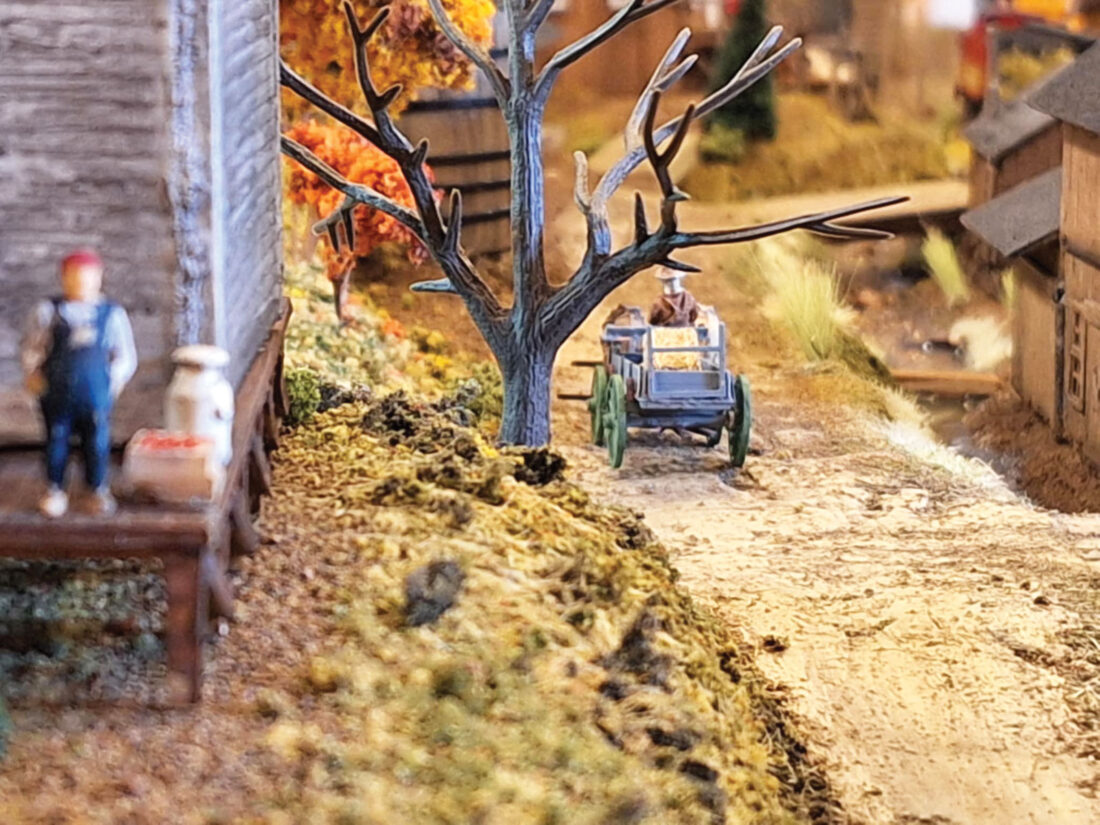
"I was originally commissioned to build a model of the town and its structures," said Bee, owner of Bee Line Hobbies in Belpre. "I added mini-scenes of steam-powered drilling, an oil derrick after a gusher, an oil derrick after a blow-out, the town cemetery on the ridge, torpedo and nitroglycerin storage area and wagons. The extras were not part of the original commission, but I modeled them to really show what life was like in Volcano in the 1870s. It's amazing what people had to endure to carry out the work there."
A number of the structures comprising the model are exact replicas, while others are Bee's best estimate or composites.
"The model was very difficult to do, because there are so few photographs or illustrations of Volcano available and there is also conflicting information out there," he said. "Most of the pictures we see are of oil field equipment and houses, of which only three or four still (exist) in one form or another.
"So, I wouldn't call the model an exact replica, but I believe it is a pretty close representation to what life was like in Volcano. Everyone who's seen the model so far is amazed at what the town probably looked like."
Bee says 678 hours were required to build the large model, working on it nearly every day over the past three months. He was assisted by fellow Mid-Ohio Valley Model Railroad Club members Doug Unsold, Kelly Offenberger, Christian Offenberger, Roy Highman and Tom Ratkovich. Unsold modeled some structures and the wagons, while the Offenberger father and son duo worked on scenery and trains. Meanwhile, Highman crafted a live edge out of wood harvested from actual oil tanks and barrels at Volcano and Ratkovich contributed train cars and research materials. Additionally, Bill Edwards and his maintenance team at Mountwood Park built the base out of wood from former oil tanks and barrels.
"While the buildings and trains are true to scale, I had to condense the mountains and scenery to fit the available space at the museum," said Bee. "If I would have made the whole thing HO scale, it would have taken up the entire room at the museum and probably part of another one."
Bee explained the town of Volcano sat in a valley between two mountains and it is estimated more than 4,000 people lived there during the oil operation's heyday of 1864-1879, when a suspicious fire caused the wooden oil storage tanks to rupture and spill burning oil into the town, which burned to the ground. Part of the operation was spared, and one of the wells remained in service until circa 1974.
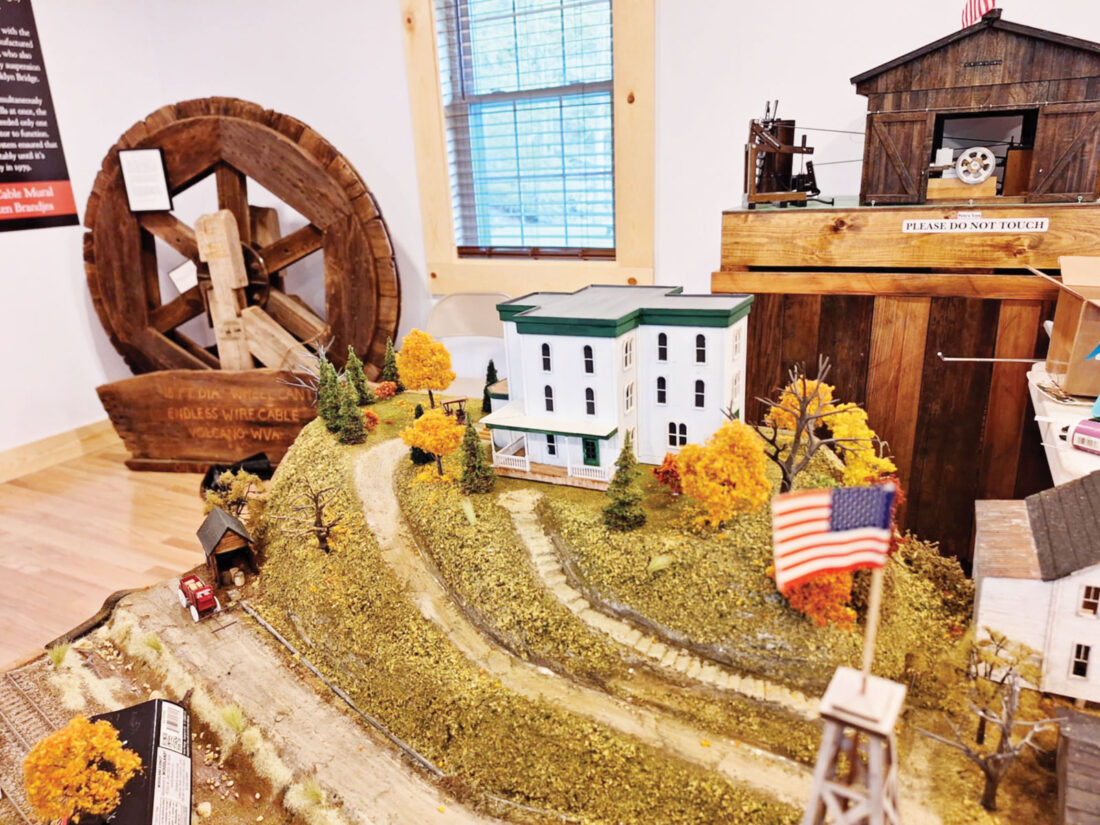
According to Bee, his favorite scenes on the model include his replica of the continuous cable system, used to pump oil from the many wells and an exact replica of town founder William Cooper Stiles Jr.'s beloved Thornhill mansion, a three-story, 25-room home, which still exists. Bee was fortunate to have at hand a diagram of the mansion's original floor plan.
"The continuous cable system was the first of its kind used for oil pumping, and it happened right here at Volcano," noted Bee. "It was later used around the world."
Bee is also fond of how his models of the hillsides and steep mountains of Volcano turned out..
Much of the model involves a certain amount of artistic license, since visual information about the town is scarce.
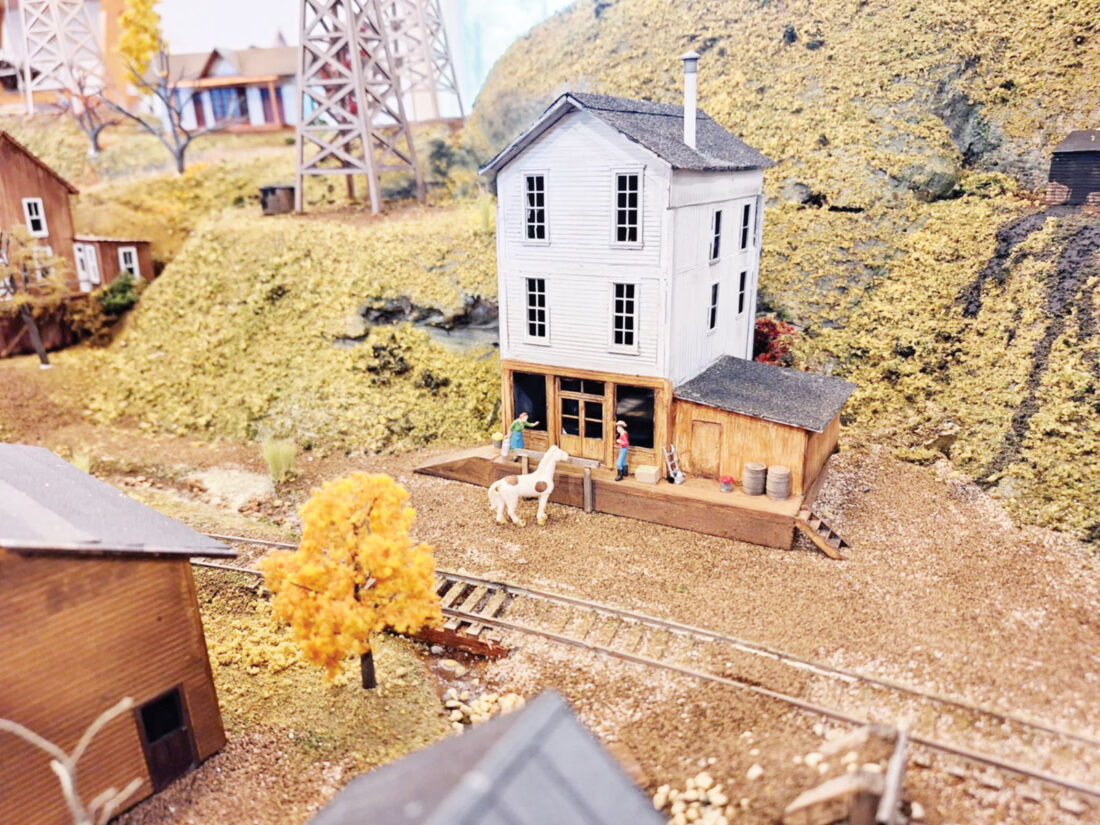
"A lot of what was built are my renditions of what was just a shape on a map," said Bee. "I did have photos of the hotel, school, the Stiles store and Dr. Sharp's house, so those buildings are accurate replicas. The model started with rough measurements and tape, laid out on the floor of my garage."
The model of Volcano will be available for public viewing once a custom-fit glass cover for it is completed by B&D's Glass in Belpre. The Mountwood Park Visitors Center is open on Saturdays and Sundays from 1-4 p.m. until Oct. 31. The annual Volcano Days festival and noted antique engine show is set for Sept. 26-28.
The oil harvested by Stiles' Volcanic Oil & Coal Company was transported to the Baltimore & Ohio Railroad interchange for transportation to Parkersburg and was utilized for illumination (oil lamps) and industrial applications. The railway carrying the oil was the Laurel Fork and Sand Hill Railroad, constructed between 1866 and 1869. Following the disastrous 1879 fire, which came on the heels of two failed attempts at arson, the oil was transported by West Virginia's first pipeline to Murphytown. It is estimated more than 2.5 millions barrels of oil were pumped at Volcano, an area of approximately 2,000 acres.
In addition to the structures previously mentioned, Volcano sported two newspapers (West Virginia Walking Beam and Volcano Lubricator), an opera house, a town hall, churches, a sawmill, a barrel-making company, a school, a post office, a bowling alley and multiple saloons.
See the timeline below for more information about Volcano, a town named for, depending on which source one believes, the Volcanic Oil & Coal Company, the light from the oil lanterns on the derricks and the flares atop the derricks.
***
A Volcano Timeline
Information shown below was derived from multiple sources and covers the major historical points of Volcano.
* 1839: William Cooper Stiles Jr. is born on July 27 in Philadelphia, PA.
* 1864: Stiles founds the Volcanic Oil & Coal Company on 2,000 acres of land in what will become Volcano. Operations were the first in the oil industry to employ the continuous cable system, adapted from an industrial application in Philadelphia. This system was later used all over the world. The American Civil War is raging at the time of the company's founding.
* 1866: At a cost of $160,000, Stiles begins construction on the Laurel Fork and Sand Hill Railroad.
* 1869: Laurel Creek and Sand Hill Railroad, one of the first short lines in West Virginia, is completed and begins operation, transporting oil from Volcano to a Baltimore & Ohio Railroad connection and on to refineries in Parkersburg.
* 1870: Stiles founds the town of Volcano, which grows quickly to become home to more than 4,000 people. Some sources state as many as 10,000 people were thought to have lived there.
* 1879: On Aug. 4, a suspicious fire leads to the near total destruction of Volcano, when aflame oil tanks rupture and burning oil flows through the streets. This event is said to have followed two failed attempts at arson. That same year, West Virginia's first pipeline was used to transport oil from Volcano to Murphytown.
* 1881: Stiles begins four years of service as a Wood County commissioner.
* 1896: William Cooper Stiles Jr. passes away at his Thornhill mansion in Volcano on Dec. 17 at the age of 57. At the time of his death, he holds two oil well leases, one for 45 wells and another for 33 wells.
Note: It is estimated the Volcanic Oil & Coal Company oil wells pumped more than 2.5 million barrels of oil during their operating lives. Some wells are estimated to have yielded oil for 75 years.