
Tuck helms conversation on need – and needs – for Parkersburg homeless shelter

Citizens from organizations across the Mid-Ohio Valley organized on Thursday afternoon to try to discover how to service the homeless community during inclement weather. (Photo by Gwen Sour)
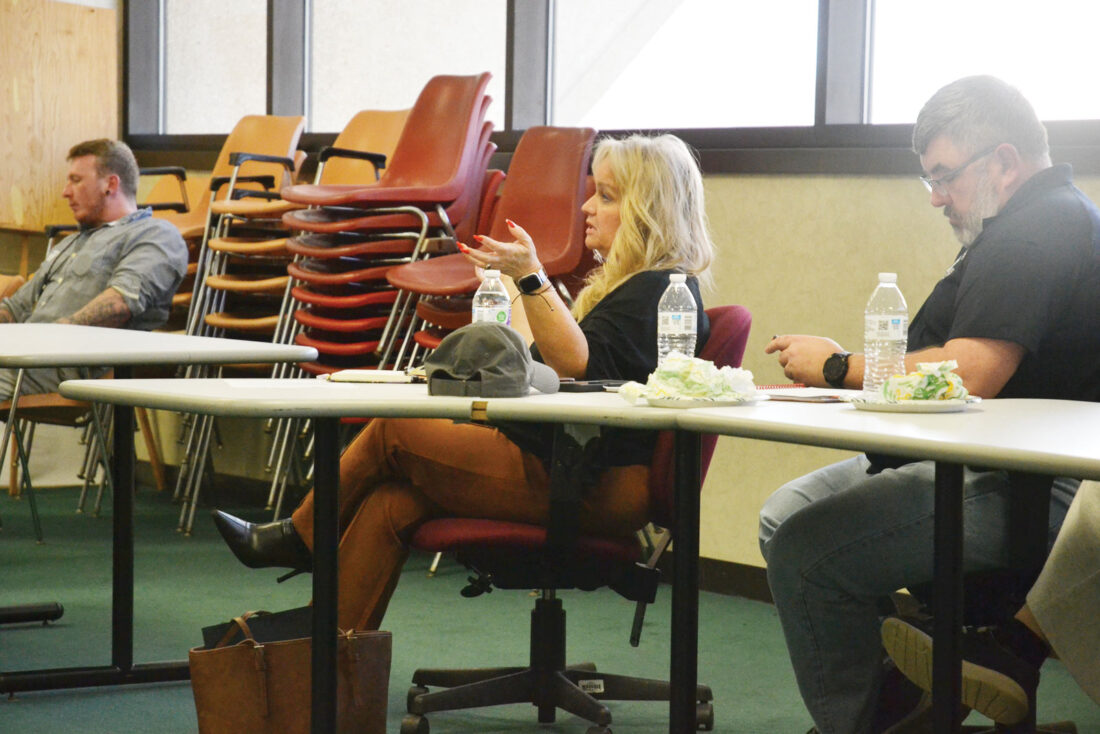
United Way of the Mid-Ohio Valley Executive Director Stacy DeCicco discussed the importance of properly training volunteers at a community conversation around assisting the homeless population on Thursday afternoon at the Parkersburg Municipal Building. (Photo by Gwen Sour)
Citizens from organizations across the Mid-Ohio Valley organized on Thursday afternoon to try to discover how to service the homeless community during inclement weather. (Photo by Gwen Sour)
United Way of the Mid-Ohio Valley Executive Director Stacy DeCicco discussed the importance of properly training volunteers at a community conversation around assisting the homeless population on Thursday afternoon at the Parkersburg Municipal Building. (Photo by Gwen Sour)
Trending
PARKERSBURG -- Parkersburg City Councilwoman Wendy Tuck held a conversation between community leaders and advocates to address the growing need for a low-barrier homeless shelter in Parkersburg, highlighting the challenges faced by the city's unhoused population during extreme weather conditions.
WHY IT MATTERS
Pastor Melody Smith from The Gathering church noted that reducing shelter entry barriers led to a dramatic increase in housing and treatment connections.
"We saw more people housed in just a couple of weeks than I have in years of ministry." Smith said.
According to several speakers, many of the shelters, like those operated by the Salvation Army, struggle with capacity and restrictions that exclude individuals with pets or active addictions.
BETWEEN THE LINES
Safety and staffing concerns remain a key challenge. Attendees discussed the need for trained behavioral health technicians and security personnel to ensure a structured, safe environment.
"My greatest concern sitting here today, if we're continuing to ask people to do things that they're not trained and qualified to do, they have a part for what we're asking Melody to be a point of entry for people in active addiction, and just because she's got the heart for it doesn't make her qualified and so then there's the safety concerns," cautioned United Way Alliance of the Mid-Ohio Valley Executive Director Stacy DeCicco.
Shane Modesitt, a Supportive Counselor and Peer Recovery Support Specialist (PRSS) from Clean & Clear Advantage Recovery, stated that moving forward he and other individuals from the recovery center would be willing to be available on an on-call basis to provide support to the shelters.
THE BIG PICTURE
Charleston's low-barrier shelter model, backed by the United Way and local organizations, was cited as a successful framework that could be adapted for Parkersburg. According to DiCicco the shelter in Charleston is held in a Salvation Army gymnasium and provides drinks until approximately 8 p.m. but no evening meal. They have practitioners that work with health care systems that volunteer time to work within those shelters including PRSS volunteers that make a pass through the shelter in the evenings and a nurse practitioner available to make referrals.
WHAT'S NEXT
Leaders are working to secure a suitable facility, develop a structured intake process, and coordinate ongoing support from local organizations. The next meeting will be on May 8 to continue to discover next steps, focused on emergency response. With the summer approaching, the group found it paramount to have a streamlined response to inclement weather by the time cooling centers are needed across the region.
Gwen Sour can be reached at gsour@newsandsentinel.com