
WWI history exhibit opening Thursday at Greater Parkersburg CVB

An exhibit featuring the lives of Parkersburg residents Cecil “Zeke” Gabriel and Louise Marsh and the letters between them during World War I from 1917-1919 will open noon Thursday at the Greater Parkersburg Convention and Visitors Bureau in Parkersburg. (Photo Provided)
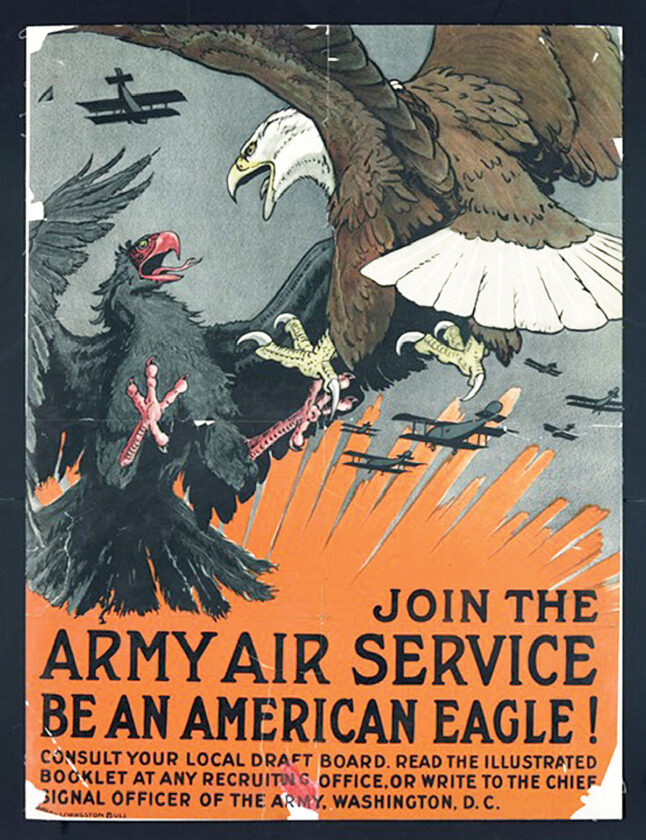
Posters are part of an exhibit opening noon Thursday at the Greater Parkersburg Convention and Visitors Bureau focusing on Cecil “Zeke” Gabriel and Louise Marsh and the letters they wrote each other during World War I. Gabriel served with the Army Air Service. (Image Provided)

Posters are part of an exhibit opening noon Thursday at the Greater Parkersburg Convention and Visitors Bureau focusing on Cecil “Zeke” Gabriel and Louise Marsh and the letters they wrote each other during World War I. Gabriel served with the Army Air Service. (Image Provided)
An exhibit featuring the lives of Parkersburg residents Cecil “Zeke” Gabriel and Louise Marsh and the letters between them during World War I from 1917-1919 will open noon Thursday at the Greater Parkersburg Convention and Visitors Bureau in Parkersburg. (Photo Provided)
Posters are part of an exhibit opening noon Thursday at the Greater Parkersburg Convention and Visitors Bureau focusing on Cecil “Zeke” Gabriel and Louise Marsh and the letters they wrote each other during World War I. Gabriel served with the Army Air Service. (Image Provided)
Posters are part of an exhibit opening noon Thursday at the Greater Parkersburg Convention and Visitors Bureau focusing on Cecil “Zeke” Gabriel and Louise Marsh and the letters they wrote each other during World War I. Gabriel served with the Army Air Service. (Image Provided)
Trending
PARKERSBURG -- The Greater Parkersburg Convention and Visitors Bureau is hosting a new World War I exhibit focused on two Parkersburg residents who lived and served in the Great War during the turbulent years of 1917-1919.
The free exhibit will open to the public at noon Thursday at the bureau's new Visitors and Welcome Center at 113 Ann St. in downtown Parkersburg.
"The CVB is proud and excited to host this remarkable exhibit by local resident Michael Coker, a graduate student at Northern Kentucky University," said Mark Lewis, president and CEO of the Greater Parkersburg Convention and Visitors Bureau.
The exhibit, which will be on display through Aug. 24, fits into the plan that the bureau also be a venue for similar events, Lewis said. The visitors bureau is open 9 a.m.-5 p.m. every day, so if someone misses the opening, they can see it on other days, too, he said.
According to Lewis, Coker developed the exhibit as his capstone project for his master's of arts, public history degree at Northern Kentucky.
"This is the first of what we believe will be many exhibits, presentations and events to be held in and around our new facility as the CVB endeavors to engage more visitors and locals alike," Lewis said.
Nearly 60,000 West Virginians served in World War I. Thousands more men and women from across the Mountain State worked in factories on the home front or supported the effort in the War to End All Wars.
"It's easy to lose sight of the individuals who make up the statistics," Coker said. "I hope this exhibit in some way helps to shine the light on two 'ordinary' people who lived and breathed in such dark times."
Coker's exhibit is concentrated on letters exchanged between Parkersburg residents, Cecil "Zeke" Gabriel and Louise Marsh from 1917 to 1919.
Gabriel enlisted and became an airplane mechanic for the 147th Aero Squadron, serving with the American Expeditionary Force in France. Marsh worked as an educator, teaching at local schools while refining her own literary ambitions.
The two sweethearts regularly wrote to one another during the war. After the war, the two married and started a family.
Daniel Gabriel, their grandson, has supported this exhibit and helped to fill in some of the missing details about his grandparents' life.
"Public history is an important tool to connect people to their past and to their community" Brian Hackett, head of the Public History Program at Northern Kentucky, said. "Different perspectives, like those found in these letters help to balance our interpretation of history."
The exhibit consists of half a dozen museum panels and a display case containing artifacts from WW I. The exhibit is free and open to the public.