
Parkersburg City Council sends food truck ordinance back to Planning Commission
Trending
PARKERSBURG - An ordinance updating regulations for mobile vendors was sent back to the Municipal Planning Commission after concerns were raised by a local food truck owner and others.
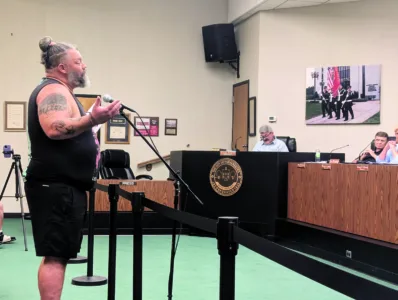
"I'm not against it completely by any means whatsoever," Jimmy Avocado's owner Jimmy Carrano said during the public forum portion of Tuesday's Parkersburg City Council meeting. "I feel that there's a significant lack of input from the food trucks in the area."
Later in the meeting, city Development Director Ryan Barber said the proposed ordinance was initially developed in response to a business wanting to sell food from a boat at Point Park. The relevant section of the municipal code, the "Hawkers and Peddlers" article, has remained largely unchanged since 1947, he said. City officials spoke with businesses through downtown Parkersburg about it.
"It hasn't been developed in a vacuum," Barber said, adding that all of its provisions are "on the books in some form or fashion."
The ordinance states mobile vendors must have a valid city business license and a mobile vending license, in addition to all permits and approvals required by the Mid-Ohio Valley Health Department. They can operate on private property with the owner's permission or on city property in conjunction with existing regulations. It also spells out rules for setting up at Bicentennial Park, a popular venue for food trucks.
Other provisions say mobile vendors can only operate between the hours of 7 a.m. and 11 p.m. and must maintain a 200-foot buffer zone from existing retail or food service businesses, including restaurants, bars, taverns, breweries, taprooms and private clubs. They also could not operate within 200 feet of property utilized during city-permitted special events unless authorized as part of the event.
"I think those are crazy," said Councilman Zak Huffman, who owns Huffman's Prime Steakhouse downtown.
"I'm wondering why it has to stop at 11," he said. "Nobody tells McDonald's when they have to close."
Huffman said food truck vendors "go where the crowd is," so it didn't make sense to keep them away from special events. Mayor Tom Joyce said that was included to prohibit people from setting up just outside an event like the Taste of Parkersburg and benefiting from the crowd without paying to be a participant. The buffer zone for special events does not apply to vendors participating in the event, he said.
Huffman said the 200-foot buffer from existing businesses might make it all but impossible for food trucks to set up at popular locations on Market Street.
"I don't think anybody's here to restrict businesses or food trucks," council President Andrew Borkowski said, calling the ordinance an attempt to "level the playing field."
Huffman also questioned the requirement for inverter generators, which he said are more expensive than the kind most food trucks use. Barber said that was included because of noise considerations and noted the city provides access to electricity at some of its sites.
Huffman made a motion to strike the four provisions he had questioned from the ordinance. Before that vote, Councilwoman Sharon Kuhl made a motion to send it back to the Municipal Planning Commission for further consideration.
"There were absolutely too many amendments," she said, suggesting Huffman attend the Planning Commission meeting and address his concerns there.
The motion passed 7-2, with Borkowski and Councilman Dave McCrady opposed.
Although the proposed ordinance was not advanced, Huffman criticized it and the rejection of a resolution authorizing funding for a grant program to support new businesses after Tuesday's meeting.
"It's reprehensible that members of council who have never opened a business jabbed small business owners twice in one night," he said.
The resolution originally appeared on council's July 28 agenda and failed on a 5-3 vote, with Huffman, Councilwoman Wendy Tuck and Councilman Chris Rexroad in favor and Councilman Mike Reynolds absent.
The three members who voted for it last month sponsored the resolution to bring it back to the agenda, and Reynolds joined them in voting in favor Tuesday. However, it failed in a 5-4 vote.
The resolution would have allocated $10,000 to a business incubator grant program to provide grants of $2,500 to be matched by the business. Although the text on the agenda specifically referred to downtown, Huffman said that was not his intention in sponsoring it. There was some debate as to whether it needed to be amended or if the resolution simply transferred funds. Council ultimately voted 5-4, with Councilman Rob Moore joining the four who supported the ordinance, to amend it to change the word downtown to citywide.
Borkowski said Wednesday the resolution only allocated funding and did not outline the program. He said he might support it if changes were made but he believed there are better options to help new business owners available through other programs.
"I don't think anyone's going to be a successful business by giving them $2,500," Borkowski said.
Barber said Wednesday that council did not approve an outline for the program, but it was developed at Huffman's suggestion by the Development Department. The program and how the money could be used were outlined at a previous Finance Committee meeting before the ordinance was referred to the full council, he said.
Finance Director Eric Jiles said during the meeting that the program itself was an administrative function but the resolution was only about allocating the money.
In other business, the final reading of an ordinance authorizing the design and construction of a system to filter PFAS and forever chemicals at the Parkersburg Utility Board's water treatment plant passed unanimously, as did the second reading of an ordinance authorizing a portion of funding for the nearly $25 million project, which will not require a rate increase. Unlike most municipal ordinances, it requires three readings.
Evan Bevins can be reached at ebevins@newsandsentinel.com.