
Justice thanks West Virginia lawmakers for successful second special session
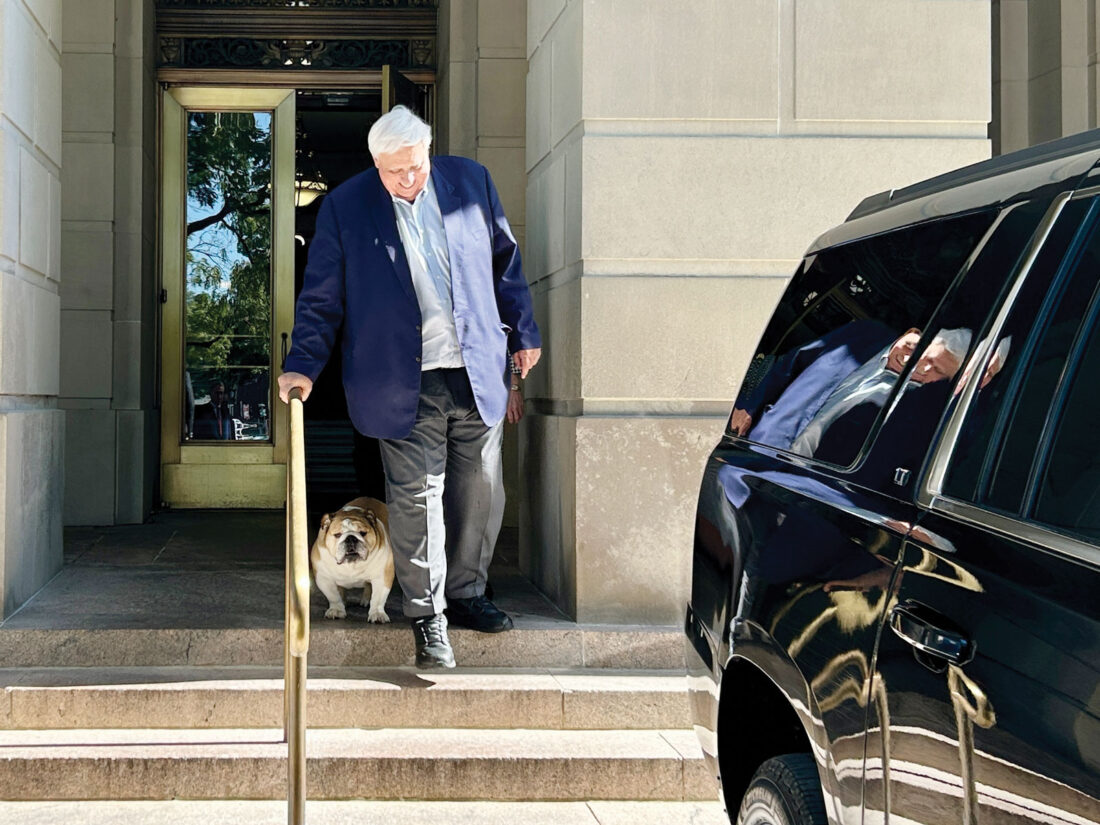
Gov. Jim Justice and Babydog leave the State Capitol Building Wednesday following his weekly administration briefing, where he celebrated a successful second special session. (Photo by Steven Allen Adams)
(Graphic by Steven Allen Adams)
Gov. Jim Justice and Babydog leave the State Capitol Building Wednesday following his weekly administration briefing, where he celebrated a successful second special session. (Photo by Steven Allen Adams)
(Graphic by Steven Allen Adams)
Trending
CHARLESTON -- Criticizing the naysayers that said he would not get his agenda accomplished, Gov. Jim Justice celebrated his second special session of 2024, which ended with a compromise personal income tax cut, a child care tax credit, and nearly three-dozen supplemental appropriations bills.
Speaking during his weekly administration briefing Wednesday at the State Capitol Building, Justice said the last few days since he called the West Virginia Legislature into special session beginning Sept. 30 were "monumental."
"We have completed our special session," Justice said. "I have absolutely all the thanks in the world to our legislators on both sides -- Senate and House. Good work."
"Governor, I can't applaud you enough," said Senate President Craig Blair, R-Berkeley, who joined Justice on his briefing. "I've been around a long time, and I've never seen any prosperity and government working the way it does today. It's never happened like that in my lifetime. Hopefully, what you've done and what we've done is going to transcend and keep being that way into the future even when we're gone."
Lawmakers first met in special session in May to restore cut funding after the Legislature passed a skinnier general revenue budget during the 2024 regular session that ended in March while the state was awaiting word from the U.S. Department of Education on a waiver from COVID-19 education funding spending requirements.
While lawmakers said another special session would be likely after the May special session, Justice said in July he would call lawmakers in special session later in the fall to consider a 5% personal income tax cut that he said would return approximately $115 million to taxpayers when fully implemented, and a child care tax credit he offered to lawmakers during the regular session but was never taken up.
The Legislature gaveled in for the second special session on Sept. 30, but after passing some agreed-upon supplemental appropriations, the House of Delegates and the state Senate adjourned until Oct. 6 when already scheduled legislative interim meetings were set to begin.
The break gave the Governor's Office and legislative leadership time to work on a compromise tax cut plan to appease the concerns of some members of the GOP caucus about the sustainability of a 5% tax cut on the next fiscal year budget.
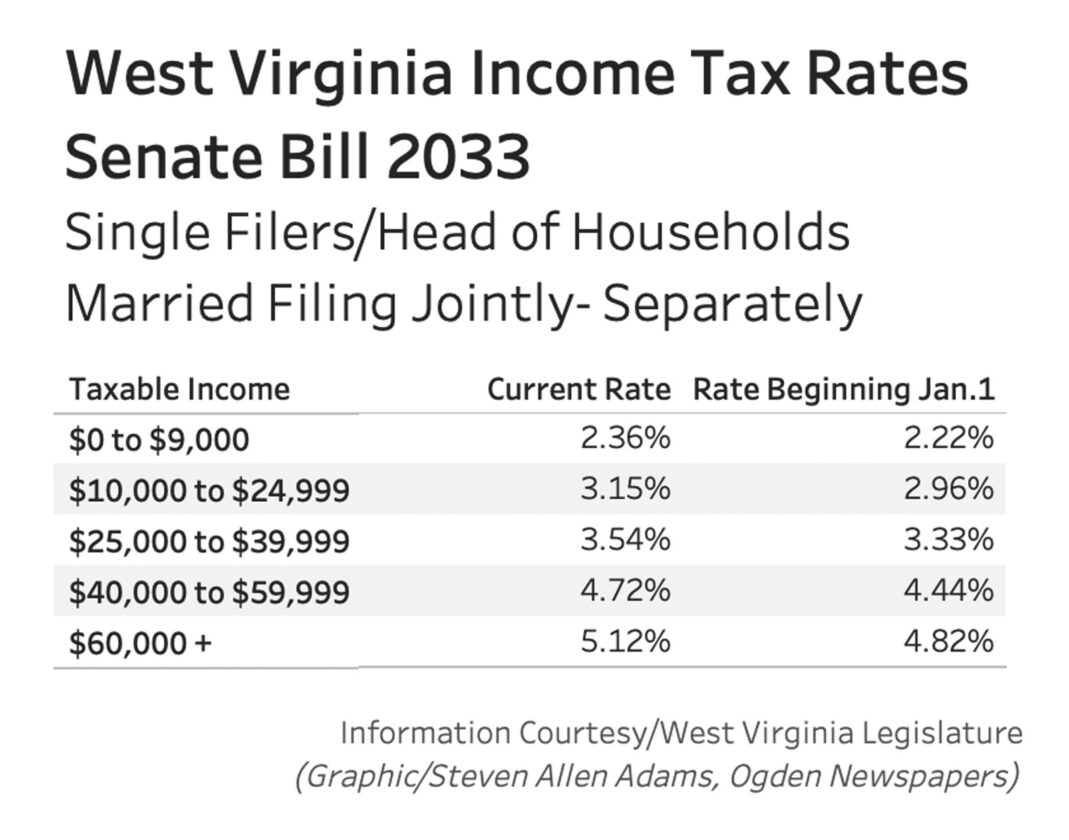
A compromise was reached for a 2% personal income tax cut effective January 2025, returning approximately $46 million to taxpayers when fully implemented. The vehicle for the tax cut, Senate Bill 2033, passed the Senate Monday night in a 31-0 vote, and passed the House Tuesday afternoon in a 90-6 vote.
"It's not that it's going to put all the money in the world back into folks' pockets. It's the multiplier effect on the dollars," Justice said. "It's $40 million going back into our economy. The multiplier effect of those dollars is people will spend it just like that. The multiplier effect on those dollars is normally 10 times. If it is 10 times, that's $400 million that's going round and around and around in our economy."
SB 2033 also delays the effective date of the next personal income tax trigger put in place by the 2023 tax reform package. When the Department of Revenue determines the next personal income tax cut in August based on the trigger and formula, instead of that tax cut going into effect in tax year 2026, it would go into effect in tax year 2027.
The first trigger determined by the Department of Revenue and the State Auditor's Office of 4% will still go into effect this coming January along with the 2% tax cut in SB 2033, returning a combined $138 million to taxpayers when fully implemented. Along with a 21.25% personal income tax cut that went into effect in 2023, Justice and the Legislature have cut personal income tax rates by more than 27% from the rate in 2022.
"I wanted to do the 5%. I wanted to do something in addition to the 4% trigger," Justice said. "But you've got 134 (lawmakers) that are there and everything else, and we did do something, and we should celebrate ... All of us want to mind the store and mind the store properly. With all of that being said, that is what we've done."
Lawmakers also passed House Bill 226, the governor's child care tax credit. The bill will provide a credit against the personal income tax in the amount of 50% of the allowable federal child and dependent care credit for those already receiving the federal tax credit, effective retroactively to Jan. 1. The credit could return up to $4.2 million to eligible taxpayers according to a fiscal note from the state Department of Revenue.
The Legislature passed 35 other bills, including multiple supplemental appropriations totaling more than $500 million, using available surplus tax collections from the previous fiscal year and unappropriated monies in the current fiscal year general revenue budget. Combined with special session bills providing spending authority for various state agencies, Justice said total spending comes to nearly $660 million.
"I'd like to have done more, but at the same time, I'm tickled to death 100%," Justice said. "I heard over and over and over 'Justice, you'll not get this done.' It's done. Dad would say 'it's done done.'"
Steven Allen Adams can be reached at sadams@newsandsentinel.com.