
Fairmont Regional Medical Center to close
Trending
PARKERSBURG --Financial and other issues affecting hospitals in West Virginia will be studied by an industry association in the state.
Following the announcement last week that the Fairmont Regional Medical Center will close in 60 days, the West Virginia Hospital Association said it will assemble a work group of its membership to identify the challenges facing hospitals.
"Although our hospitals provide great benefits to their communities, they are not immune to the numerous challenges in providing healtbh care: the long-standing realities of rural health care, including low patient volume, a heavy reliance on government payers and an older population with more chronic conditions, to name a few," Joe Letnaunchyn, president and CEO of the Hospital Association, said.
The announcement by Alecto Healthcare Services, a California company, about Fairmont Regional follows the company's closure of the Ohio Valley Medical Center in Wheeling and the East Ohio Regional Hospital in Martins Ferry in August. Alecto operates and manages Fairmont Regional.
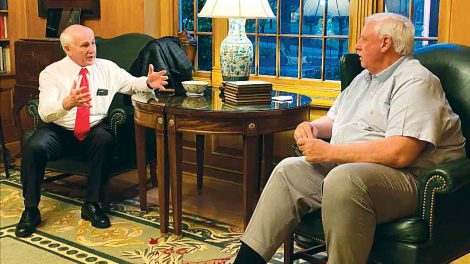
On Thursday, the House of Delegates adopted a resolution for Attorney General Patrick Morrisey to immediately investigate Alecto and the closing of Fairmont Regional and Ohio Valley to determine if state laws were violated. Gov. Jim Justice met with representatives of Fairmont Regional on Thursday and said he wanted to save the whole hospital.
"We've got to try to find a way. I don't know if we can pull it off, but we've at least got to work our blooming tails off to see if we can accomplish that," he said in a statement.
About 600 people are affected at Fairmont Regional. WorkForce West Virginia in 2019 listed Alecto with Fairmont Regional and Ohio Valley as the 30th largest employer in the state in 2019.
The announcement is a reminder that West Virginia's hospitals "are the cornerstones of their communities," Letnaunchyn said.
Hospital care, the largest component of the healthcare sector in West Virginia, employs more than 46,000 people and provides $10.5 billion in economic activity to the state economy and are "key access points of care" for thousands of residents, he said.
"We must work collaboratively to preserve the care provided by our hospitals in these and other communities and help sustain the entire hospital industry in West Virginia," Letnaunchyn said.
Among issues before hospitals are healthcare changes including the shift from inpatient to outpatient care, growing behavioral health needs and higher drug costs, he said.
"These obstacles, and others, are felt more acutely in rural settings due to geographic isolation, fewer patients and the large proportion of Medicare, Medicaid and uninsured populations served by hospitals," Letnaunchyn said. "The cumulative burden of these challenges can threaten a hospital's ability to maintain access to services."
Hospitals are already stretched thin by caring for chronically ill patients with fewer clinicians and fewer dollars and addressing the changes in healthcare practice, payment and compliance requirements, he said.
"While saddled with these challenges and limited resources, rural providers simply may not have capacity to shift attention to urgent issues or remain flexible for the future," Letnaunchyn said. "For some hospitals, this ever-more-demanding situation becomes unsustainable, leading to service reduction or complete closure."
Communities and healthcare leaders best understand their needs and have the experience to "develop the creative and bold solutions required for success," he said. The workgroup will identify the issues and challenges, Letnaunchyn said.
"It is time to seize the opportunity to develop thoughtful, strategic, long-term policy to protect access to high-quality care for the thousands of West Virginians living in rural areas," Letnaunchyn said. "We look forward to sharing our findings and recommendations with the governor, state policy makers and legislators."
The closure was announced despite the governor's office working for the past several months for a solution, according to Gov. Jim Justice. Justice said he asked Sen. Roman Prezioso, D-Marion, to meet with him Tuesday, at the mansion, to discuss the closure.
He and Prezioso were to meet with hospital representatives Thursday.
"Fairmont Regional Medical Center is a vital lifeline to our people in the Fairmont community and those across Marion County," Justice said. "My administration has been studying various options over the past several months and meeting with delegates, senators, and other community leaders to try to find a workable solution."
Sen. Joe Manchin, who is from Marion County, said the 11th largest county and seventh largest city in the state "can't survive without a quality hospital."
"This is an unfortunate and painful trend across rural America," Manchin said. "The closing of rural hospitals and clinics continues to make access to quality care harder and forces people to travel unreasonably far distances to receive the care they need."
West Virginia University Health Systems and Mon Health System are monitoring the developments, according to statements from the organizations.
"We're certainly concerned about the implications this could have for the residents of Marion County, as well as the hospital's employees. Our commitment is always to ensure West Virginians have access to critical healthcare services, and as a reminder, Marion County residents have quick access to many of our services at our Fairmont Gateway Clinic, including Urgent Care," a statement from West Virginia University Health System said.
Mon Health also will continue to provide care, treatment and programs to residents in Marion County through established services, Mon Health President and CEO David Goldberg said.
"We've recently announced expansion of Mon Health services as part of our ongoing commitment to the community, adding to our cardiology, primary care, and soon-to-be women's health services," he said.
"We will continue to monitor the community needs and meet those needs through Mon Health collaborations," Goldberg said. "The most important part of any solution is to ensure that citizens of Greater Fairmont and its surrounding communities continue to have real choice in where they get their healthcare."
Jess Mancini can be reached at jmancini@newsandsentinel.com.