Hive of Activity: A behind-the-scenes look at Mister Bee
-
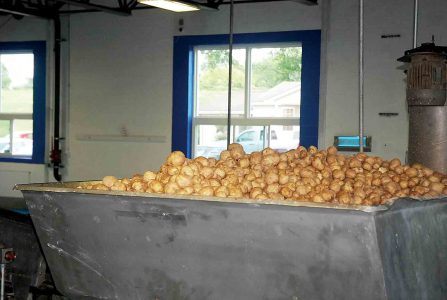
- Thousands of pounds of potatoes sit in the hopper as they begin the process to become Mister Bee chips. From there they drop into the peeler. These spuds were purchased from Missouri. (Photo by Evan Bevins)
-
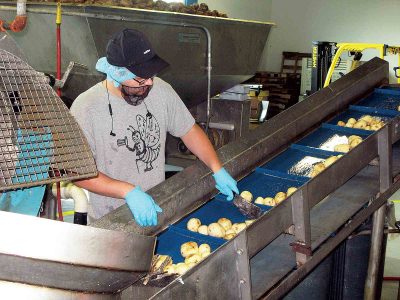
- Mister Bee Potato Chips employee Nate Caplinger checks potatoes as they move from the peeler to the slicer. Caplinger is responsible for making sure the peels have been completely removed, looking for and removing green spots and cutting larger potatoes down to size so they can fit into the slicer. (Photo by Evan Bevins)
-
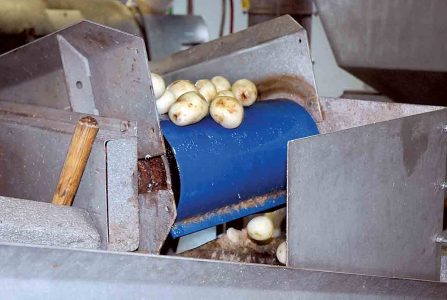
- Potatoes roll off the conveyor belt into the slicer. (Photo by Evan Bevins)
-
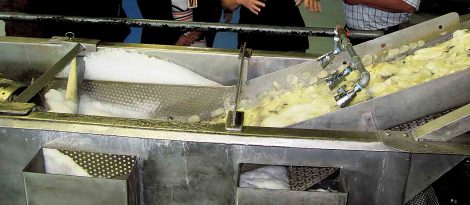
- After being cut up in the slicer, the raw potato chips go through a starch bath, which removes the excess starch from the potatoes, and are rinsed as they move along a conveyor belt. (Photo by Evan Bevins)
-
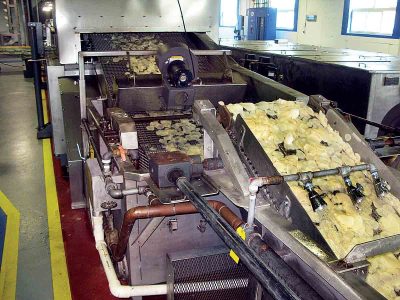
- After the raw chips are rinsed, they move under an air blower to remove as much of the water as possible before they go into the oil in the fryer. (Photo by Evan Bevins)
-
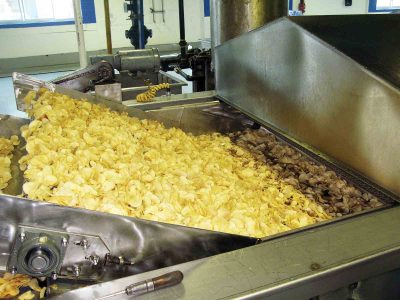
- Hot, unsalted chips emerge from the fryer. (Photo by Evan Bevins)
-
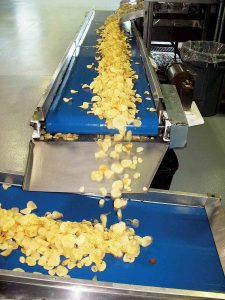
- The chips go from the fryer to a series of conveyor belts. (Photo by Evan Bevins)
-
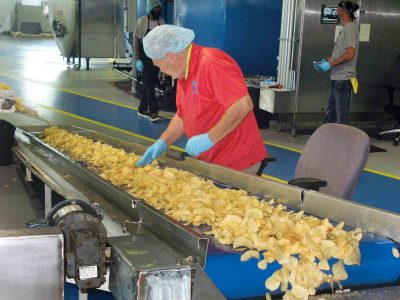
- Mister Bee “potato picker” Mark Parsons sorts through the fried chips on a conveyor belt, looking to remove those that are burnt, green or discolored, as well as any larger potato pieces that might have made it this far in the process. (Photo by Evan Bevins)
-
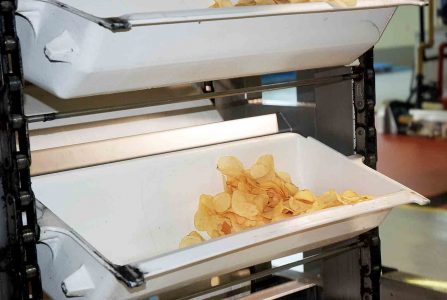
- The conveyor belt delivers chips to a circuit of buckets that carry them to the upper level of the production area. (Photo by Evan Bevins)
-
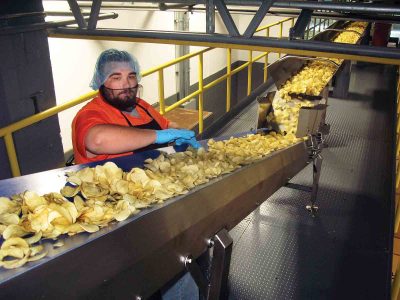
- On the catwalk level, Mister Bee employee Wesley “Chunk” Canterbury performs another check for defects. (Photo by Evan Bevins)
-
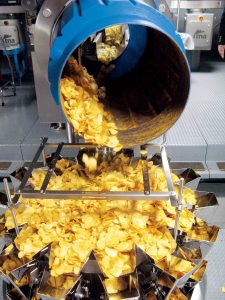
- Barbecue seasoning is added to the chips in a rotating drum before they slide onto a set of scales that dispenses them into a series of receptacles. Each container is calibrated to hold and dispense the correct weight of chips to be deposited into a specifically sized bag at the bottom of a series of chutes below. (Photo by Evan Bevins)
-
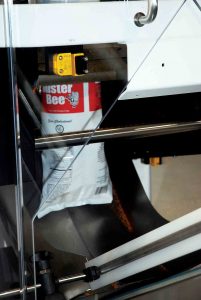
- A bag of Mister Bee Barbeque potato chips is sealed after being filled with chips. (Photo by Evan Bevins)
-
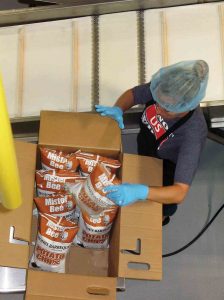
- Mister Bee employee Samantha Bostic places freshly sealed, 9-ounce bags of Honey Barbeque chips into a box. This photo was taken before the installation of the new collators that stack the bags upright so workers don’t have to reach down and grab them as they move by. (Photo by Evan Bevins)
-
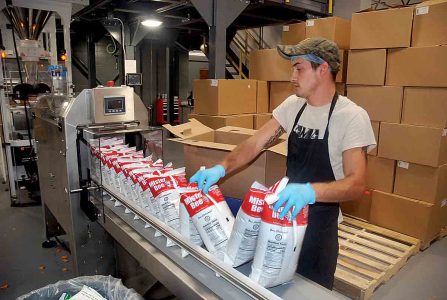
- Mister Bee employee Braden Hewitt loads bags of Barbeque chips from a collator into a box. (Photo by Evan Bevins)
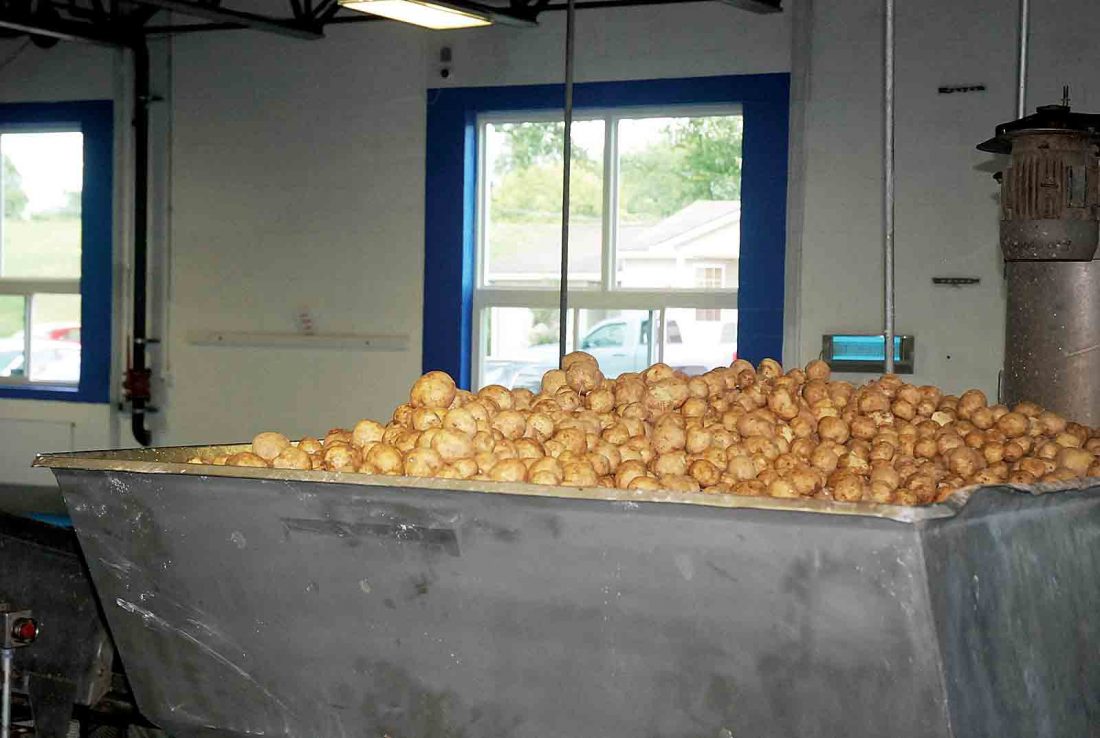
Thousands of pounds of potatoes sit in the hopper as they begin the process to become Mister Bee chips. From there they drop into the peeler. These spuds were purchased from Missouri. (Photo by Evan Bevins)
PARKERSBURG — Mister Bee potato chips have been made in Parkersburg for nearly 70 years, but today the process is more efficient than ever.
West Virginia Potato Chip Co. majority owner Mary Anne Ketelsen invested more than $2 million in new equipment that more than tripled production capacity, while bringing costs down 40 percent.
Production was suspended for more than two months while the new equipment — including a potato peeler, slicer, an overhauled fryer and a catwalk — was installed, although Mister Bee built up inventory in advance to cover that gap.
Mister Bee utilizes approximately 45,000 pounds of potatoes a day, the same amount they went through in three days with the previous equipment. The potatoes are purchased from Florida, Michigan, Missouri and Wisconsin, Ketelsen said.
The number of 1- to 2-ounce bags that can be filled in a minute has jumped from 25 to about 90. The capacity for 16-ounce bags went from six to eight to around 30 a minute, while 9-ounce bags jumped from 15 to 50.
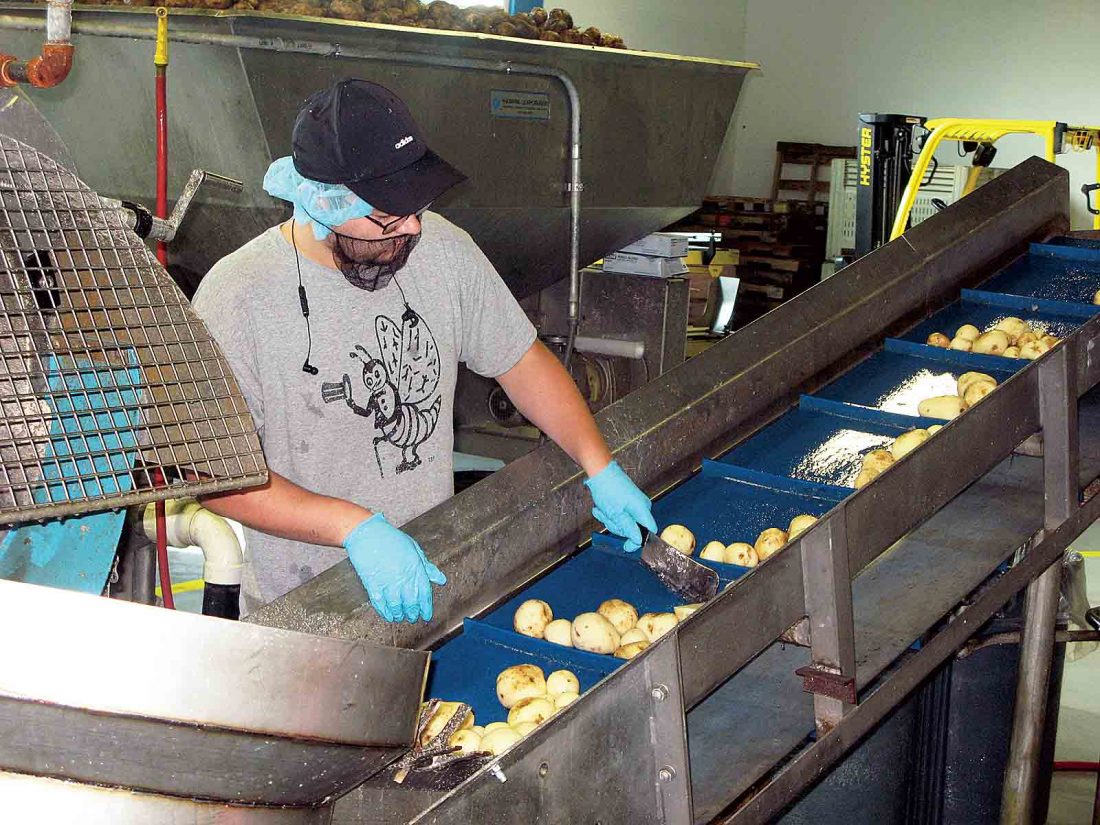
Mister Bee Potato Chips employee Nate Caplinger checks potatoes as they move from the peeler to the slicer. Caplinger is responsible for making sure the peels have been completely removed, looking for and removing green spots and cutting larger potatoes down to size so they can fit into the slicer. (Photo by Evan Bevins)
Ketelsen said she’s working to expand the company’s customer base “trying to get Mister Bee’s good name back” after a series of challenges over the years, including filing for bankruptcy in 2011 and a fire in 2013. She purchased the company in 2015 and took over day-to-day operations in May 2018.
Along the way, Ketelsen worked a variety of jobs in the production area to learn the business from the ground up.
“I didn’t want to be the kind of person that bought this business and really didn’t know anything about it,” she said.
Recently, she and sales manager Rob Graham shared a behind-the-scenes look at the process with West Virginia Secretary of Commerce Ed Gaunch and The Parkersburg News and Sentinel.
Mister Bee employs approximately 30 people, about evenly split between production workers, route drivers and administration. The production staff generally works about 30 hours a week, although Ketelsen has said as business increases she would like to get them more hours.
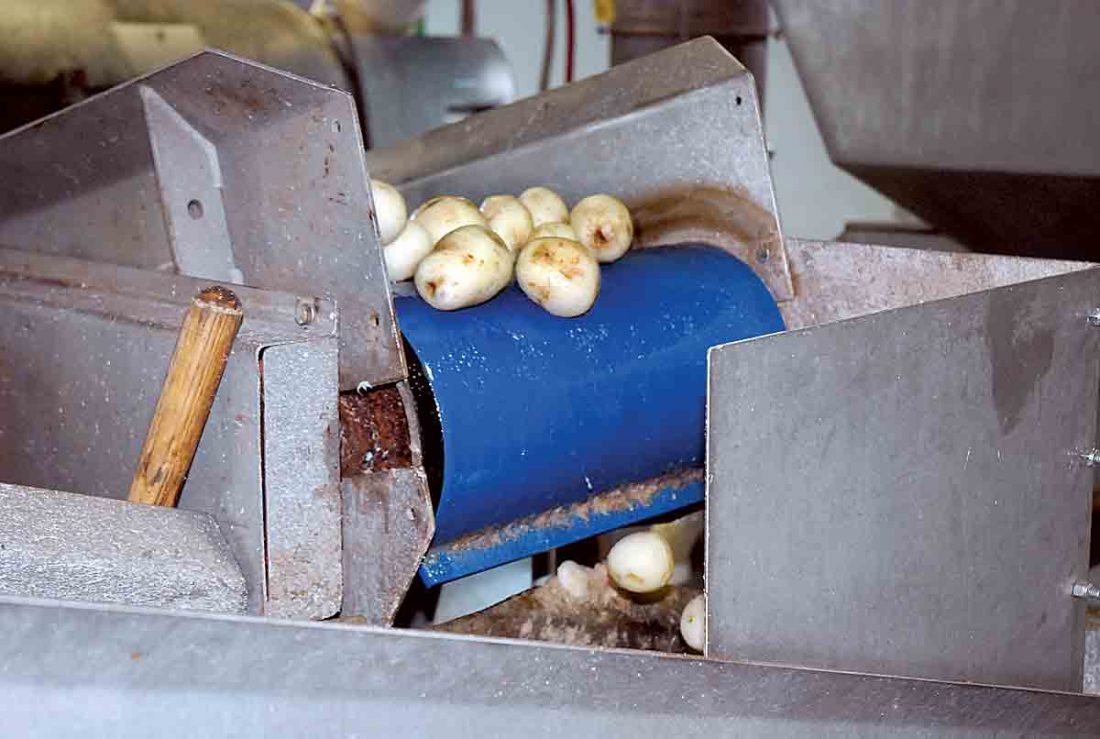
Potatoes roll off the conveyor belt into the slicer. (Photo by Evan Bevins)
Mister Bee co-packages chips for five other companies, including one that has them making a line of cheese-flavored chips to serve with wine.
“All the local people here have no idea what we do down here,” Graham said.
***
The Potato Chip Process
1. Three to four thousand pounds of potato are placed in a hopper, from which they drop into a peeler.
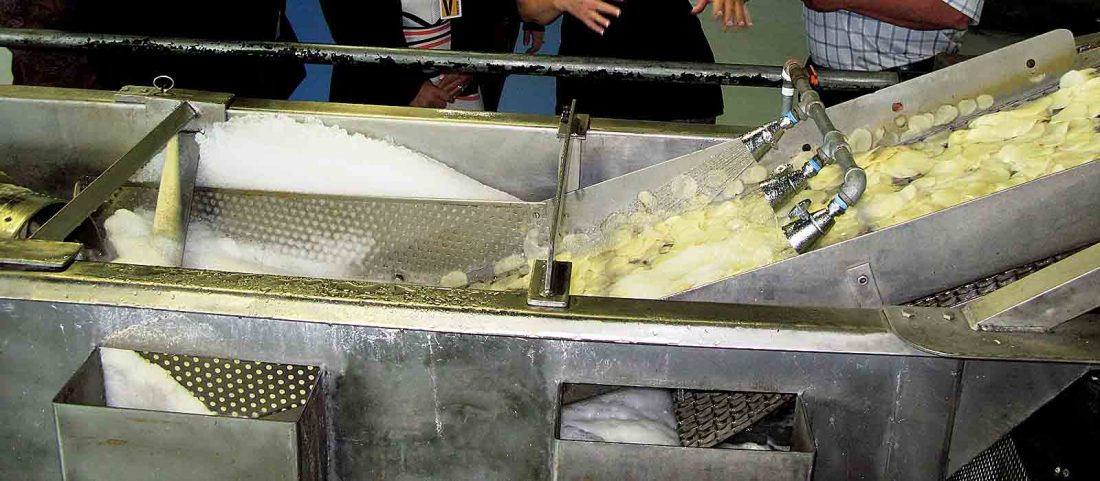
After being cut up in the slicer, the raw potato chips go through a starch bath, which removes the excess starch from the potatoes, and are rinsed as they move along a conveyor belt. (Photo by Evan Bevins)
2. The peeled potatoes roll onto a conveyor belt where an employee checks them to make sure the peels have been completely removed, removes green spots and cuts larger potatoes down so they’ll fit in the slicer.
3. After being cut up in the slicer, the raw potato chips go through a bath to remove excess starch.
4. They ascend on another conveyor belt and are rinsed, then pass under an air blower to remove as much excess water as possible before they reach the oil in the fryer.
5. Chips emerge from the fryer and onto a series of conveyor belts that carry them to a rotating circuit of buckets.
6. The buckets carry the chips to an upper level where they will be seasoned.
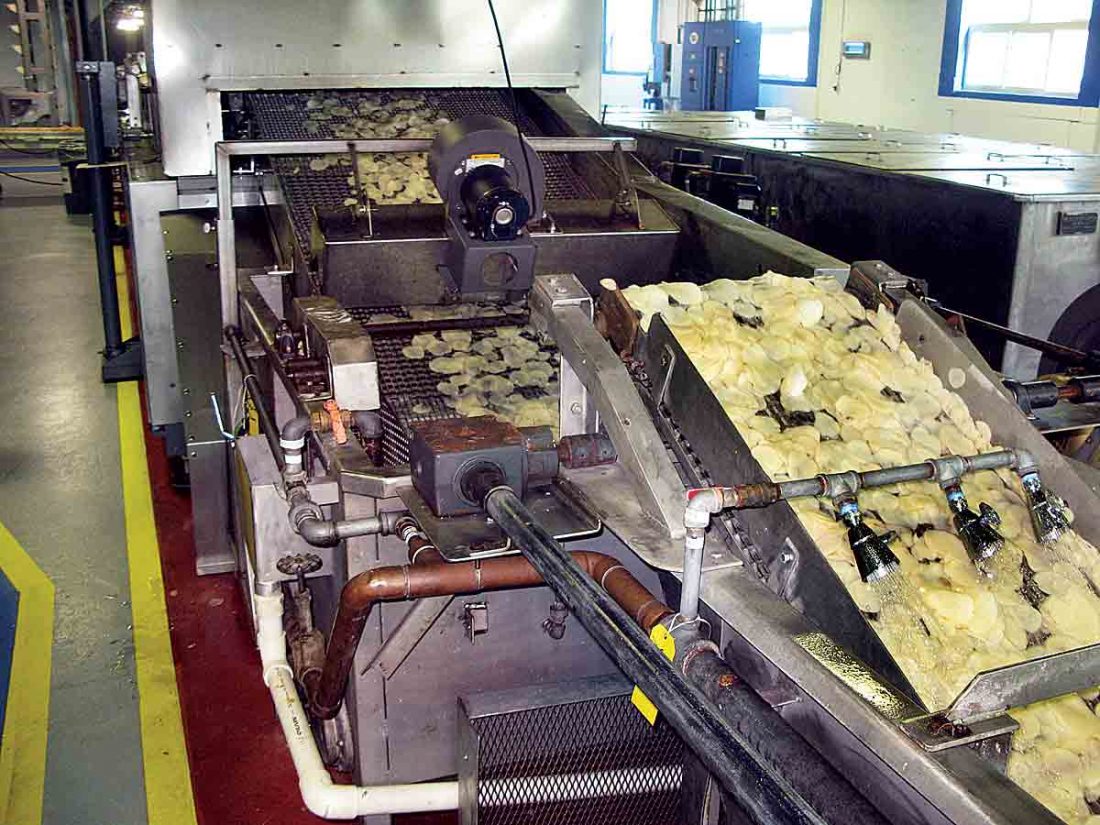
After the raw chips are rinsed, they move under an air blower to remove as much of the water as possible before they go into the oil in the fryer. (Photo by Evan Bevins)
7. On both the lower and upper levels, an employee inspects the chips, looking for and removing those that are burnt, green or discolored, as well as any larger potato pieces that might have made it through.
8. The chips go through rotating drums where they are seasoned with the flavors being manufactured that day.
9. The chips move from the drums to scales that dispense them into receptacles that measure and drop the correct weight of chips into a series of chutes and the waiting bags below.
10. The bags are automatically sealed and sent to employees who place them in boxes.
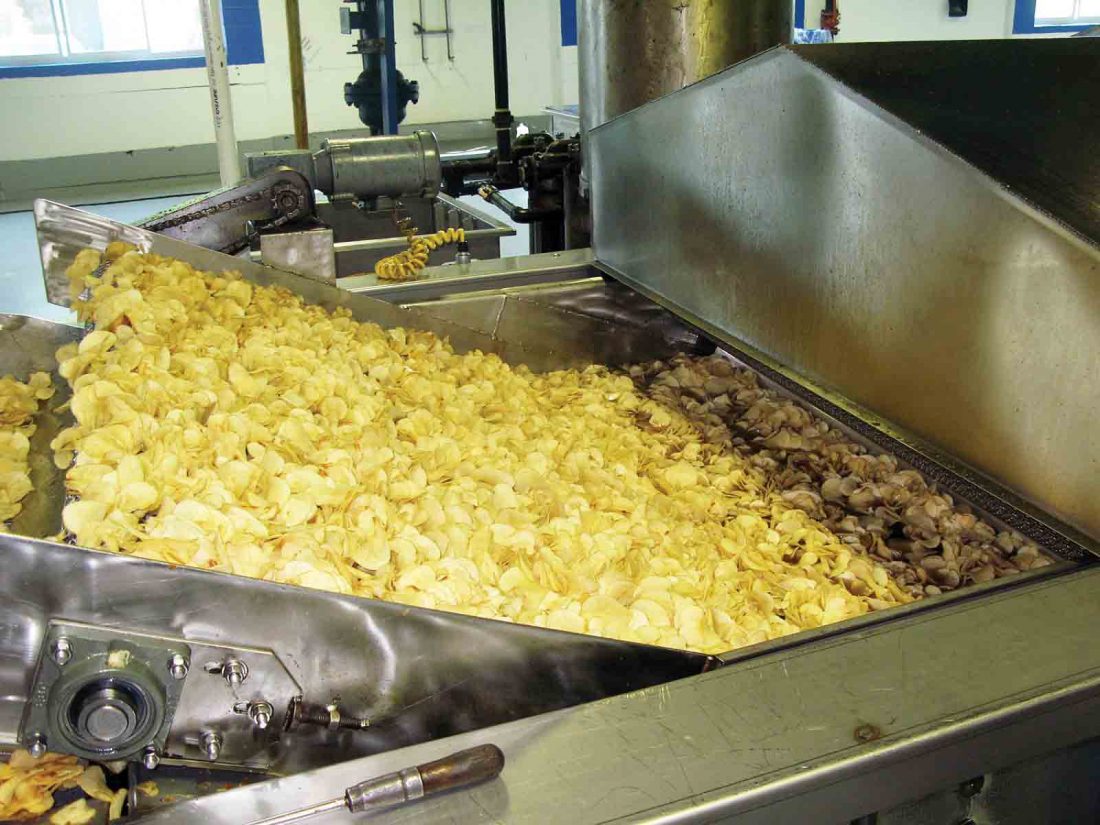
Hot, unsalted chips emerge from the fryer. (Photo by Evan Bevins)
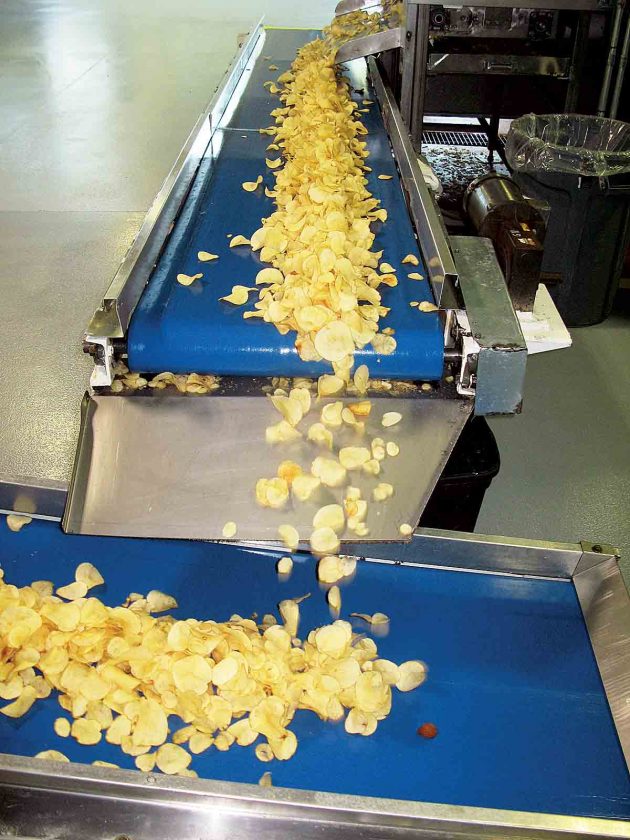
The chips go from the fryer to a series of conveyor belts. (Photo by Evan Bevins)
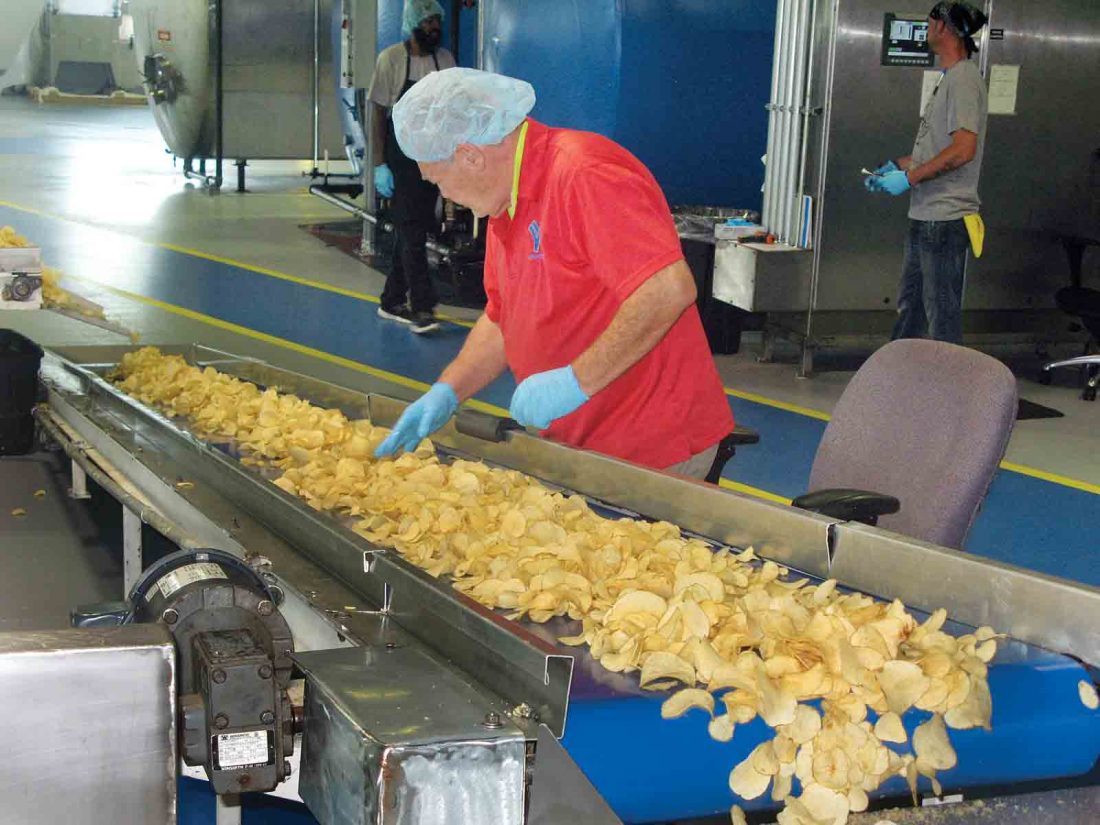
Mister Bee “potato picker” Mark Parsons sorts through the fried chips on a conveyor belt, looking to remove those that are burnt, green or discolored, as well as any larger potato pieces that might have made it this far in the process. (Photo by Evan Bevins)
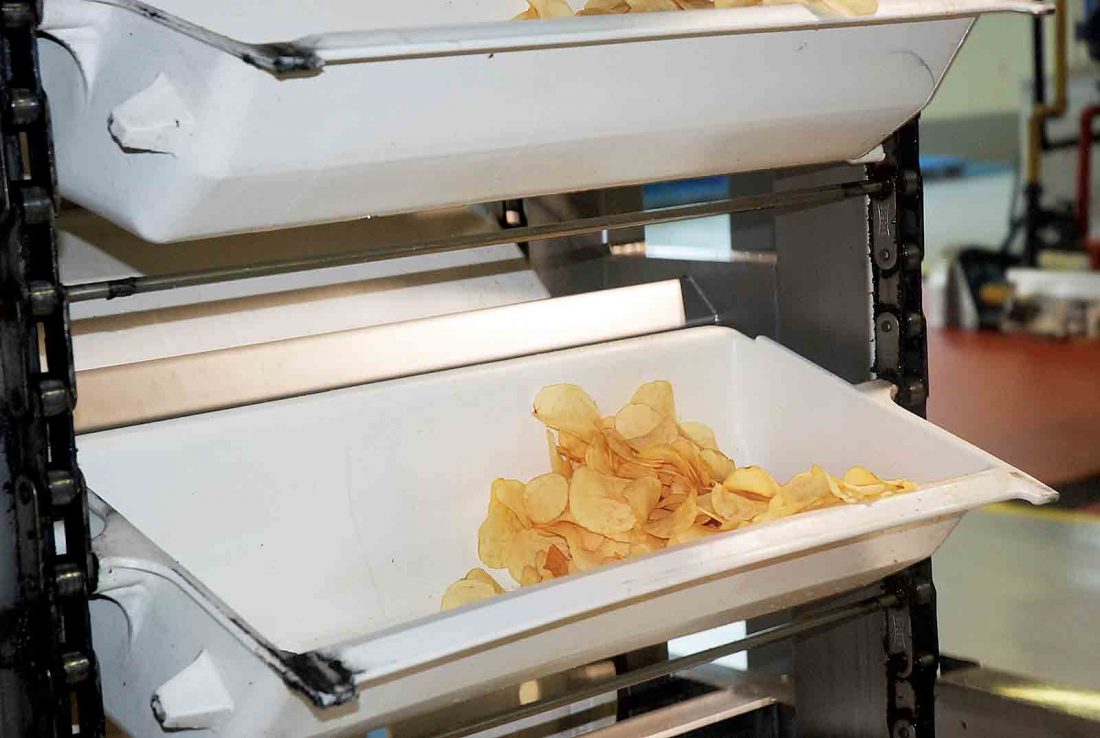
The conveyor belt delivers chips to a circuit of buckets that carry them to the upper level of the production area. (Photo by Evan Bevins)
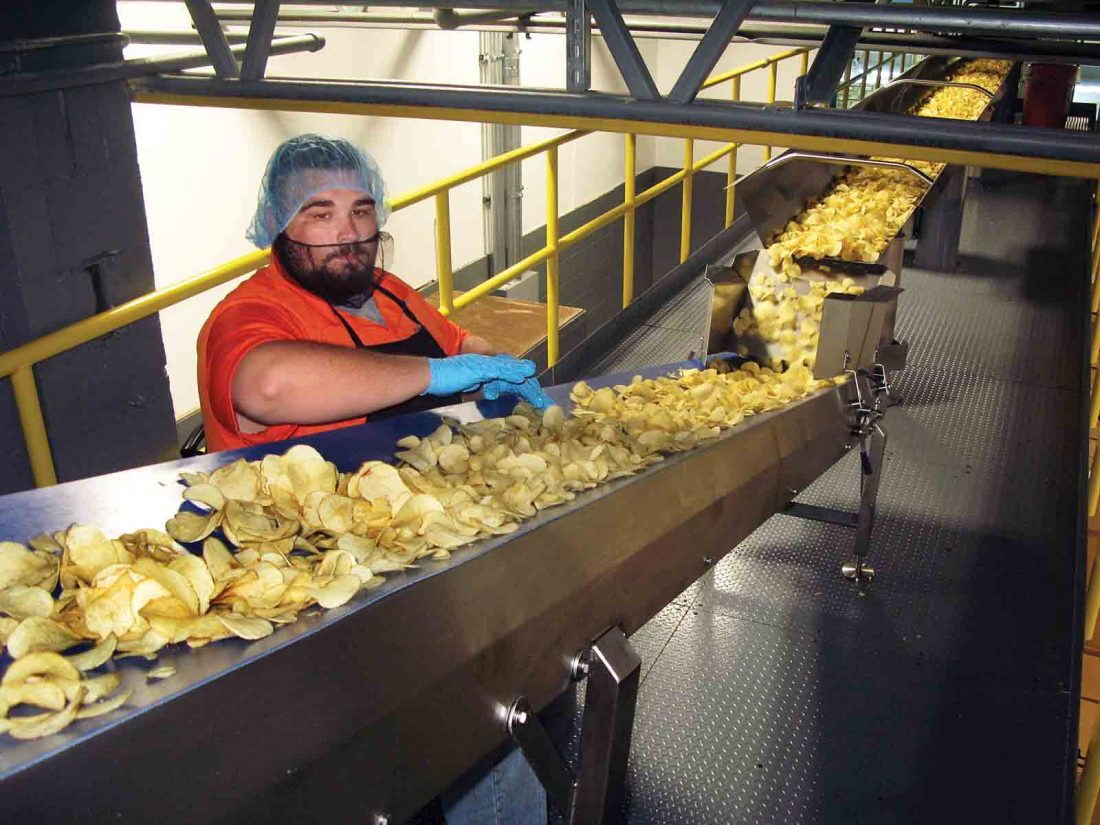
On the catwalk level, Mister Bee employee Wesley “Chunk” Canterbury performs another check for defects. (Photo by Evan Bevins)
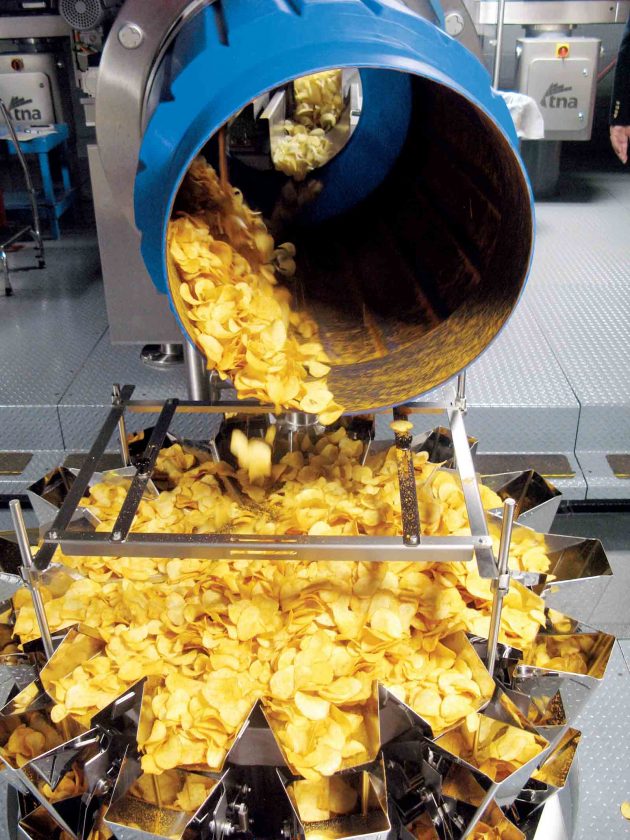
Barbecue seasoning is added to the chips in a rotating drum before they slide onto a set of scales that dispenses them into a series of receptacles. Each container is calibrated to hold and dispense the correct weight of chips to be deposited into a specifically sized bag at the bottom of a series of chutes below. (Photo by Evan Bevins)
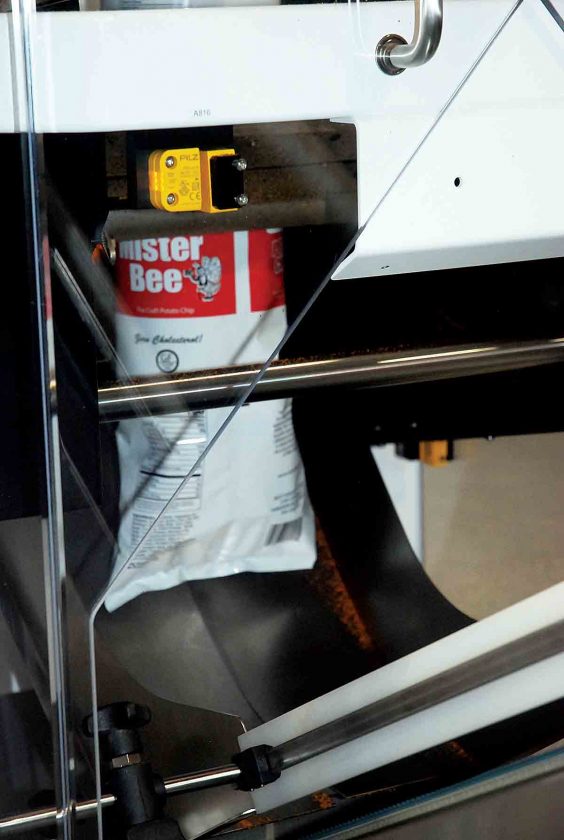
A bag of Mister Bee Barbeque potato chips is sealed after being filled with chips. (Photo by Evan Bevins)
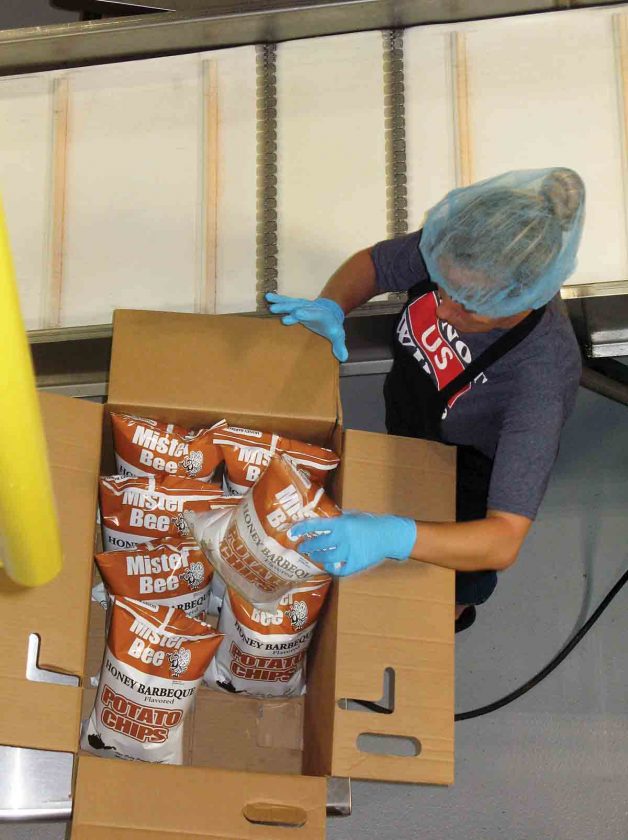
Mister Bee employee Samantha Bostic places freshly sealed, 9-ounce bags of Honey Barbeque chips into a box. This photo was taken before the installation of the new collators that stack the bags upright so workers don’t have to reach down and grab them as they move by. (Photo by Evan Bevins)
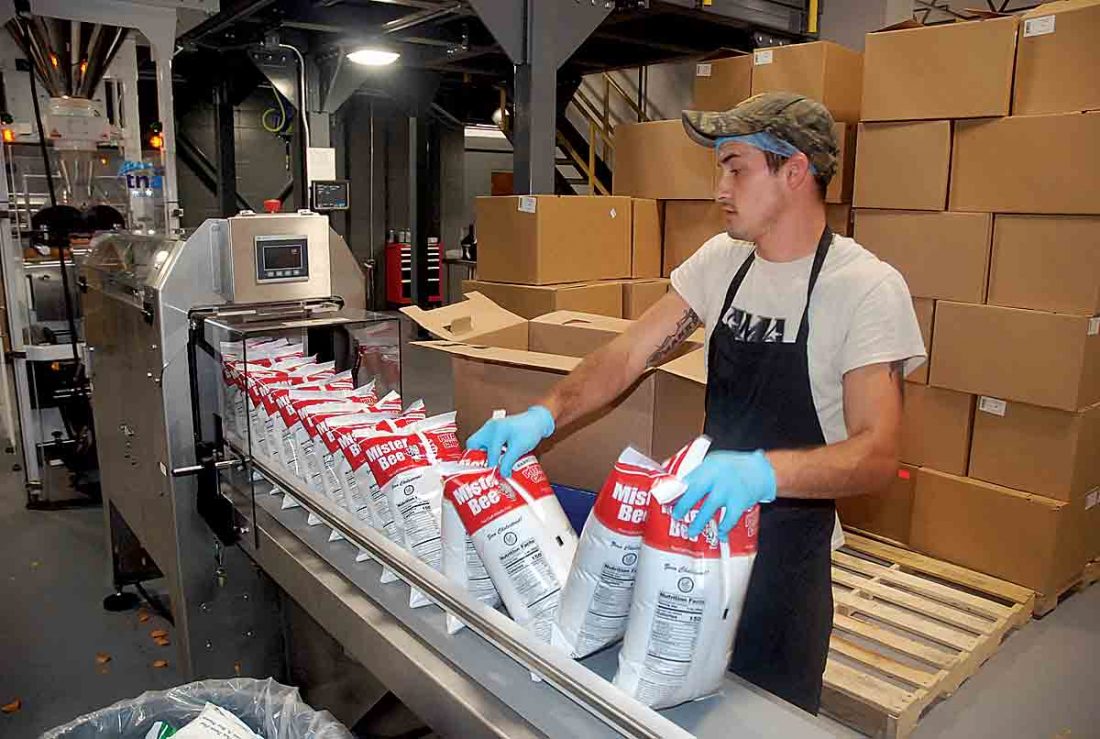
Mister Bee employee Braden Hewitt loads bags of Barbeque chips from a collator into a box. (Photo by Evan Bevins)
Local News

No Joke: Personal income tax collections down in March but W.Va. revenues remain in black

Capito speaks at final day of W.Va. Coal Association Mining Symposium
Parkersburg mayor offers way for petitioners to remove signatures
PARKERSBURG – As a committee seeking to repeal or place on the ballot an ordinance authorizing a trash service ...
Multiple fire departments respond to two fires Tuesday
PARKERSBURG – Multiple local fire departments responded to a brush fire and structure fire Tuesday evening. The ...

W.Va. Educational Broadcasting Commission thankful for flat budget for next fiscal year