
Trending
As families across the Mid-Ohio Valley prepare for another school year, much of the attention naturally turns to new teachers, school supplies and morning routines. But there is another back-to-school question worth asking:
Can your kid goto school safely?
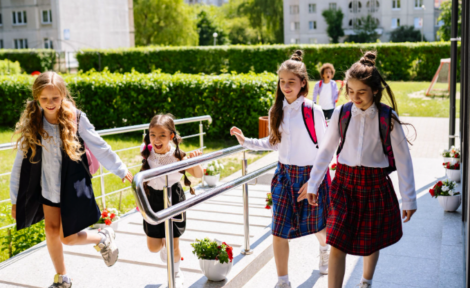
For students who walk or bike, the answer depends on something as basic as whether a sidewalk exists, a crosswalk is visible, or drivers slow down near the school entrance.
A safe road to school shouldn't be a matter of luck but the result of structured planning, responsible driving and communities willing to invest in streets that put children first.
That's how we can reach this.
Safe routes begin with the basics
The first priority should be making sure children have safe, continuous paths to reach their schools. In some neighborhoods, that means filling gaps in sidewalks, while in others, it's about repairing damaged walkways, improving lighting, or creating safer connected paths between a residential street and a school entrance.
A safer community also gives families more opportunities to enjoy their free time without worrying about traffic and road safety.
Yes, digital entertainment calls the shots today, with online games becoming prominent. Some parents might believe it's better for them to read the review on Marvel Casino at https://gry-hazardowe-zadarmo.com/marvel-casino/ and choose it or other legal options like that to spend time playing instead of going outside with kids. Yet, as with any form of leisure, the focus should remain on balance, responsible choices, and overall well-being of all family members.
These improvements seem ordinary, but they can change the situation to a child walking alongside a busy road. A sidewalk also serves more people than students. Parents with strollers, older residents and people with mobility challenges all benefit when neighborhoods are designed to be easier and safer to navigate.
Let's make crosswalks count
Crosswalks need to be visible, maintained and positioned where people naturally cross. Around schools, communities should consider additional signs, lighting, crossing guards or traffic-monitoring measures that improve flow.
The goal should be simple:
Drivers should have enough warning that children may be crossing, and children should have a clearly identifiable place to do so. This is critical during morning arrival and afternoon dismissal, when buses, cars, bicycles and pedestrians are all competing for the same space.
What about slowing down around schools?
School zones should be treated differently from ordinary stretches of road. Lower speeds and attentive driving give children and motorists more time to react when something unexpected happens.
That matters because children do not always behave like predictable pedestrians. They may become distracted, move suddenly or misjudge the speed of an approaching vehicle.
The safest assumption for a driver near a school is that a child could appear unexpectedly.
Why not give students a safe way to bike?
For older students, bicycling is another way to travel. Yet, families won't choose that option if the route requires children to ride alongside fast-moving traffic with no safe infrastructure.
Where practical, communities should look at bike lanes, shared-use paths, safe crossings and bicycle parking near schools.
The objective does not have to be creating an elaborate cycling network overnight. It can begin with identifying the neighborhoods where students already bike and making those routes safer.
A regular conversation between schools, municipalities, transportation officials, law enforcement and families could identify the most urgent problems and establish practical priorities.
Ohio is already investing in this approach.
Governor Mike DeWine recently announced $8.8 million investment in projects that make it safer for students to go to school.
There is a broader benefit to creating safer walking and cycling routes. Children who can safely walk or bike to school have an opportunity to start their day with physical activity and time outdoors.
The potential health benefit is significant:
A national analysis found that Safe Routes to School (SRTS) programs were associated with walking-to-school rates increasing from roughly 7-8% to 15-16%, while bicycling increased from 1% to 2% over three years.
The details will differ from household to household, but the principle remains the same: A child's well-being depends on more than what happens inside the classroom.
A priority worth taking seriously
The people best positioned to identify problems are often those using the roads every day. Students can point out where sidewalks end abruptly. Parents can identify intersections they avoid. Bus drivers can highlight areas where traffic becomes difficult. Teachers can describe congestion around school entrances.
Let's make such observations a part of local planning. Schools could work with students and families to map common walking and cycling routes and identify trouble spots for municipalities to prioritize improvements.
The Mid-Ohio Valley is made up of communities that understand the importance of looking out for one another. That principle should extend to the roads surrounding our schools.
A safe route to school should not be considered an extra amenity. It is basic community infrastructure. If we want children to walk and bike to school, we need to make those choices safe.